Definition of SEO: Search Engine Optimization Explained
What Is SEO? Definition and Core Concept The definition of SEO — Search Engine Optimization — is the practice of improving a website's content, structure...

What Is SEO? Definition and Core Concept
The definition of SEO — Search Engine Optimization — is the practice of improving a website's content, structure, and authority so it ranks higher in organic search results and attracts more qualified, unpaid traffic. If you've ever wondered why one website appears at the top of Google while another languishes on page five, SEO is the answer.
Understanding SEO matters whether you're a solo blogger, a marketing manager at a mid-size company, or a founder building your first product. Search engines remain the primary way people discover information, products, and services online. Getting that visibility without paying for every click is one of the most powerful and durable advantages any website can earn.
This article covers the full search engine optimization meaning — from how search engines work, to the three main types of SEO, to a practical checklist you can start using today.
The One-Sentence Definition
SEO (Search Engine Optimization) is the practice of optimizing a website's content, structure, and authority to improve its visibility in organic search results and attract more qualified traffic from search engines — without paying per click.
That single sentence contains three distinct obligations: optimizing content, optimizing structure, and building authority. Miss any one of them and your SEO results will plateau. In practice, successful SEO weaves all three together into an ongoing strategy rather than a one-time project.
Why the Definition of SEO Matters for Businesses
Organic search consistently ranks as one of the highest-ROI digital marketing channels available. According to BrightEdge research cited widely across the industry, organic search drives approximately 53% of all website traffic — more than any other single channel, including paid search, social media, or email.
The business case is compelling precisely because the economics work differently from paid advertising. With pay-per-click (PPC) ads, traffic stops the moment your budget runs out. With SEO, a well-optimized page can continue generating traffic for months or years after its initial publication. That compounding effect is why many companies treat SEO as infrastructure rather than a campaign.
Beyond traffic volume, SEO also delivers intent-matched visitors. Someone who searches "best project management software for remote teams" is already in a buying or evaluation mindset — they're not a passive audience being interrupted by an ad. That quality of visitor tends to convert at higher rates and with greater lifetime value.
How Search Engine Optimization Works
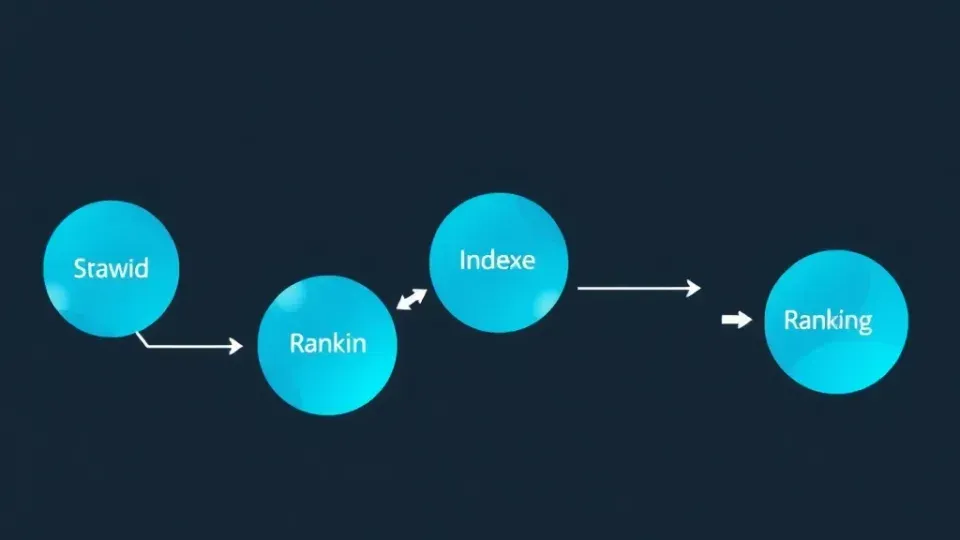
Understanding how SEO works requires a brief look under the hood of a search engine. The process involves three sequential stages: crawling, indexing, and ranking. Each stage presents optimization opportunities — and failure points.
How Search Engines Crawl and Index Content
Crawling is the discovery phase. Search engines deploy automated programs called bots or crawlers (Google's primary crawler is called Googlebot) that follow links across the web, visiting pages and reading their content. Think of crawlers as librarians scanning new books before shelving them.
After crawling, the content enters indexing — the search engine processes and stores the page in a massive database. Google's index reportedly contains hundreds of billions of web pages. If your page isn't indexed, it literally cannot appear in search results, which is why technical SEO (covered below) matters so much.
Finally, ranking is where the competition happens. When a user types a query, the search engine retrieves relevant indexed pages and orders them by estimated quality and relevance. This ordering is driven by hundreds of signals called ranking factors.
A few practical implications for site owners:
- Pages blocked by a
robots.txtfile or anoindextag won't appear in results. - Slow-loading pages may be crawled less frequently.
- Duplicate content can confuse crawlers and dilute ranking potential.
- Internal linking helps crawlers discover new pages and understand site structure.
How SEO Ranking Factors Influence Results
Google has confirmed the use of hundreds of ranking signals, though it doesn't publish a complete list. Based on years of industry research, official documentation, and Google's own public statements, the most influential factors cluster into a few categories.
Content quality and relevance sit at the top. Google's Search Quality Evaluator Guidelines — a 170+ page document Google uses to train human quality raters — emphasizes E-E-A-T: Experience, Expertise, Authoritativeness, and Trustworthiness. Pages that demonstrate genuine expertise on a topic consistently outperform thin or generic content.
Backlinks (links from other websites pointing to yours) remain one of the most powerful signals. Google co-founder Larry Page built the original PageRank algorithm around the premise that a link is essentially a vote of confidence. Industry studies from Ahrefs and Moz consistently find a strong correlation between the number and quality of backlinks and search ranking positions.
Page experience signals now include Google's Core Web Vitals — a set of metrics measuring loading speed (LCP), interactivity (INP), and visual stability (CLS). Google officially confirmed Core Web Vitals as a ranking factor, meaning a technically poor site faces a measurable ranking disadvantage even with excellent content.
For a deeper breakdown of the signals that matter most, see our guide to SEO ranking factors.
Three Types of SEO: On-Page, Off-Page, and Technical
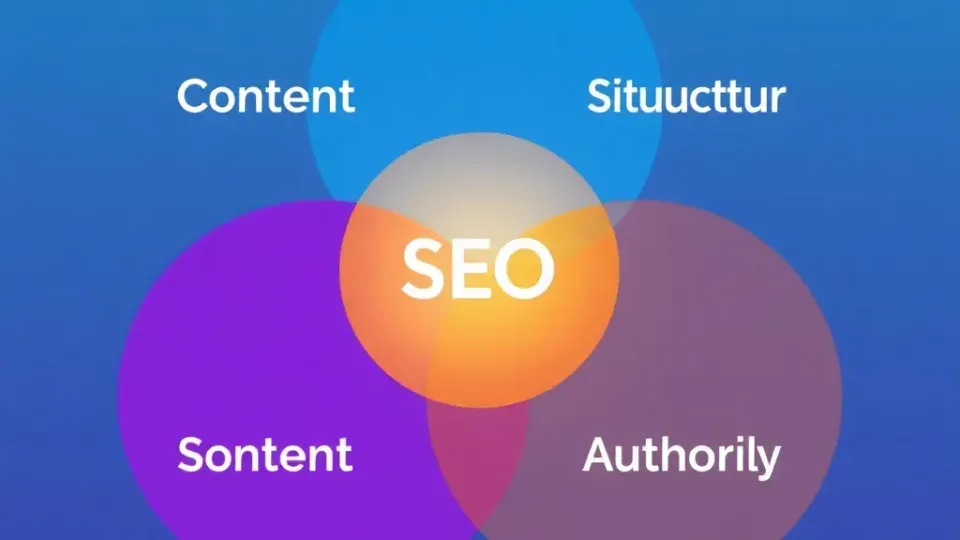
The field of SEO is commonly divided into three interconnected disciplines. Understanding all three — and how they work together — is essential before investing time or money into any optimization effort. For a deeper dive into each, see our comprehensive guide on types of SEO.
| Type | Focus Area | Primary Goal | |---|---|---| | On-Page SEO | Content, keywords, HTML | Relevance and user value | | Off-Page SEO | Backlinks, mentions, authority | Trust and credibility | | Technical SEO | Speed, crawlability, structure | Indexability and performance |
On-Page SEO: Content and Keywords
On-page SEO refers to everything you control directly on a web page to improve its relevance for target search queries. It's the most hands-on type of SEO and typically where most practitioners start.
The core components include:
- Keyword optimization — researching the terms your audience actually searches and incorporating them naturally into titles, headings, and body content. See our keyword research guide for a step-by-step process.
- Title tags and meta descriptions — the HTML elements that appear in search results as your page's headline and summary. These directly influence click-through rates.
- Heading structure (H1–H6) — organizing content with clear, hierarchical headings helps both readers and crawlers understand the page's topic.
- Content depth and quality — longer, more comprehensive content tends to rank for more keyword variations, but only if it genuinely serves the reader. Padding for word count without adding value is counterproductive.
- Internal linking — connecting related pages on your site helps distribute "link equity" and guides visitors to additional relevant content.
- Image optimization — using descriptive file names and
alttext helps search engines understand visual content and improves accessibility.
In my experience working with content-heavy sites, the single biggest on-page lever is matching search intent — understanding whether the user wants information, a product, a comparison, or a quick answer, then structuring the page to deliver exactly that.
Off-Page SEO: Links and Authority
Off-page SEO encompasses actions taken outside your website to improve its perceived authority and trustworthiness in the eyes of search engines. The cornerstone of off-page SEO is link building — earning hyperlinks from reputable external websites.
Why do backlinks matter so much? Because search engines can't take your word for it that your content is good. Links from authoritative, relevant sites act as third-party endorsements. A single link from a high-authority news site like the BBC or a respected industry publication can carry more ranking weight than dozens of links from low-quality directories.
Effective off-page SEO tactics include:
- Digital PR and media outreach — creating genuinely newsworthy content (original research, data studies, expert commentary) that journalists and bloggers naturally want to cite.
- Guest posting — contributing high-quality articles to reputable publications in your industry with a contextual link back to your site.
- Broken link building — identifying broken external links on relevant sites and offering your content as a replacement.
- Brand mentions — even unlinked mentions of your brand name signal authority to some search engines.
- Social proof and community engagement — while social media links are typically
nofollow(not passing link equity directly), they drive traffic and visibility that can earn organic links.
For strategic approaches to earning high-quality links, see our link building guide.
Technical SEO: Site Performance and Crawlability
Technical SEO ensures that search engines can efficiently crawl, index, and render your website — and that users experience fast, stable, and reliable performance when they arrive. It operates largely in the background but can single-handedly block rankings if neglected.
Key technical SEO areas include:
- Site speed and Core Web Vitals — Google's LCP (Largest Contentful Paint) should ideally be under 2.5 seconds. Slow sites frustrate users and receive ranking penalties.
- Mobile-friendliness — Google uses mobile-first indexing, meaning it primarily evaluates the mobile version of your site for ranking decisions.
- HTTPS security — Google confirmed HTTPS as a ranking signal. Sites without SSL certificates trigger browser warnings that destroy trust.
- XML sitemaps — structured files that help crawlers discover and prioritize your most important pages.
- Canonical tags — HTML directives that tell search engines which version of a page is the "master" copy, preventing duplicate content issues.
- Structured data (Schema markup) — machine-readable code that helps search engines understand your content's context and can unlock rich result features like star ratings, FAQs, or recipe cards in SERPs.
Technical SEO is where many content-focused teams leave significant ranking potential untapped. When I audit sites that have strong content and backlinks but weak rankings, technical issues — crawl blocks, redirect chains, or Core Web Vitals failures — are the culprit surprisingly often.
The Definition of SEO in Marketing: Business Impact and Strategy

SEO in marketing occupies a unique position in the digital channel mix because it operates on organic visibility rather than paid placement. Where display advertising rents attention and PPC ads buy clicks, SEO builds an owned asset — your site's search visibility — that appreciates over time. Understanding the full search engine optimization meaning within a marketing context means recognizing that it functions simultaneously as a demand-capture, brand-building, and cost-efficiency tool.
From a business strategy perspective, SEO serves several distinct marketing objectives simultaneously:
Demand capture: SEO intercepts users who are already searching for what you offer. Unlike outbound channels that interrupt audiences, SEO puts your brand in front of high-intent buyers at exactly the right moment.
Brand awareness and authority: Appearing consistently in search results for relevant topics — even informational queries — reinforces brand recognition and positions your company as an industry authority. Buyers who've seen your content multiple times before a purchase decision are significantly more likely to convert.
Cost efficiency at scale: The cost-per-acquisition (CPA) from organic search typically decreases over time as content compounds. A well-optimized article published today may generate leads for three to five years with minimal additional investment. Compare that to paid search, where costs often increase as competition intensifies.
SEO vs. Paid Search: Key Differences
A critical distinction for marketers is the difference between SEO and SEM. SEO targets organic results — the unpaid listings that appear because search engines deem them relevant and authoritative. Paid search (also called SEM or PPC) places advertisements in labeled ad slots and charges per click. Both appear on the same search results page but operate on fundamentally different economics.
SEO requires upfront time and content investment; SEM requires ongoing budget. The smartest digital marketing strategies use both in concert — using paid search for immediate visibility while SEO builds long-term authority. Key tradeoffs at a glance:
- SEO: Takes 3–6+ months to gain traction, but traffic compounds and doesn't disappear when spending stops.
- SEM/PPC: Delivers immediate visibility, but every click has a direct cost and results halt when budget runs out.
SEO vs. Other Digital Channels
Unlike social media, where algorithm changes can overnight eliminate your organic reach, search traffic is relatively stable for well-optimized content. Unlike email marketing, SEO doesn't require an existing list — it attracts new audiences who've never heard of you. This unique ability to generate discovery traffic from strangers makes SEO irreplaceable in most marketing strategies.
For business decision-makers evaluating where to invest, SEO's long-term ROI profile is compelling. Industry estimates consistently show that organic search delivers lower long-term CPA than most paid channels, though it requires patience — a point we address directly in the FAQ below.
White-Hat vs. Black-Hat SEO: What You Need to Know

Not all SEO practices are created equal — or equally safe. The industry distinguishes between approaches based on their alignment with search engine guidelines.
White-hat SEO refers to optimization practices that follow Google's (and other search engines') published guidelines. The emphasis is on creating genuine value for users: high-quality content, legitimate link earning, clean technical implementation, and honest representation of your site's purpose. White-hat SEO takes longer to produce results but builds durable rankings that don't disappear overnight.
Core white-hat practices include:
- Publishing original, well-researched content that serves real user needs.
- Earning backlinks through merit — great content, digital PR, and relationship-based outreach.
- Optimizing page speed and mobile experience for user benefit, not just search engines.
- Using structured data accurately, without misrepresenting content.
Black-hat SEO involves tactics that attempt to manipulate search rankings in ways that violate search engine guidelines. These tactics exploit short-term loopholes and can produce rapid initial results — which is why they remain tempting. But the downside risk is severe.
Common black-hat tactics include:
- Keyword stuffing — cramming keywords into content at unnatural densities to manipulate relevance signals.
- Cloaking — showing different content to search engine crawlers than to human visitors.
- Link schemes — buying links, participating in link farms, or using private blog networks (PBNs) to artificially inflate backlink counts.
- Doorway pages — creating pages designed solely to rank for queries, with no genuine user value.
- Hidden text — placing keyword-rich text on a page in a color matching the background, invisible to users but readable by crawlers.
Google's manual and algorithmic penalties can remove a site from search results entirely — sometimes permanently. The Penguin and Panda algorithm updates, for example, were specifically designed to target link manipulation and thin content respectively. In my observation, sites that chase black-hat shortcuts spend more time recovering from penalties than they would have spent building an ethical SEO foundation.
Gray-hat SEO occupies a middle ground — tactics not explicitly prohibited but that push the boundaries of guidelines, such as aggressive exact-match anchor text optimization or certain forms of reciprocal linking. Proceed with caution and stay close to Google's Webmaster Guidelines.
SEO Definition: Frequently Asked Questions

How do you define SEO in simple terms?
The definition of SEO in plain language: it's the process of making your website easier for search engines to find, understand, and recommend — so more people discover you through organic search without you paying for each visit. In simple terms, it's how you earn your spot in Google's results rather than buying it.
What is SEO in marketing, and why does it matter?
SEO in marketing is the discipline of growing a website's organic search visibility to attract qualified traffic, build brand authority, and reduce long-term customer acquisition costs. It matters because organic search drives the majority of web traffic — more than paid ads, social media, or email combined — and the traffic it generates is intent-driven, meaning visitors are actively looking for what you offer.
What is the difference between SEO and SEM (paid search)?
SEO targets organic (unpaid) search results and requires no per-click payment. Rankings are earned through content quality, backlinks, and technical optimization. SEM (Search Engine Marketing) — often used interchangeably with PPC — places advertisements in labeled ad slots above organic results and charges an advertiser every time someone clicks.
The key tradeoffs:
- SEO: Slower to show results (3–6 months typically), but traffic is free at scale and compounds over time.
- SEM: Immediate visibility, but traffic stops when budget stops, and costs tend to rise with competition.
Most mature marketing strategies use both: SEM for immediate demand capture and testing, SEO for sustainable long-term growth.
How long does it take to see results from SEO?
The honest answer is: it depends, but most practitioners cite 3–6 months as the timeframe for seeing measurable organic traffic improvement from a new SEO initiative. For brand-new sites or highly competitive keywords, the timeline can extend to 12 months or more.
Factors that accelerate results include:
- A site that already has existing authority (age and backlink history).
- Targeting lower-competition, long-tail keywords initially.
- Fixing critical technical issues that are actively suppressing rankings.
- Producing content that targets queries with clear, answerable intent.
The 3–6 month benchmark is an industry consensus drawn from agency experience and platform data — not a guarantee. Treat it as a planning heuristic, not a contract.
Is SEO still relevant with AI search engines and LLMs?
Yes — arguably more than ever. While AI-powered answer engines (like Google's AI Overviews, Perplexity, and ChatGPT Search) are reshaping how some queries are answered, traditional search engines still handle billions of queries daily and remain the dominant discovery channel.
More importantly, AI answer engines depend on well-structured, authoritative, trustworthy content as their source material. A site that ranks well in traditional search — because it has strong E-E-A-T signals, clear entity definitions, and well-organized content — is also more likely to be cited or surfaced by AI systems. The core SEO principles of relevance, authority, and content clarity are inputs to AI answer systems, not casualties of them.
The practical implication: optimizing for AI answer engines (sometimes called GEO — Generative Engine Optimization) largely extends rather than replaces traditional SEO. Clear definitions, structured data, FAQ sections, and authoritative sources all improve both traditional rankings and AI citation probability.
What is the most important SEO ranking factor?
There is no single "most important" factor — Google has confirmed it uses hundreds of signals and the relative weight varies by query type. That said, industry consensus consistently points to three pillars that carry the most combined weight:
- Content quality and relevance — Does the page genuinely answer the query better than alternatives?
- Backlink authority — Do reputable external sites endorse this content with links?
- Page experience — Does the page load fast, work on mobile, and feel trustworthy?
If forced to name one factor for a site just starting out: content that comprehensively and authentically serves search intent is the highest-leverage starting point, because without it, no amount of link building or technical polish will produce sustainable rankings.
SEO Implementation Checklist for Getting Started
The gap between understanding the definition of SEO and actually improving your rankings comes down to execution. The checklist below is organized by priority — tackle items at the top first before moving down.
Phase 1: Foundation (Week 1–2)
- [ ] Set up Google Search Console — free tool that shows which queries trigger your site, indexing issues, and Core Web Vitals data. This is non-negotiable baseline data.
- [ ] Set up Google Analytics 4 — track organic traffic, user behavior, and conversions to measure SEO ROI.
- [ ] Verify your site is indexed — search
site:yourdomain.comin Google. If pages are missing, investigate crawl blocks. - [ ] Check for HTTPS — confirm your site uses SSL and that all pages redirect properly to the HTTPS version.
- [ ] Submit an XML sitemap — create and submit via Google Search Console so crawlers can efficiently find your pages.
- [ ] Review robots.txt — ensure you're not accidentally blocking crawlers from important pages.
Phase 2: Keyword and Content Strategy (Week 2–4)
- [ ] Conduct keyword research — identify target queries your audience is searching, grouped by intent (informational, navigational, transactional). Use tools like Ahrefs, SEMrush, or Google Keyword Planner. See our keyword research guide for a full walkthrough.
- [ ] Audit existing content — identify pages with ranking potential that need optimization vs. thin content that should be consolidated or removed.
- [ ] Map keywords to pages — assign primary and secondary keywords to specific pages. Avoid "keyword cannibalization" (multiple pages targeting the same query).
- [ ] Optimize title tags — ensure every page has a unique, descriptive title tag under 60 characters that includes the primary keyword.
- [ ] Write compelling meta descriptions — these don't directly affect rankings but improve click-through rates from SERPs.
- [ ] Optimize heading structure — every page should have one H1, with supporting H2s and H3s that reflect the content hierarchy.
- [ ] Improve content depth — for pages targeting competitive queries, ensure your content is more comprehensive and useful than current top-ranking alternatives.
Phase 3: Technical Health (Week 3–6)
- [ ] Run a Core Web Vitals audit — use Google PageSpeed Insights or Search Console's Core Web Vitals report. Prioritize LCP under 2.5s and CLS under 0.1.
- [ ] Fix mobile usability issues — test with Google's Mobile-Friendly Test tool and address any reported problems.
- [ ] Resolve crawl errors — in Search Console, fix 404 errors (broken pages) and redirect chains where possible.
- [ ] Implement structured data — add Schema markup (Article, FAQ, Product, etc.) appropriate to your content type to improve rich result eligibility.
- [ ] Audit internal links — ensure your most important pages receive internal links from relevant supporting pages. Fix or redirect broken internal links.
- [ ] Eliminate duplicate content — use canonical tags or 301 redirects to consolidate duplicate or near-duplicate pages.
Phase 4: Authority and Off-Page (Ongoing)
- [ ] Identify link-building opportunities — research where competitors earn their best backlinks using Ahrefs or SEMrush. See our link building guide for strategic approaches.
- [ ] Create linkable assets — original research, data studies, comprehensive guides, or free tools that give other sites a reason to link.
- [ ] Set up brand monitoring — use Google Alerts or a tool like Mention to track unlinked brand mentions you can convert into backlinks.
- [ ] Build topical authority — publish a cluster of related content around your core topics rather than isolated articles. Internal linking between cluster content reinforces your authority signals.
- [ ] Earn or request links — reach out to authors of relevant content where your resource genuinely adds value. Focus on relevance and quality over volume.
Phase 5: Measurement and Iteration (Monthly)
- [ ] Track ranking positions — monitor keyword rankings weekly or monthly using Search Console or a rank tracker.
- [ ] Review organic traffic trends — in GA4, compare organic sessions month-over-month and year-over-year to identify growth or declines.
- [ ] Analyze top-performing content — double down on what's working. Update, expand, and re-promote pages that are gaining traction.
- [ ] Audit and refresh declining content — pages that were previously ranking and have dropped often need updated information, improved depth, or new links.
- [ ] Review Search Console for new opportunities — queries you're appearing for but not ranking highly for are candidates for targeted optimization.
A note on tooling: If you're managing SEO at scale — especially keyword clustering and content production — platforms like Writora can accelerate the process significantly. Writora combines keyword clustering, AI-assisted article generation, and one-click publishing in a single workflow, which is particularly useful for independent publishers trying to build topical authority without a full SEO team. It's worth exploring if content velocity is a bottleneck in your SEO strategy.
The Bottom Line: Putting the Definition of SEO Into Practice
The definition of SEO is straightforward: it's the practice of optimizing your website's content, technical foundation, and external authority so search engines rank it higher — delivering qualified, unpaid traffic that compounds over time. But understanding what SEO means is just the starting line.
Effective search engine optimization combines all three disciplines — on-page optimization for relevance, off-page authority building for credibility, and technical SEO for performance — into a unified, ongoing strategy. Neglect any pillar and the other two underperform.
What makes SEO one of the most valuable disciplines in digital marketing is precisely what makes it challenging: it rewards genuine investment in user value. The sites that rank consistently aren't gaming algorithms — they're building the most useful, trustworthy resources in their niche, backed by solid technical execution. That's the search engine optimization meaning that actually translates to business results.
The checklist above gives you a concrete roadmap to move from theory to implementation. Start with the foundation (Search Console, indexing verification, HTTPS), layer in keyword strategy, address technical health, and build authority over time. For a complete walkthrough of execution, see our guide on how to do SEO.
SEO in marketing isn't a quick fix — but for businesses and publishers willing to play the long game, it remains one of the highest-ROI investments in the digital marketing toolkit.