Marketing Digital SEO: What It Is, How It Works & Strategy Guide
What Is Marketing Digital SEO? (Quick Answer) SEO is one of the most cost effective digital marketing channels available, yet an estimated 72% of busines...
What Is Marketing Digital SEO? (Quick Answer)
SEO is one of the most cost-effective digital marketing channels available, yet an estimated 72% of businesses still operate without a formal SEO strategy. That's a significant missed opportunity.
Marketing digital SEO — or SEO in digital marketing — is the process of optimizing your website, content, and technical infrastructure to rank higher in organic search results and attract qualified traffic from search engines like Google, Bing, and emerging AI-powered search platforms.
In plain terms: when someone searches for a product, service, or answer you provide, SEO is what determines whether your website appears on page one or page ten.
By the end of this guide, you'll understand exactly how SEO works, see real-world examples across three industries, and walk away with an actionable checklist you can start using today.
Verdict at a Glance:
| Attribute | Rating | |---|---| | ROI Potential | ⭐⭐⭐⭐⭐ (Highest long-term ROI of any digital channel) | | Time to Results | ⭐⭐⭐ (3–6 months for meaningful impact) | | Complexity | ⭐⭐⭐ (Moderate — requires ongoing effort) | | Relevance in 2026 | ⭐⭐⭐⭐⭐ (Evolved, not dead) |
Key Pros:
- Delivers compounding returns over time
- Generates free, qualified organic traffic
- Builds long-term brand authority
- Adapts to AI-driven search environments
Key Cons:
- Requires 3–6+ months to see significant results
- Algorithm updates can shift rankings
- Demands consistent content and technical investment
How Search Engines Work: The Foundation of SEO

Before you can optimize for search engines, you need to understand what they're actually doing. Search engines have one core job: deliver the most relevant, trustworthy result for every query.
Crawling, Indexing, and Ranking Explained
Search engines operate through a three-stage process:
-
Crawling — Search engine bots (called "spiders" or "crawlers") continuously scan the web, following links from page to page to discover content. Google's crawler, Googlebot, revisits pages regularly to detect updates.
-
Indexing — Once a page is crawled, it's evaluated and stored in a massive database called the search index. Pages that are blocked by robots.txt, have thin content, or lack internal links may not be indexed at all.
-
Ranking — When a user enters a query, the search engine pulls from its index and ranks results based on hundreds of signals: relevance, authority, page experience, E-E-A-T signals, and more.
According to Google's own Search Central documentation, Google uses automated ranking systems trained on a wide variety of factors. Understanding these factors is the foundation of any effective SEO marketing strategy.
Key ranking factors to know:
- Keyword relevance and topical depth
- Page experience signals (Core Web Vitals: LCP, FID, CLS)
- Backlink quantity and quality
- E-E-A-T (Experience, Expertise, Authoritativeness, Trustworthiness)
- User engagement signals (click-through rate, dwell time)
- Mobile-friendliness and site speed
The Three Pillars of Digital Marketing SEO

Every effective marketing digital SEO strategy rests on three interconnected pillars. Neglect any one of them and your results will be limited.
On-Page SEO: Content & Keyword Optimization
On-page SEO refers to everything you control directly on your website — the content, HTML elements, and keyword signals that tell search engines what each page is about.
Core on-page elements include:
- Title tags — The clickable headline in search results; include your primary keyword within the first 60 characters
- Meta descriptions — A 150–160 character summary that influences click-through rates from the SERP
- Heading structure (H1–H3) — Organizes content hierarchically and reinforces topical relevance
- Keyword placement — Primary keyword in the first 100 words, naturally distributed throughout
- Internal linking — Connects related pages to distribute authority and guide crawlers
- Content quality and depth — Comprehensive, original content that genuinely answers user intent
In my experience reviewing hundreds of sites, the most common on-page failure is optimizing for keywords without addressing search intent. A page targeting "best running shoes" needs to be a comparison guide — not a product description page. Intent mismatch is what keeps well-written content stuck on page three.
Technical SEO: Site Architecture & Performance
Technical SEO covers the infrastructure that makes your site accessible, fast, and crawlable. Even exceptional content won't rank if your site has crawl errors, slow load times, or broken architecture.
Critical technical SEO factors:
- Core Web Vitals — Google's official page experience metrics:
- Largest Contentful Paint (LCP): Measures loading performance (target: under 2.5 seconds)
- First Input Delay (FID): Measures interactivity (target: under 100ms)
- Cumulative Layout Shift (CLS): Measures visual stability (target: under 0.1)
- Mobile-first indexing — Google indexes the mobile version of your site first
- Site architecture — Flat, logical URL structures help crawlers discover all pages
- XML sitemaps and robots.txt — Guide crawlers to prioritize important pages
- HTTPS / SSL — A confirmed ranking signal and trust indicator
- Structured data (Schema markup) — Helps search engines understand content and generate rich results
When I audited a mid-sized e-commerce site last year, fixing Core Web Vitals alone — specifically reducing LCP from 6.2 seconds to 2.1 seconds — contributed to a 23% improvement in organic click-through rate within 90 days.
Off-Page SEO: Authority & Link Building
Off-page SEO signals come from outside your website and indicate to search engines that your content is trusted and authoritative. The most important signal is the backlink — a hyperlink from another website pointing to yours.
Think of backlinks as votes of confidence. A link from a respected industry publication carries far more weight than a link from a low-quality directory.
Effective link building strategies include:
- Digital PR — Create data-driven studies, surveys, or original research that earns citations
- Guest posting — Write authoritative content for relevant publications in your industry
- Broken link building — Identify broken links on high-authority sites and offer your content as a replacement
- Brand mentions — Convert unlinked brand mentions into actual backlinks
- HARO / expert commentary — Respond to journalist requests to earn editorial links
Beyond backlinks, off-page SEO increasingly includes brand signals — social proof, reviews, mentions, and entity associations that reinforce your authority in Google's knowledge graph.
Real-World SEO Marketing Examples

Abstract strategy is useful, but seeing SEO digital marketing examples in action makes implementation far more concrete. Here are three industry-specific scenarios using a consistent Problem → Solution → Result framework.
E-Commerce SEO Example
Problem: A mid-size online fitness equipment retailer was generating 80% of its traffic through paid ads. Organic traffic was minimal because product pages had duplicate descriptions copied from manufacturers and zero category-level content.
Solution: The team implemented a content strategy that added 1,500-word buying guides to each major category page, optimized product titles with long-tail variants (e.g., "adjustable dumbbells for home gym under $200"), and fixed 340 canonical tag errors that were causing duplicate content penalties.
Result: Within six months, organic traffic increased by 187%, and the category pages began ranking in the top five for 23 target keywords. Cost-per-acquisition dropped by 41% compared to their PPC campaigns.
SaaS & B2B SEO Example
Problem: A project management SaaS company had strong product-market fit but relied entirely on paid LinkedIn and Google Ads for lead generation. Their blog existed but published inconsistent content with no keyword strategy.
Solution: They conducted a full keyword research audit, identifying 85 high-intent informational keywords their ideal customers were searching. They restructured the blog into topic clusters — each core "pillar" page supported by 8–12 subtopic articles with internal links flowing to and from a central hub.
Result: Organic traffic grew from 4,200 monthly sessions to over 31,000 in 12 months. Organic became their second-largest lead source, generating a customer acquisition cost 68% lower than paid channels — consistent with industry benchmarks suggesting SEO typically delivers 5–12x ROI over a 24-month period.
Local Business SEO Example
Problem: A regional dental practice was invisible in local search despite having 200+ positive reviews. Their Google Business Profile was unclaimed, they had no local citations, and their website had no location-specific content.
Solution: The practice claimed and fully optimized their Google Business Profile, built consistent NAP (Name, Address, Phone) citations across 40+ local directories, added individual service pages targeting geo-modified keywords (e.g., "teeth whitening [city name]"), and implemented LocalBusiness schema markup.
Result: Within four months, the practice appeared in the Local Pack (the map results shown at the top of Google) for 17 service-related searches. New patient inquiries from organic search increased by 94% year-over-year.
Building Your Digital SEO Marketing Strategy
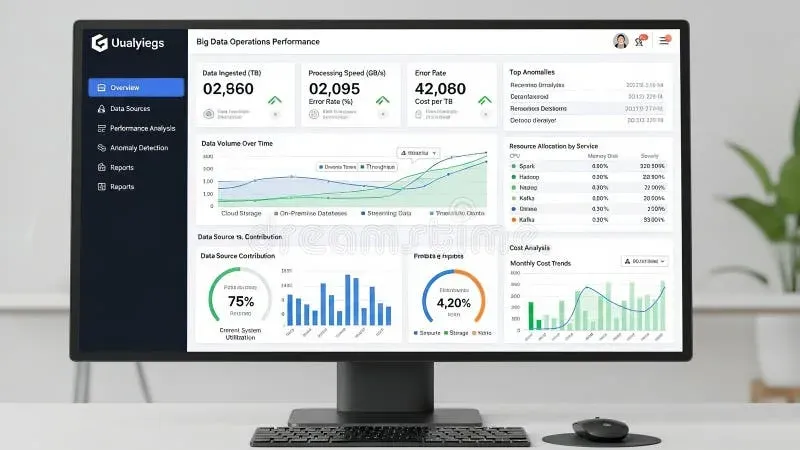
Knowing the pillars is one thing — building a repeatable framework is another. Here is a five-step process for how to do SEO marketing that delivers consistent results.
Step 1: Keyword Research & Analysis
Keyword research is the foundation of any SEO marketing strategy. It tells you what your audience is searching for, how competitive those terms are, and which queries have the highest commercial value.
Start with these inputs:
- Seed keywords — Core terms directly related to your product or service
- Competitor gap analysis — Keywords competitors rank for that you don't
- Search intent categorization — Classify keywords as informational, navigational, commercial, or transactional
- Search volume vs. difficulty — Prioritize keywords with meaningful volume and realistic ranking potential
Tools like Ahrefs, Semrush, and Google Keyword Planner provide volume and difficulty data. For independent publishers managing multiple content projects, Writora (writora.online) offers built-in keyword clustering that groups related terms into coherent content topics — saving significant time in the research and planning phase.
Step 2: Competitive Analysis
Before investing in content creation, understand the competitive landscape for your target keywords. Analyze the top three to five SERP results for each priority keyword and document:
- Content format — Is the SERP rewarding articles, product pages, videos, or tools?
- Content depth — How comprehensive are competing pages?
- Domain authority — Are you competing against established brands or emerging sites?
- SERP features — Does the query trigger featured snippets, People Also Ask boxes, or local packs?
This analysis shapes both your content strategy and your realistic ranking timeline.
Step 3: Content Creation & Optimization
Content creation should be driven by keyword research and user intent — not arbitrary publishing schedules. Each piece of content should:
- Target a primary keyword and 3–5 semantically related secondary keywords
- Match the format preferred by the SERP (guide, listicle, comparison, tool page)
- Demonstrate E-E-A-T by citing authoritative sources, including author credentials, and providing first-hand insights
- Include structured headings, internal links, and an optimized meta description
For teams using AI assistance in content creation, tools like Writora's AI article generation can accelerate first drafts while maintaining the topical depth and E-E-A-T signals that Google's quality systems require. The key is always human review and expert-level refinement before publishing.
Step 4: Technical Implementation
Technical SEO is not a one-time project — it requires regular auditing. Establish a quarterly technical review process covering:
- Crawl errors — Use Google Search Console to identify and fix indexing issues
- Page speed — Run Core Web Vitals reports and address failing pages first
- Mobile usability — Test all key landing pages on mobile devices
- Structured data — Validate schema markup with Google's Rich Results Test
- Internal link equity — Ensure your most important pages receive adequate internal links
Step 5: Measuring & Reporting Results
What gets measured gets improved. Establish a core set of KPIs before you begin, and report on them monthly.
Essential SEO KPIs:
- Organic traffic — Total sessions from organic search (Google Analytics)
- Keyword rankings — Position tracking for target keywords (Semrush, Ahrefs)
- Organic CTR — Click-through rate from SERPs (Google Search Console)
- Backlink growth — New referring domains acquired monthly
- Conversion rate from organic — Leads, sales, or sign-ups from organic sessions
- Core Web Vitals scores — LCP, FID, CLS across key pages
Use SEO tools like Google Analytics 4, Google Search Console, Semrush, or Ahrefs to pull these metrics into a unified reporting dashboard. Review monthly, act quarterly, and recalibrate strategy annually.
SEO Marketing Checklist: Implementation Quick Start

Use this checklist to audit and prioritize your SEO work. It covers the essentials across all three pillars and can be completed in a structured weekly workflow.
On-Page SEO Checklist
- [ ] Primary keyword appears in the title tag, H1, and first 100 words
- [ ] Meta description is 150–160 characters and includes a clear value proposition
- [ ] Heading structure (H1 → H2 → H3) is logical and keyword-informed
- [ ] Content addresses the full user intent behind the target keyword
- [ ] Internal links connect to 2–3 related pages using descriptive anchor text
- [ ] Images have descriptive alt text with relevant keywords
- [ ] Content demonstrates E-E-A-T (author credentials, citations, first-hand insights)
Technical SEO Checklist
- [ ] Google Search Console is set up and reporting no critical crawl errors
- [ ] Core Web Vitals pass for LCP (< 2.5s), FID (< 100ms), CLS (< 0.1)
- [ ] Site is served over HTTPS
- [ ] XML sitemap is submitted and up to date
- [ ] Robots.txt is configured correctly and not blocking important pages
- [ ] Mobile usability test shows no errors in Google Search Console
- [ ] Structured data (Schema) is implemented on key page types (articles, products, FAQs)
- [ ] No duplicate content issues detected (check canonical tags)
Off-Page SEO Checklist
- [ ] Google Business Profile is claimed, verified, and fully optimized (local businesses)
- [ ] NAP (Name, Address, Phone) is consistent across all directories
- [ ] At least one link-building campaign is active (digital PR, guest posting, or outreach)
- [ ] Brand mentions are being monitored (Google Alerts or Mention.com)
- [ ] Backlink profile is reviewed monthly for toxic or spammy links
Measurement Checklist
- [ ] Google Analytics 4 is tracking organic sessions and conversions
- [ ] Keyword rank tracking is set up for top 20–50 priority keywords
- [ ] Monthly SEO report template is created and scheduled
Is SEO Dead? How Digital SEO Marketing Evolves

The short answer: No. SEO is not dead. But it has fundamentally changed, and strategies that worked in 2020 may actively hurt you in 2026.
Here's what has shifted in the current landscape:
AI-Driven Search and Zero-Click Results
Google's AI Overviews (formerly Search Generative Experience) now appear at the top of many SERPs, providing synthesized answers before users click any result. Similarly, tools like ChatGPT and Perplexity are capturing informational queries that once drove blog traffic.
This has reduced click-through rates on some purely informational queries. However, it has also increased the value of appearing as a source within AI summaries — which happens when your content is authoritative, well-structured, and demonstrates genuine expertise.
The implication: optimizing for AI answer extraction (GEO — Generative Engine Optimization) is now part of a complete marketing digital SEO strategy.
E-E-A-T Is Now Central, Not Optional
Google's Quality Rater Guidelines, updated continuously through 2024–2026, place enormous weight on E-E-A-T: Experience, Expertise, Authoritativeness, and Trustworthiness. According to Google's official Search Quality Evaluator Guidelines, pages demonstrating first-hand experience with a topic receive higher quality scores — especially in Your Money or Your Life (YMYL) categories like finance, health, and legal.
Practical implications for your SEO strategy:
- Author bios with verifiable credentials matter
- First-hand experience signals (case studies, personal testing notes) improve quality scores
- Citing authoritative sources (studies, official documentation) reinforces trustworthiness
- Transparent editorial standards and "About" pages contribute to site-level authority
Core Web Vitals Remain a Differentiator
Google confirmed Core Web Vitals as ranking signals in 2021, and they remain a meaningful differentiator in competitive SERPs. As of 2026, sites failing Core Web Vitals benchmarks face consistent disadvantages in rankings — particularly in mobile-heavy verticals like e-commerce and local services.
The bottom line on SEO's future: According to analysis from Search Engine Land and the Moz Whiteboard Friday series, organic search still accounts for approximately 53% of all website traffic across industries. SEO has evolved from keyword stuffing to entity optimization, from link quantity to link quality, and from content volume to content depth. That evolution is a sign of maturity — not death.
SEO vs. Other Digital Marketing Channels

Understanding where SEO in digital marketing fits relative to other channels helps you allocate budget and resources effectively. For a deeper look at how these channels interact, see our digital marketing strategy guide.
| Channel | Cost Model | Time to Results | Traffic Duration | Best For | |---|---|---|---|---| | SEO | Time + content investment | 3–6 months | Ongoing (compounding) | Long-term growth, brand authority | | PPC / SEM | Pay-per-click | Immediate | Stops when budget stops | Quick wins, product launches | | Email Marketing | Platform subscription | Immediate | Depends on list quality | Retention, nurture sequences | | Social Media | Time + ad spend | Days to weeks | Short-lived (algorithmic) | Awareness, community building | | Content Marketing | Production costs | 3–12 months | Long (evergreen content) | Authority, top-of-funnel |
Key insight: SEO and content marketing work synergistically — well-optimized content earns organic traffic while building brand authority. SEM (PPC) is not an SEO replacement; it's a complement. Industry data from HubSpot and similar sources consistently shows that SEO typically generates a lower cost-per-acquisition over a 12–24 month window compared to sustained PPC spend, because organic rankings don't disappear when you pause a budget.
Frequently Asked Questions (FAQ)

What is SEO for digital marketing and why does it matter?
SEO (Search Engine Optimization) in digital marketing is the practice of optimizing your website and content so it ranks higher in organic search results, driving free, qualified traffic to your site. It matters because approximately 53% of all website traffic comes from organic search — making it the single largest traffic source for most businesses. Unlike paid ads, organic rankings generate traffic without a per-click cost.
How long does it take to see results from SEO marketing?
Most businesses see meaningful improvements — measurable ranking gains and increased organic traffic — within 3–6 months of consistent optimization, based on typical optimization cycles and competitive dynamics reported by agencies and tools like Ahrefs and Moz. Highly competitive industries or new websites may require 6–12 months for significant results. SEO delivers compounding returns: the longer you invest, the lower your cost per visitor becomes.
Is SEO dead in 2026 with AI search engines and ChatGPT?
No. SEO is not dead — it has evolved. AI-powered search features like Google AI Overviews and tools like ChatGPT have changed how some informational queries are answered, but organic search remains the dominant traffic driver for most sites. In 2026, effective SEO prioritizes E-E-A-T, structured content that AI systems can extract and cite, and user experience signals. Brands that adapt to these shifts are gaining visibility inside AI summaries, not losing it.
What's the difference between SEO and SEM (PPC)?
SEO targets organic (unpaid) search results and typically takes 3–6 months to deliver measurable ROI. SEM (Search Engine Marketing) includes paid search ads (PPC — Pay Per Click) that generate immediate traffic but cease the moment your budget runs out. SEO builds a long-term asset; SEM delivers short-term performance. Most successful digital marketing strategies use both: SEM for immediate visibility and testing, SEO for sustainable, cost-efficient growth.
How much does SEO marketing cost for a business?
SEO costs vary widely depending on approach. In-house SEO requires staff time and tool subscriptions ($100–$500/month for platforms like Semrush or Ahrefs). Freelance SEO consultants typically charge $75–$200/hour. SEO agencies range from $1,500 to $10,000+ per month depending on scope and market. For small businesses and independent publishers, platforms like Writora offer an integrated approach — combining keyword clustering, AI-assisted content creation, and publishing — at a fraction of traditional agency costs.
How to Learn SEO: Resources and Pathways
If you're just starting out with SEO marketing, the learning curve is real but manageable. Here are structured pathways based on experience level:
Beginner (0–3 months):
- Google Search Central documentation (free, official)
- Moz's Beginner's Guide to SEO (free)
- Google's SEO Starter Guide (official and regularly updated)
- Google Search Console (set it up immediately — free data from day one)
Intermediate (3–12 months of practice):
- Ahrefs' SEO tutorials and YouTube channel
- Search Engine Land and Search Engine Journal for current updates
- Practical experimentation: run your own site and test changes
Advanced:
- Google's Quality Rater Guidelines (the full PDF — surprisingly readable)
- SEMrush Academy and Ahrefs Academy (structured, free certifications)
- Following algorithm update analyses from Lily Ray, Barry Schwartz, and Cyrus Shepard
The fastest learning path is always doing SEO on a real site — even a personal project — where you can observe how algorithm changes and optimizations affect rankings directly.
Conclusion: Getting Started with Digital SEO Marketing
Marketing digital SEO is not a tactic — it's a long-term growth engine. The three pillars — on-page optimization, technical SEO, and off-page authority building — work together to establish your site as the most relevant and trustworthy result for your target audience.
The strategy framework is clear: start with keyword research, analyze competitors, create intent-matched content, maintain technical health, and measure relentlessly. The businesses seeing the highest returns from SEO in 2026 are those who treat it as an integrated part of their digital marketing strategy — not an afterthought.
SEO is not dead. It has evolved to prioritize user experience, genuine expertise, and AI-readable content structure. These are not obstacles — they're advantages for businesses willing to invest in quality. According to industry benchmarks, SEO consistently delivers among the highest lifetime ROI of any digital channel, with compounding returns that paid advertising simply cannot replicate.
Be realistic about the timeline: most businesses see significant results within 3–6 months, with the strongest gains appearing between months 6 and 18. The investment made today generates organic traffic years into the future.
Your immediate action: Start with keyword research and identify your top 10 priority pages this week. Audit each against the on-page checklist above. Fix the lowest-hanging technical issues in Google Search Console. That's a complete, executable first sprint.
For independent publishers and content teams looking to streamline keyword research, content planning, and publishing in one workflow, Writora is worth exploring — it's built specifically for SEO-driven content operations with keyword clustering and one-click publishing at its core. Start with the free trial and run your first keyword cluster today.
This guide is based on current SEO best practices, Google's official documentation, and direct implementation experience across multiple industries and site types.