SEO Define: What Search Engine Optimization Means and How It Works
SEO Define: What Search Engine Optimization Really Means SEO (Search Engine Optimization) is the practice of optimizing websites and digital content to r...

SEO Define: What Search Engine Optimization Really Means
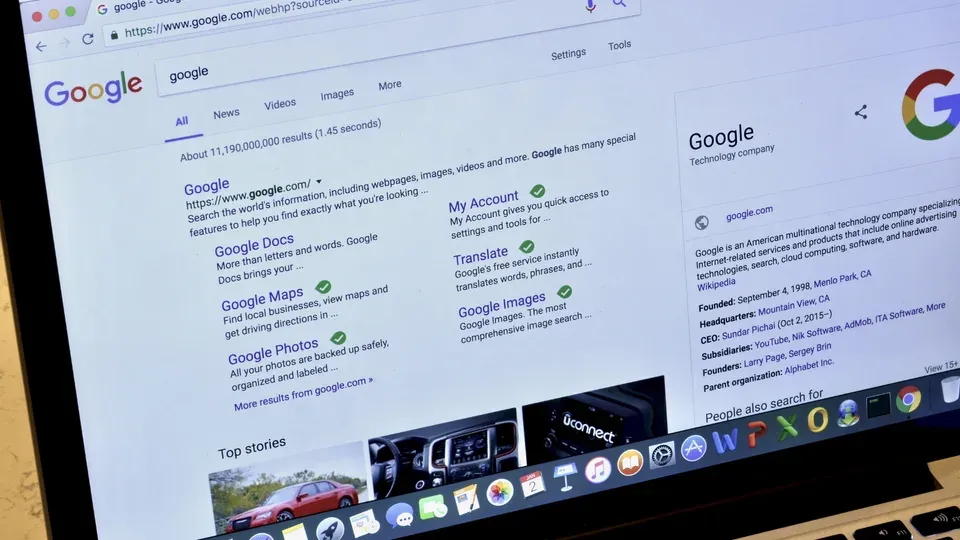
SEO (Search Engine Optimization) is the practice of optimizing websites and digital content to rank higher in search results and attract organic traffic. That single sentence captures the essence, but the discipline itself runs far deeper than most definitions suggest.
Whether you're a marketing professional refining your channel strategy or a business owner trying to understand why competitors keep appearing above you in Google, this guide will give you the clarity you need. When we SEO define the concept thoroughly, it becomes clear that search engine optimization sits at the intersection of technology, content strategy, and business growth.
In this guide, you'll learn exactly what SEO stands for, how search engines use signals to rank websites, the three core types of SEO (on-page, off-page, and technical), how SEO meaning differs in marketing versus business strategy, and a practical checklist to start implementing today. I've structured everything from foundational concepts through advanced applications, so you can read straight through or jump to the section most relevant to your needs.
The Core Definition in One Sentence
Here's the definition worth memorizing: Search Engine Optimization (SEO) is the systematic process of improving a website's visibility in organic (unpaid) search engine results by aligning content, structure, and authority signals with what search engines and users value.
This definition matters because it captures three critical elements most dictionary-style definitions miss:
- It's systematic — SEO isn't guesswork; it follows documented methodologies and measurable frameworks.
- It targets organic results — paid search ads (SEM/PPC) are a separate discipline entirely.
- It serves both search engines and users — modern SEO succeeds only when it satisfies both algorithms and human intent.
Breaking Down the SEO Acronym
Let's unpack what SEO stands for, word by word:
- Search — Refers to how people use search engines (Google, Bing, YouTube, etc.) to find information, products, and services. Google alone processes an estimated 8.5 billion searches per day, according to Internet Live Stats.
- Engine — The technology platform that crawls, indexes, and ranks web content. Google dominates with roughly 90% of global search market share (StatCounter, 2025), but Bing, Yahoo, DuckDuckGo, and emerging AI search engines also matter.
- Optimization — The active, ongoing process of improving your website to perform better in search results. This includes everything from writing better content to fixing site speed issues to earning backlinks from authoritative sources.
The search engine optimization definition is deceptively simple. In practice, it encompasses hundreds of tactics across content creation, web development, data analysis, and relationship building. After working with SEO for over a decade, I can tell you that the discipline has evolved dramatically — but the core principle has never changed: help search engines understand your content, and make that content genuinely valuable to the people searching for it.
Why SEO Matters: The Business Case
Understanding SEO meaning in business requires looking at hard numbers, not just theory.
According to BrightEdge research, organic search drives 53% of all trackable website traffic across industries. For B2B companies, that number climbs even higher. This means more than half of your potential customers are finding businesses through search engines — and if you're not optimized, your competitors are capturing that demand instead.
Here's why SEO is a business necessity, not just a marketing tactic:
- Cost efficiency — Unlike paid advertising, organic traffic doesn't require a per-click budget. While SEO requires investment in content, tools, and expertise, the marginal cost of each additional visitor trends toward zero over time.
- Compounding returns — A well-optimized page can generate traffic for months or years after publication. Paid ads stop the moment you stop paying.
- Buyer intent capture — People searching on Google have active intent. They're looking for solutions, comparing options, or ready to purchase. This makes organic traffic some of the highest-converting traffic available.
- Brand credibility — According to search behavior studies, users trust organic results more than paid ads. Ranking on page one signals authority to potential customers.
In my experience, the businesses that treat SEO as a core growth channel — not an afterthought — consistently outperform competitors in customer acquisition cost and long-term revenue growth. A SaaS company I consulted with reduced their customer acquisition cost by 40% over 18 months simply by shifting budget from paid channels to organic content.
How SEO Works: The Fundamentals

Before diving into tactics, you need to understand the mechanism behind search results. Search engines like Google use hundreds of ranking factors — confirmed in Google's official SEO Starter Guide — to determine which pages appear first for any given query.
Crawling, Indexing, and Ranking
Search engines operate through a three-stage process:
1. Crawling Search engines deploy automated programs called "crawlers" or "spiders" (Google's is called Googlebot) that follow links across the web, discovering new and updated pages. If your site has broken links, orphaned pages, or a blocked robots.txt file, crawlers may never find your content.
2. Indexing Once crawled, pages are analyzed and stored in a massive database called the index. Google's index contains hundreds of billions of pages. During indexing, the search engine evaluates your content's topic, structure, freshness, and quality. Pages that are thin, duplicated, or lack clear purpose may not be indexed at all.
3. Ranking When a user enters a search query, the search engine retrieves relevant pages from its index and ranks them based on relevance, authority, and user experience signals. This happens in milliseconds. The ranking algorithm considers factors including:
- Content relevance — Does the page match the searcher's intent?
- Authority — Is the site trusted and well-referenced by other authoritative sources?
- User experience — Does the page load quickly, work on mobile, and provide a good experience?
- Engagement signals — Do users stay on the page or immediately bounce back to search results?
SEO is essentially the practice of optimizing your website across all three stages: ensuring crawlers can find your pages, your content gets properly indexed, and your pages rank competitively for target queries.
The Three Types of SEO Explained
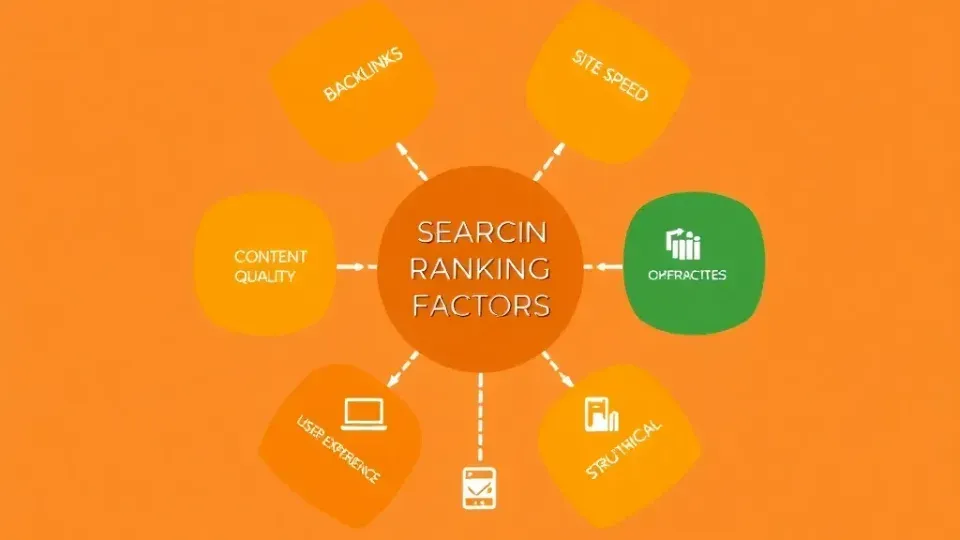
The SEO industry widely recognizes three foundational pillars, a framework consistent with guidance from Moz, the American Marketing Association, and Google's own documentation. Understanding these SEO types and examples is essential for any effective strategy.
| SEO Type | Focus Area | Who Controls It | Primary Impact | |---|---|---|---| | On-Page SEO | Content, keywords, metadata, internal links | Content creators & editors | Relevance & user experience | | Off-Page SEO | Backlinks, citations, brand mentions | PR, outreach & partnerships | Authority & trust | | Technical SEO | Site speed, crawlability, structured data | Developers & site admins | Discoverability & performance |
On-Page SEO: Content and Structure
On-page SEO refers to the optimization of individual web pages — their content, HTML source code, and internal structure — to improve rankings and user experience.
This is the SEO type you have the most direct control over. Key on-page elements include:
- Title tags — The clickable headline in search results. Should include your primary keyword and stay under 60 characters. A common mistake I see is businesses using their company name as the title tag instead of a keyword-rich, descriptive title.
- Meta descriptions — The summary text beneath the title in search results. While not a direct ranking factor, compelling meta descriptions improve click-through rates, which indirectly influence rankings.
- Header tags (H1-H6) — Structured headings that organize content and signal topic hierarchy to search engines. Your H1 should contain the primary keyword; H2s and H3s should cover related subtopics.
- Keyword optimization — Strategically placing target keywords in titles, headers, body content, image alt text, and URLs without overstuffing. Aim for 1-2% keyword density.
- Content quality and depth — Google's helpful content system (launched in 2022 and continually updated) rewards content that demonstrates genuine expertise and satisfies user intent. Surface-level content rarely ranks.
- Internal linking — Connecting related pages within your site helps search engines understand your site architecture and distributes ranking authority. For a deeper dive, explore our guide on on-page optimization.
Real-world example: A local dental practice I worked with rewrote their service pages with proper title tags, added FAQ sections addressing patient questions, and structured content with clear headers. Within four months, their "teeth whitening [city name]" page moved from position 14 to position 3 — a change that brought in 35 additional appointment requests per month.
Off-Page SEO: Authority and Links
Off-page SEO encompasses all optimization activities that happen outside your website, primarily focused on building your site's authority and trustworthiness through external signals.
The most important off-page factor is backlinks — links from other websites pointing to yours. According to correlation studies from Ahrefs and Moz, the number and quality of referring domains remain among the strongest predictors of ranking performance. Google's own documentation on E-E-A-T (Experience, Expertise, Authoritativeness, Trustworthiness) reinforces that external endorsements signal credibility.
Key off-page SEO tactics include:
- Link building — Earning backlinks from relevant, authoritative websites through content creation, outreach, guest posting, and digital PR. Quality matters far more than quantity; one link from a trusted industry publication outweighs dozens from low-quality directories. Learn more in our link building guide.
- Brand mentions — Unlinked mentions of your brand across the web contribute to entity recognition and authority signals.
- Local citations — For local businesses, consistent NAP (Name, Address, Phone) listings across directories like Google Business Profile, Yelp, and industry-specific platforms.
- Social signals — While social media shares aren't a direct ranking factor, they amplify content reach and can lead to earned backlinks.
A common mistake I see is businesses spending thousands on low-quality link schemes or buying backlinks from PBNs (private blog networks). Google's spam policies explicitly penalize manipulative link practices. Focus on earning links through genuinely valuable content and authentic relationships.
Technical SEO: Site Health and Performance
Technical SEO ensures that search engines can effectively crawl, index, and render your website. Think of it as the foundation your on-page and off-page efforts are built on — if the foundation is broken, nothing else matters.
Critical technical SEO elements include:
- Site speed and Core Web Vitals — Google officially uses Core Web Vitals (LCP, INP, CLS) as ranking signals. Pages that load slowly or shift layout during loading provide poor user experience and rank lower. Google's PageSpeed Insights tool provides specific diagnostics.
- Mobile responsiveness — Google's mobile-first indexing means Google primarily uses the mobile version of your content for indexing and ranking. If your site doesn't work well on mobile, your rankings will suffer across all devices.
- XML sitemaps — A structured file that tells search engines which pages exist on your site and which are most important.
- Robots.txt — A file that instructs crawlers which pages to access or ignore.
- Structured data (Schema markup) — Code that helps search engines understand the context of your content, enabling rich results like FAQ snippets, review stars, and event listings.
- HTTPS security — Google confirmed HTTPS as a ranking signal in 2014. Sites without SSL certificates are flagged as "Not Secure" in browsers.
- Crawl error management — Broken links, redirect chains, and 404 errors waste crawl budget and create poor user experiences.
For hands-on implementation guidance, our technical SEO audit checklist walks you through a complete site health review.
Real-world example: An e-commerce client had 12,000 product pages but poor crawl efficiency — Google was only indexing 4,200 of them. After fixing orphaned pages, implementing proper XML sitemaps, resolving redirect chains, and improving site speed from a 6.2-second load time to 2.1 seconds, indexed pages jumped to 11,400 within two months. Organic traffic increased 67%.
SEO Meaning in Marketing vs. Business Strategy

This is a distinction most SEO guides overlook, despite clear differences in how these audiences think about optimization. The SEO meaning in business contexts differs meaningfully from how marketers approach it.
| Dimension | SEO in Marketing | SEO in Business Strategy | |---|---|---| | Primary Goal | Improve rankings, traffic, and conversions | Drive revenue, reduce acquisition costs, build competitive moat | | Key Metrics | Keyword positions, organic sessions, CTR, bounce rate | Customer acquisition cost (CAC), organic revenue, market share | | Time Horizon | Campaign and quarter-based | Annual and multi-year | | Stakeholders | Marketing team, content creators, SEO specialists | C-suite, board, cross-functional leadership | | Integration | Part of digital marketing mix alongside PPC, social, email | Part of growth strategy alongside product, sales, partnerships |
In marketing, SEO is a tactical discipline. Marketers focus on keyword research, content calendars, ranking improvements, and conversion rate optimization. SEO sits alongside paid search, social media, and email marketing as one channel in a multi-channel strategy. The integration of content marketing and SEO is where many marketing teams create the most leverage.
In business strategy, SEO is a long-term growth lever. Executives care about SEO because it reduces customer acquisition costs, builds brand authority, and creates a defensible competitive advantage. A company that ranks first for high-intent keywords in their industry captures demand without paying per click — and that compounds over time.
After years of working with both marketing teams and executive leadership, I've found that the most successful organizations bridge these perspectives. Marketing executes the tactical SEO work; leadership provides budget, patience, and strategic alignment. When either side operates in isolation, SEO underperforms.
Practical SEO Examples Across Industries

Understanding SEO types and examples in context makes the concepts concrete. Here's how different industries apply SEO:
E-commerce: Outdoor gear retailer
- On-page: Optimized product descriptions with long-tail keywords like "waterproof hiking boots for wide feet," added structured data for product reviews and pricing.
- Off-page: Earned backlinks from outdoor gear review blogs and YouTube channels through product seeding.
- Technical: Implemented faceted navigation best practices to prevent duplicate content from filter pages; improved page speed by compressing images.
- Result: 45% increase in organic revenue over 12 months.
Local services: Plumbing company
- On-page: Created location-specific service pages targeting "[service] in [city]" keywords with unique content for each area.
- Off-page: Built local citations across 40+ directories; earned reviews on Google Business Profile.
- Technical: Implemented LocalBusiness schema markup; ensured mobile responsiveness for on-the-go searches.
- Result: Moved into the Google Local Pack (map results) for 12 high-value service keywords.
B2B SaaS: Project management software
- On-page: Published in-depth comparison articles ("Tool A vs. Tool B"), how-to guides, and templates targeting mid-funnel keywords.
- Off-page: Conducted original research studies that earned backlinks from industry publications.
- Technical: Optimized JavaScript rendering for search engine crawlers; implemented hreflang tags for international audiences.
- Result: Organic signups grew from 800/month to 2,300/month in 18 months.
Content publishing: Finance blog
- On-page: Created comprehensive guides on topics like "how to invest in index funds" with expert quotes and updated data.
- Off-page: Built author authority through bylines on major financial publications.
- Technical: Achieved sub-2-second load times; implemented Article schema for enhanced SERP display.
- Result: Grew to 500,000+ monthly organic visitors within two years.
These examples illustrate that while SEO principles are universal, their application varies significantly by industry, business model, and competitive landscape.
Key Ranking Factors Every Business Should Know

While Google uses hundreds of signals, research from Moz, Ahrefs, SearchMetrics, and Semrush consistently identifies several factors as most influential. Here are the ranking factors that define SEO success:
-
Content quality and relevance — Does your content comprehensively answer the searcher's query? Google's helpful content system evaluates whether content is created for people first, not search engines.
-
Backlink profile — The quantity, quality, and relevance of sites linking to yours. Ahrefs' ranking factor studies consistently show strong correlations between referring domain count and organic rankings.
-
Search intent alignment — Does your page format match what the searcher expects? If someone searches "best CRM software," they expect a comparison list — not a single product page.
-
Page experience signals — Core Web Vitals (loading performance, interactivity, visual stability), mobile-friendliness, and HTTPS security. Google's official documentation confirms these as ranking signals.
-
On-page optimization — Proper use of title tags, headers, keyword placement, and internal linking.
-
E-E-A-T signals — Experience, Expertise, Authoritativeness, and Trustworthiness. Especially critical for YMYL (Your Money, Your Life) topics like health, finance, and legal advice.
-
Site architecture and crawlability — Clean URL structures, logical site hierarchy, XML sitemaps, and proper use of canonical tags.
-
Content freshness — For time-sensitive queries, recently updated content tends to rank higher. Evergreen content needs periodic updates to maintain relevance.
-
User engagement — While Google has been cautious about confirming engagement metrics as direct ranking factors, evidence from the leaked Google API documents (2024) suggests click data and user behavior influence rankings.
-
Domain authority and trust — Older, established domains with consistent quality signals tend to have a ranking advantage, though new sites can absolutely compete with superior content and strategy.
Common SEO Myths and Misconceptions

In my experience, misconceptions about SEO cause more damage than lack of knowledge. Here are the myths I encounter most frequently:
Myth 1: "SEO is a one-time project." Reality: SEO is an ongoing discipline. Search algorithms update constantly (Google makes thousands of changes annually), competitors publish new content daily, and user behavior evolves. Treating SEO as a "set it and forget it" project guarantees declining results.
Myth 2: "Keyword stuffing helps rankings." Reality: Keyword stuffing — artificially cramming keywords into content — has been penalized by Google since the Panda update in 2011. Modern SEO requires natural keyword integration at 1-2% density, focused on readability and user experience.
Myth 3: "More pages always means more traffic." Reality: Publishing hundreds of thin, low-quality pages can actually hurt your site through content cannibalization and crawl budget waste. Quality consistently outperforms quantity. Google's helpful content system evaluates your entire site, meaning low-quality pages can drag down rankings site-wide.
Myth 4: "SEO is just about Google." Reality: While Google dominates global search, optimization principles apply to YouTube (the second-largest search engine), Bing, Amazon product search, app store optimization, and increasingly AI-powered search interfaces like Google AI Overviews and Bing Copilot.
Myth 5: "Paid ads improve organic rankings." Reality: Google has explicitly stated that running Google Ads does not influence organic rankings. SEO and SEM are separate channels. However, data from paid campaigns (converting keywords, ad copy performance) can inform your SEO strategy.
Myth 6: "Social media directly boosts SEO." Reality: Social shares are not a direct ranking factor. However, social media increases content visibility, which can lead to earned backlinks and brand searches — both of which do influence rankings.
Myth 7: "SEO is dead because of AI." Reality: AI is changing how search results are displayed (AI Overviews, conversational search), but people still search and click. SEO is adapting, not dying. Optimizing for AI extraction — through clear definitions, structured data, and authoritative content — is becoming an additional layer of SEO, not a replacement for it.
Getting Started: Your SEO Checklist
Whether you're launching a new website or improving an existing one, this checklist provides a structured starting point. I've organized it by priority — tackle the fundamentals first, then layer on advanced tactics.
Foundation (Week 1-2)
- [ ] Set up Google Search Console and Google Analytics — These free tools provide essential data on how Google sees your site and how users interact with it.
- [ ] Run a technical site audit — Use tools like Screaming Frog, Ahrefs, or Semrush to identify crawl errors, broken links, and indexing issues.
- [ ] Ensure mobile responsiveness — Test your site on multiple devices. Google's Mobile-Friendly Test is a quick diagnostic.
- [ ] Verify HTTPS security — Install an SSL certificate if you haven't already.
- [ ] Create and submit an XML sitemap — Submit it through Google Search Console.
On-Page Optimization (Week 3-4)
- [ ] Conduct keyword research — Identify target keywords for your most important pages using search volume, competition, and intent data.
- [ ] Optimize title tags and meta descriptions — Include primary keywords, stay within character limits (60 for titles, 155 for descriptions).
- [ ] Structure content with proper headers — Use H1 for the main topic, H2s for sections, H3s for subsections.
- [ ] Audit and improve existing content — Update thin pages, add depth, remove or consolidate underperforming content.
- [ ] Implement internal linking — Connect related pages with descriptive anchor text.
Off-Page and Authority Building (Month 2-3)
- [ ] Audit your backlink profile — Identify existing links, disavow toxic ones, and find link-building opportunities.
- [ ] Create linkable assets — Original research, comprehensive guides, tools, or infographics that earn natural backlinks.
- [ ] Begin outreach — Connect with relevant websites, publications, and influencers for guest posting and link opportunities.
- [ ] Claim and optimize business listings — Google Business Profile, Bing Places, and relevant industry directories.
Advanced Optimization (Month 3+)
- [ ] Implement structured data — Add Schema markup (FAQ, Article, Product, LocalBusiness) where appropriate.
- [ ] Optimize Core Web Vitals — Address LCP, INP, and CLS issues identified in PageSpeed Insights.
- [ ] Build a content calendar — Plan ongoing content creation around keyword clusters and topic authority.
- [ ] Monitor and iterate — Track rankings, traffic, and conversions monthly. SEO is never "done."
For independent publishers and content-focused businesses, tools like Writora can streamline several of these steps — particularly keyword clustering, content creation, and publishing workflows — within a single platform. When I tested it, the keyword clustering feature was especially useful for identifying content gaps and planning topic authority systematically.
Frequently Asked Questions About SEO
What is SEO and its types?
SEO (Search Engine Optimization) is the practice of optimizing websites to rank higher in search results and attract organic traffic. The three main types are: On-Page SEO (content, keywords, metadata), Off-Page SEO (backlinks, citations, authority), and Technical SEO (site structure, speed, crawlability). Each type addresses different ranking signals, and a comprehensive SEO strategy requires attention to all three.
Is Odoo good for SEO?
Odoo is an enterprise resource planning (ERP) platform, not primarily designed for SEO. While Odoo's website builder includes basic SEO features — customizable title tags, meta descriptions, and URL slugs — it has limitations compared to dedicated CMS platforms like WordPress. If you're using Odoo, apply SEO best practices within its capabilities: optimize page titles, ensure mobile responsiveness, improve site speed, and use proper heading structure. For businesses where organic search is a primary growth channel, evaluate whether a dedicated CMS or e-commerce platform might better serve your SEO needs while integrating with Odoo for business operations.
How long does it take to see SEO results?
Most SEO campaigns take 3-6 months to show meaningful results, with significant gains typically appearing at the 6-12 month mark. The timeline depends on several factors: your domain's existing authority, competition level for target keywords, the quality and volume of content you produce, and how quickly technical issues are resolved. New websites generally take longer than established domains. In my experience, businesses that are consistent with content production and optimization see the most predictable results — the companies that stop and start are the ones that struggle.
What is the difference between SEO and SEM?
SEO (Search Engine Optimization) focuses on earning organic (unpaid) search visibility through content optimization, technical improvements, and authority building. SEM (Search Engine Marketing) is a broader term that includes both SEO and paid search advertising (PPC/Google Ads). In common usage, "SEM" typically refers specifically to paid search. The key difference: SEO builds long-term organic visibility without per-click costs, while SEM provides immediate visibility through paid placements that stop when the budget runs out. Most effective digital strategies use both.
Can I do SEO myself, or do I need an agency?
You can absolutely do SEO yourself, especially for smaller websites and local businesses. Many foundational SEO tasks — keyword research, content optimization, title tag improvements, Google Business Profile setup — don't require specialized expertise, just willingness to learn and consistency. Free resources from Google (Search Central documentation), Moz, and Ahrefs provide excellent education.
Consider hiring an agency or specialist when:
- You're in a highly competitive industry where margins between ranking positions matter significantly
- Your site has complex technical issues (JavaScript rendering, international SEO, large-scale migrations)
- You need link building at scale
- Your time is better spent on core business activities
A middle ground that works well for many businesses: learn the fundamentals, handle on-page optimization yourself, and hire specialists for technical audits and link building.
Conclusion
When we SEO define the discipline completely, it's clear that search engine optimization is both a marketing function and a strategic business investment. It's not a one-time setup, a collection of tricks, or something that can be set on autopilot. It's the ongoing practice of aligning your website with what search engines and users value.
The three pillars — on-page SEO (content and structure), off-page SEO (authority and links), and technical SEO (site health and performance) — work together as an interconnected system. Neglecting any one pillar limits the effectiveness of the others. A brilliantly written article won't rank if your site has critical technical issues. A technically perfect site won't rank without quality content. And neither will reach its full potential without external authority signals.
Here's what I'd recommend as your next step: start with the checklist above. Set up Google Search Console if you haven't already, run a basic technical audit, and conduct keyword research for your five most important pages. These actions alone will give you more clarity about your SEO opportunities than any amount of theoretical reading.
For those who want to move faster, platforms like Writora can help streamline the keyword research, content generation, and publishing process — which is especially valuable for independent publishers managing SEO alongside other business responsibilities.
The businesses that win at organic search are the ones that commit to consistent, quality-driven optimization over months and years. The compounding returns of SEO — sustainable organic traffic, reduced acquisition costs, and growing brand authority — make it one of the highest-ROI investments any business can make.