SEO Definitions: A Comprehensive Glossary of 150+ Search Engine Optimization Terms
SEO definitions are the fundamental vocabulary of search engine optimization, encompassing strategies and concepts used to improve website visibility in...
SEO definitions are the fundamental vocabulary of search engine optimization, encompassing strategies and concepts used to improve website visibility in organic search results. Whether you're a seasoned digital marketer brushing up on emerging terminology or a business owner trying to decode your agency's reports, mastering this SEO glossary is the first step toward making informed decisions about your online presence.
In this comprehensive guide, I've organized 150+ SEO definitions across six core categories—on-page SEO, technical SEO, off-page SEO, content strategy, analytics, and ethical practices. Each definition includes practical context so you understand not just what a term means, but how it applies to real-world optimization. You'll also find a downloadable quick-reference checklist at the end and an FAQ section addressing the beginner questions most competitors skip entirely.
Search Engine Optimization (SEO) is the practice of optimizing websites and digital content to increase visibility in organic (non-paid) search engine results, thereby driving targeted traffic and improving brand authority. According to BrightEdge research, organic search drives over 53% of all trackable website traffic, making it the single largest channel for most online businesses.
Why does learning SEO terminology matter? Mastering these search engine optimization terms allows marketers to communicate strategy effectively, implement best practices, interpret analytics data, and stay current with algorithm updates and industry standards. In my experience working with content teams over the past decade, the single biggest barrier to effective SEO implementation isn't technical skill—it's vocabulary gaps that cause miscommunication between writers, developers, and strategists.
What Are SEO Definitions and Why They Matter

Before diving into the full glossary, let's establish the foundational framework. SEO isn't a single technique—it's an ecosystem of interconnected practices, each with its own specialized language.
Quick Definition: Search Engine Optimization at a Glance
SEO (Search Engine Optimization): The practice of optimizing websites, content, and technical infrastructure to rank higher in organic search engine results pages (SERPs), attract qualified traffic, and achieve business objectives without paying for ad placement.
The three pillars of SEO are:
- On-page SEO — Optimizing content, keywords, and HTML page elements
- Technical SEO — Improving site architecture, speed, crawlability, and rendering
- Off-page SEO — Building backlinks, brand mentions, and domain authority
Every definition in this glossary falls under one of these three pillars or the measurement frameworks that evaluate their effectiveness.
Why Learning SEO Terminology Is Essential for Digital Marketers
A common mistake I see is marketers treating SEO as a black box—delegating it entirely without understanding the vocabulary. This leads to three costly problems:
- Misaligned strategy: Without understanding terms like search intent or topic clusters, content teams create pages that target the wrong queries.
- Wasted development resources: If you can't explain the difference between crawlability and indexability to your engineering team, technical fixes get deprioritized or implemented incorrectly.
- Inability to evaluate performance: Terms like CTR, impressions, and keyword cannibalization aren't just jargon—they're the language of ROI measurement.
The SEO terminology landscape has also evolved significantly. Concepts that dominated five years ago (like exact-match keyword density) have been replaced by semantic search, E-E-A-T signals, and AI-driven optimization. This guide reflects the current state of best practices while flagging deprecated concepts you should avoid.
On-Page SEO Definitions
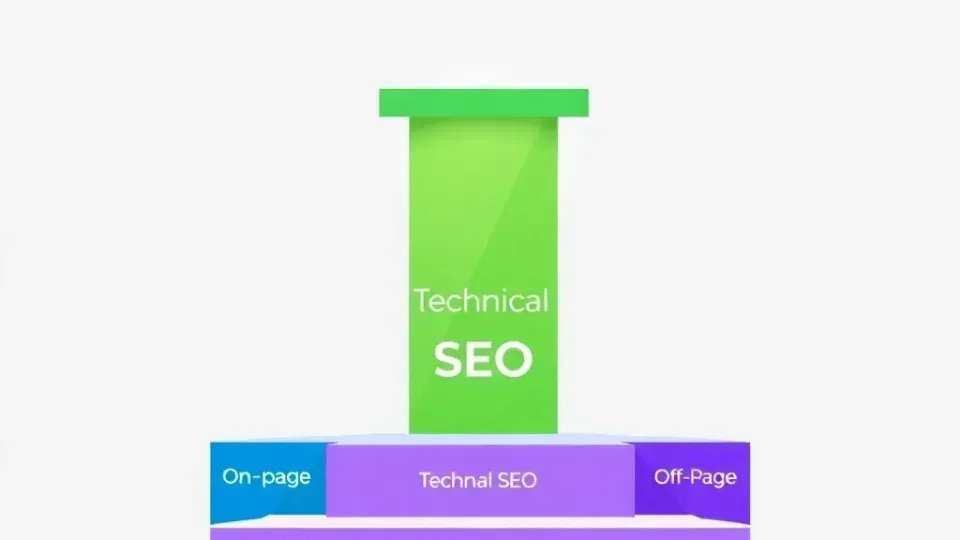
On-page SEO refers to all optimization techniques applied directly to your website's pages—content, HTML source code, and internal linking. According to analysis from Moz and other industry experts, on-page signals collectively account for approximately 25–35% of Google's ranking algorithm weight, making this category foundational for any optimization strategy.
Title Tags, Meta Descriptions, and Header Tags Explained
Title Tag: The HTML element (<title>) that specifies the title of a web page. It appears in browser tabs, SERPs, and social shares. Best practice: keep under 60 characters and include your primary keyword near the beginning.
Meta Description: A 150–160 character HTML attribute (<meta name="description">) that summarizes a page's content. While not a direct ranking factor, it heavily influences click-through rate (CTR). A well-written meta description can improve CTR by 5–10% according to multiple A/B testing studies.
Header Tags (H1–H6): HTML elements that create a hierarchical content structure. Key definitions:
| Tag | Purpose | SEO Role | |-----|---------|----------| | H1 | Primary page heading | Should contain target keyword; one per page | | H2 | Major section headings | Break content into topical sections; include secondary keywords | | H3 | Subsection headings | Add granularity within H2 sections | | H4–H6 | Nested subsections | Used for complex, detailed content |
Alt Text (Alternative Text): Descriptive text assigned to images via the alt attribute. Serves two purposes: accessibility for screen readers and image SEO. In my experience, well-optimized alt text is one of the most overlooked on-page elements—and one of the easiest wins for image search traffic.
Canonical Tag: An HTML element (<link rel="canonical">) that tells search engines which version of a URL is the "master" copy. Essential for preventing duplicate content issues when the same content is accessible via multiple URLs.
Schema Markup (Structured Data): Code added to your HTML (typically JSON-LD format) that helps search engines understand page content and generate rich results. Common types include Article, FAQPage, Product, and HowTo schemas.
Internal Linking: Hyperlinks that connect one page of your website to another page on the same domain. Strategic internal linking distributes page authority, establishes content hierarchy, and helps search engines discover new pages.
URL Slug: The portion of a URL that identifies a specific page in human-readable form (e.g., /seo-definitions). Best practice: keep slugs short, descriptive, and keyword-inclusive with hyphens separating words.
Keyword Optimization Terms You Need to Know
Primary Keyword: The main search term a page is designed to rank for. Each page should target one primary keyword to maintain clear topical focus.
Secondary Keywords: Related terms that support the primary keyword and capture additional search variations. For example, if your primary keyword is "seo definitions," secondary keywords might include "seo glossary" or "seo terms explained."
Keyword Density: The percentage of times a keyword appears relative to total word count. Important note: This metric is largely deprecated as a direct optimization target. Modern Google algorithms use semantic understanding, not keyword counting. Aim for natural usage (typically 1–2%) rather than a specific density target.
Keyword Stuffing: The practice of unnaturally repeating keywords to manipulate rankings. This is a black hat technique that violates Google's spam policies and can result in manual penalties or algorithmic demotion.
Keyword Cannibalization: When multiple pages on your site compete for the same keyword, diluting ranking potential. A common mistake I see is creating separate blog posts for "SEO definitions" and "SEO terminology" without realizing they target the same intent.
LSI Keywords (Latent Semantic Indexing): A term often used in SEO circles to describe semantically related terms. Technically, Google doesn't use LSI technology, but the concept of including contextually relevant words (e.g., "ranking," "organic traffic," "algorithm" alongside "SEO") remains valid for demonstrating topical depth.
Keyword Prominence: The placement of keywords within a page—earlier placement in titles, headings, and body text signals higher relevance. This is why SEO best practices recommend including your primary keyword in the first 100 words.
Long-Tail Keywords: Longer, more specific search phrases (typically 3+ words) with lower search volume but higher conversion intent. "Best SEO tools for small businesses" is a long-tail variation of "SEO tools." These phrases often have lower keyword difficulty and capture users further along the buyer journey.
SERP (Search Engine Results Page): The page displayed by a search engine showing ranked results for a user's query. Modern SERPs include organic results, paid ads, featured snippets, knowledge panels, People Also Ask boxes, local packs, and various rich results.
Technical SEO Definitions

Technical SEO covers the server-side and code-level optimizations that help search engines efficiently crawl, render, index, and rank your website. Without solid technical SEO foundations, even the best content may never appear in search results. For a complete walkthrough, see our technical SEO audit guide.
Crawling, Indexing, and Site Architecture Concepts
Crawling: The process by which search engine bots (like Googlebot) discover web pages by following links and requesting URLs. Think of crawling as search engines reading your website.
Crawl Budget: The number of pages a search engine bot will crawl on your site within a given time period. Larger sites (10,000+ pages) need to optimize crawl budget by eliminating low-value pages and ensuring efficient site structure.
Indexing: The process of storing and organizing crawled page content in a search engine's database. A page must be indexed to appear in search results. Being crawled does not guarantee being indexed.
Robots.txt: A text file in your website's root directory that instructs search engine crawlers which pages or sections they can and cannot access. It controls crawling, not indexing—a critical distinction many beginners miss.
XML Sitemap: A structured file (usually sitemap.xml) that lists all important URLs on your site, helping search engines discover and prioritize content for crawling. Best practice: submit your sitemap via Google Search Console.
Noindex Tag: A meta tag (<meta name="robots" content="noindex">) or HTTP header that instructs search engines not to include a specific page in their index. Useful for thank-you pages, internal search results, or staging environments.
Nofollow Attribute: An HTML attribute (rel="nofollow") applied to links that tells search engines not to pass PageRank or ranking credit through that link. Google also introduced rel="sponsored" and rel="ugc" as more specific alternatives.
Site Architecture: The hierarchical organization of a website's pages and the navigation paths that connect them. A flat, logical architecture (where important pages are within 3 clicks of the homepage) improves both user experience and crawl efficiency.
Rendering: The process by which search engines execute JavaScript and other client-side code to see the fully loaded version of a page. JavaScript-heavy sites can face rendering delays that impact indexing.
Pagination: Breaking content across multiple pages (e.g., page 1, page 2). Proper implementation uses rel="next" and rel="prev" tags—though Google has stated it no longer uses these signals, clear pagination remains an important UX and crawling consideration.
Mobile-First Indexing: Google's approach of using the mobile version of a website's content for indexing and ranking. According to Google's official documentation, mobile-first indexing applies to the vast majority of websites as of 2024, with Google confirming that over 95% of crawling is done via their mobile user agent (Googlebot Smartphone).
Hreflang Tags: HTML attributes that specify the language and geographic targeting of a page, ensuring users see the correct regional version in search results. Essential for international SEO.
HTTPS (Hypertext Transfer Protocol Secure): The encrypted version of HTTP. Google confirmed HTTPS as a ranking signal in 2014, and today virtually all top-ranking pages use it. Beyond rankings, HTTPS protects user data and builds trust.
Core Web Vitals and Performance Metrics Explained
Core Web Vitals are Google's standardized metrics measuring user experience performance. Google officially incorporated these into its ranking algorithm as part of the Page Experience update, confirming their role as ranking signals through multiple announcements and developer documentation.
| Metric | What It Measures | Good Threshold | |--------|-----------------|----------------| | LCP (Largest Contentful Paint) | Loading speed of the largest visible content element | ≤ 2.5 seconds | | INP (Interaction to Next Paint) | Responsiveness to user interactions (replaced FID in March 2024) | ≤ 200 milliseconds | | CLS (Cumulative Layout Shift) | Visual stability during page load | ≤ 0.1 |
Page Speed: The overall time it takes for a web page to fully load. While Core Web Vitals focus on specific aspects, page speed as a holistic metric affects user experience, bounce rate, and conversions. Google's PageSpeed Insights tool provides both lab and field data.
TTFB (Time to First Byte): The time between a browser requesting a page and receiving the first byte of data from the server. A diagnostic metric rather than a Core Web Vital, but TTFB issues often indicate server performance problems.
Lazy Loading: A technique that delays loading of non-critical resources (typically images and videos) until they're needed—usually when they enter the viewport. Improves initial page load speed and LCP scores.
CDN (Content Delivery Network): A geographically distributed network of servers that delivers web content from the location nearest to the user, reducing latency and improving load times.
AMP (Accelerated Mobile Pages): A web framework developed by Google for creating fast-loading mobile pages. Note: AMP is no longer required for Top Stories placement in Google Search, and many publishers have moved away from it in favor of optimizing standard pages for Core Web Vitals.
Off-Page and Link Building SEO Definitions
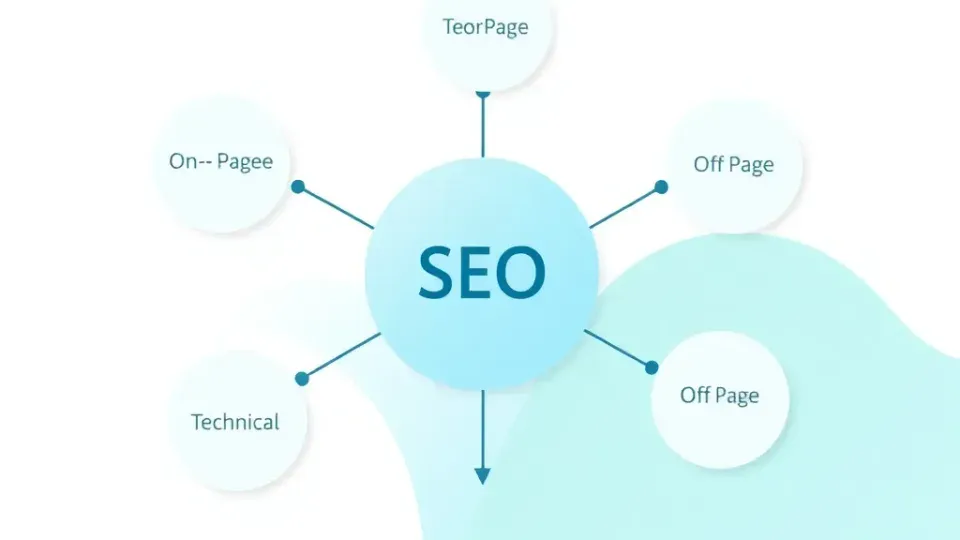
Off-page SEO encompasses all optimization activities that happen outside your website to improve its authority, relevance, and trustworthiness. Link building remains the dominant off-page tactic, though brand signals and digital PR are increasingly important.
Backlinks, Anchor Text, and Domain Authority Defined
Backlink (Inbound Link): A hyperlink on an external website pointing to your website, serving as a vote of confidence for authority and credibility. Backlinks remain one of the most heavily weighted ranking factors in Google's algorithm, with multiple correlation studies confirming that pages with more high-quality backlinks tend to rank higher.
Anchor Text: The visible, clickable text of a hyperlink. Types include:
- Exact-match: Anchor text matches the target keyword exactly (e.g., "seo definitions")
- Partial-match: Includes a variation of the target keyword (e.g., "learn seo definitions here")
- Branded: Uses the brand name (e.g., "Writora")
- Generic: Uses non-descriptive text (e.g., "click here," "learn more")
- Naked URL: The raw URL serves as the anchor (e.g., "https://example.com")
A natural backlink profile includes a diverse mix of anchor text types. Over-optimized exact-match anchors can trigger algorithmic penalties.
Domain Authority (DA): A score developed by Moz (scale of 1–100) predicting how likely a domain is to rank in search results. It's not a Google metric—it's a third-party approximation. Similar metrics include Ahrefs' Domain Rating (DR) and Semrush's Authority Score.
Page Authority (PA): Similar to Domain Authority but measured at the individual page level rather than the entire domain.
PageRank: Google's original algorithm (named after co-founder Larry Page) that assigns authority scores to web pages based on the quantity and quality of links pointing to them. While Google no longer publishes public PageRank scores, the underlying concept of link-based authority remains central to their algorithm.
Link Equity (Link Juice): The ranking value or authority passed from one page to another through hyperlinks. Not all links pass equal equity—links from high-authority, relevant sites pass more value.
Referring Domain: A unique external domain that contains at least one backlink to your site. In my experience, the number of unique referring domains is a stronger ranking signal than the total number of backlinks, since 100 links from one domain carry less weight than 100 links from 100 different domains.
DoFollow vs. NoFollow Links:
- DoFollow (default): Passes link equity and signals to search engines that the link is an endorsement
- NoFollow (
rel="nofollow"): Signals that the link should not pass equity, though Google treats nofollow as a hint rather than a directive since 2019
Link Building: The strategic practice of acquiring backlinks from other websites. For ethical approaches, see our link building best practices guide.
Digital PR: A link building strategy that involves creating newsworthy content, data studies, or resources that earn coverage and backlinks from media outlets, industry publications, and authoritative websites.
Guest Posting: Writing and publishing content on external websites, typically including a backlink to your own site. When done for genuine audience value, it's a white hat tactic; when done purely for links on low-quality sites, it violates Google's guidelines.
Link Farm: A network of websites created solely to generate artificial backlinks. A black hat practice that can result in severe penalties.
Disavow File: A text file submitted through Google Search Console that tells Google to ignore specific backlinks when assessing your site's ranking. Used to combat negative SEO or clean up toxic link profiles.
Brand Mentions (Implied Links): References to your brand name online without an actual hyperlink. Google's patents suggest that unlinked brand mentions may function as implicit authority signals, though the direct ranking impact remains debated.
Content and Keyword Strategy Terms

Content strategy and keyword research are where SEO meets user experience. Understanding these SEO terms explained in context is critical for creating content that ranks and converts. For methodology deep-dives, explore our keyword research strategies guide.
Search Intent, Keyword Difficulty, and Topic Clusters Explained
Search Intent (User Intent): The underlying goal or need behind a user's search query—whether they seek information, want to make a purchase, need navigation help, or are conducting research. Google's algorithm is increasingly sophisticated at matching results to intent, making intent alignment one of the most important ranking factors.
The four primary types of search intent:
| Intent Type | User Goal | Example Query | Best Content Format | |-------------|-----------|---------------|-------------------| | Informational | Learn something | "what is SEO" | Blog post, guide, video | | Navigational | Find a specific site | "Google Search Console login" | Landing page | | Commercial | Research before buying | "best SEO tools compared" | Comparison article, review | | Transactional | Complete an action | "buy Ahrefs subscription" | Product/pricing page |
Keyword Difficulty (KD): A metric (typically scored 0–100) estimating how hard it would be to rank on page one for a given keyword. Different tools calculate this differently—Ahrefs focuses on backlink requirements, while Semrush incorporates multiple factors. After years of working with these tools, I've found that no single KD score tells the full story; always analyze the actual SERP composition manually.
Search Volume: The estimated average number of times a keyword is searched per month. Note that these are estimates based on sampling data and can vary significantly between tools.
Topic Clusters: A content architecture model where a comprehensive pillar page covers a broad topic, linked to multiple cluster pages that address subtopics in detail. This structure signals topical authority to search engines and creates efficient internal linking.
Pillar Page: The central, comprehensive piece of content in a topic cluster. For example, this SEO glossary functions as a pillar page for the topic of SEO terminology.
Content Gap: Keywords or topics your competitors rank for that your site does not cover. Identifying content gaps reveals opportunities to expand your topical authority.
Content Pruning: The practice of auditing existing content and removing, consolidating, or updating low-performing pages. This can improve overall site quality, crawl efficiency, and the performance of remaining pages.
Semantic Search: Search engine technology that interprets the meaning and context behind queries rather than matching keywords literally. Google's advances in natural language processing (including BERT and MUM) mean that content quality, context, and topical depth matter far more than exact keyword matching.
E-E-A-T (Experience, Expertise, Authoritativeness, Trustworthiness): Google's quality rating framework used by human quality raters to assess content. While not a direct ranking algorithm, E-E-A-T principles guide Google's algorithm development and are especially critical for YMYL (Your Money or Your Life) content.
- Experience: Evidence the author has first-hand experience with the topic
- Expertise: Demonstrated depth of knowledge or credentials
- Authoritativeness: Recognition from others in the field (backlinks, citations, reputation)
- Trustworthiness: Accuracy, transparency, and safety of the content and site
YMYL (Your Money or Your Life): A Google content classification for pages that could impact a person's health, financial stability, safety, or well-being. YMYL pages are held to higher E-E-A-T standards.
Featured Snippet: A highlighted answer box that appears at the top of some SERPs (often called "Position 0"). Formatting content as concise definitions, tables, numbered lists, or direct answers increases the chance of earning featured snippets.
People Also Ask (PAA): An expandable SERP feature showing related questions and answers. Optimizing for PAA involves answering related questions concisely within your content.
Topical Authority: A site's perceived expertise on a specific subject area, built through comprehensive, interlinked content covering all facets of a topic. Sites with strong topical authority tend to rank faster for new content within their niche.
AI-Driven Optimization: The use of artificial intelligence tools to assist with content creation, keyword research, technical auditing, and performance prediction. Tools like Writora leverage AI for keyword clustering and article generation, streamlining the process of building topical authority at scale.
AI Overviews (SGE): Google's AI-generated summary answers that appear at the top of some search results. Optimizing for AI Overviews requires clear, structured, and directly answerable content—essentially the same best practices that earn featured snippets.
Analytics and Measurement SEO Definitions

Understanding measurement terms is essential for evaluating whether your SEO efforts are producing results. For a complete framework, see our guide on measuring SEO performance.
Tracking Organic Traffic, CTR, and Conversion Metrics
Organic Traffic: Website visitors who arrive through unpaid, non-advertising search engine results. This is the primary KPI for most SEO campaigns and is tracked through tools like Google Analytics, Google Search Console, and third-party platforms.
Impressions: The number of times your page appears in search results for a query, regardless of whether it's clicked. High impressions with low clicks indicate a CTR optimization opportunity—usually through improved title tags and meta descriptions.
Click-Through Rate (CTR): The percentage of impressions that result in clicks. Calculated as: (Clicks ÷ Impressions) × 100. Average organic CTR varies dramatically by position:
| SERP Position | Average CTR | |--------------|-------------| | Position 1 | ~27–31% | | Position 2 | ~15–17% | | Position 3 | ~10–12% | | Position 4–10 | ~2–8% |
Data based on aggregated CTR studies from Backlinko and Advanced Web Ranking.
Bounce Rate: The percentage of single-page sessions where a user leaves without interacting further. A high bounce rate isn't always bad—if a user finds the answer they need on the first page, that's a satisfied query. Context matters.
Dwell Time: The amount of time a user spends on your page after clicking from search results before returning to the SERP. Longer dwell time generally signals content relevance, though Google has never confirmed it as a direct ranking factor.
Conversion Rate: The percentage of visitors who complete a desired action (purchase, form submission, newsletter signup). SEO's ultimate value isn't just traffic—it's qualified traffic that converts.
Organic Keyword Rankings: The positions your pages hold in SERPs for target keywords. Track rankings over time to measure the impact of optimization efforts, but avoid obsessing over daily fluctuations—weekly or monthly trends are more meaningful.
Google Search Console (GSC): Google's free tool providing data on your site's search performance, including impressions, clicks, CTR, average position, indexing status, and technical issues. It's the single most essential SEO analytics tool and the only source of verified Google data.
Google Analytics (GA4): Google's web analytics platform tracking user behavior, traffic sources, conversions, and engagement metrics. GA4's event-based model replaced Universal Analytics in 2023.
Domain Overview: A snapshot of a website's SEO performance typically provided by third-party tools (Ahrefs, Semrush, Moz), including estimated organic traffic, number of ranking keywords, backlink profile, and domain authority.
ROI (Return on Investment) for SEO: The measurement of revenue or value generated from SEO activities compared to the cost of those activities. Unlike paid advertising, SEO ROI compounds over time—content published today continues to generate traffic for months or years.
Attribution Model: The framework used to assign credit for conversions to different marketing touchpoints. For SEO, common models include first-touch (crediting the first organic visit), last-touch (crediting the final visit before conversion), and multi-touch (distributing credit across touchpoints).
KPI (Key Performance Indicator): A measurable metric tied to a business objective. Common SEO KPIs include organic traffic growth, keyword ranking improvements, backlink acquisition rate, organic conversion rate, and revenue from organic search.
White Hat vs. Black Hat SEO: Important Distinctions
Understanding the ethical boundaries of SEO is critical—not just for compliance, but for long-term business sustainability. White hat SEO uses ethical, search engine-approved techniques to improve rankings, while black hat SEO employs manipulative tactics that violate guidelines and risk penalties.
| Practice | White Hat ✅ | Black Hat ❌ | |----------|-------------|-------------| | Content creation | Original, valuable, expert-driven content | Scraped, spun, or AI-generated content with no human oversight or quality control | | Link building | Editorial outreach, digital PR, earned links | Purchased links, link farms, PBNs (Private Blog Networks) | | Keyword usage | Natural integration matching search intent | Keyword stuffing, hidden text | | Technical tactics | Schema markup, proper canonicalization | Cloaking (showing different content to bots vs. users), doorway pages | | User experience | Fast, accessible, mobile-friendly design | Sneaky redirects, intrusive interstitials |
Grey Hat SEO: Tactics that fall in a grey area—not explicitly against guidelines but potentially risky. Examples include aggressive guest posting campaigns or acquiring links through partnerships that border on exchanges.
Manual Penalty (Manual Action): A human-reviewed penalty applied by Google's webspam team for guideline violations. Checked and managed through Google Search Console under "Security & Manual Actions."
Algorithmic Penalty: A ranking drop caused by a Google algorithm update (like Penguin for links or Panda for content quality). Unlike manual actions, these aren't explicitly flagged in Search Console—you infer them from correlation with known update dates.
Cloaking: Presenting different content to search engine crawlers than what users see. One of the most severe violations of Google's guidelines.
PBN (Private Blog Network): A network of websites owned by a single entity, used solely to build artificial backlinks to a target site. Google has become increasingly effective at detecting PBNs, and the risk of penalty far outweighs any short-term ranking gains.
Negative SEO: The practice of using black hat techniques against a competitor's website (e.g., building toxic backlinks to their domain). While Google claims its algorithms can handle most negative SEO attacks, the disavow tool exists as a safeguard.
For a comprehensive approach to sustainable optimization, review our white hat SEO techniques guide.
Deprecated vs. Current SEO Practices

One of the gaps I've noticed in competing glossaries is the failure to distinguish outdated practices from current best practices. Here's a comparison table that highlights what's changed:
| Deprecated Practice | Current Best Practice | Why It Changed | |---|---|---| | Exact-match keyword density targets (e.g., 3–5%) | Natural keyword usage with semantic variations | Google's NLP models understand context, not just exact matches | | Submitting URLs to search engines manually | Ensuring crawlability via sitemap and internal links | Search engines now discover content efficiently on their own | | Building hundreds of directory backlinks | Earning editorial links from relevant, authoritative sites | Google's Penguin algorithm penalizes low-quality link schemes | | Creating separate mobile sites (m.example.com) | Responsive design with a single URL | Mobile-first indexing requires content parity | | AMP as a requirement for mobile visibility | Optimizing standard pages for Core Web Vitals | AMP is no longer required for Top Stories or enhanced visibility | | Meta keywords tag | Ignored by all major search engines | Google confirmed it hasn't used meta keywords since 2009 | | Exact-match domains as a ranking advantage | Brand-focused domains with strong content | The EMD update reduced the boost from exact-match domains | | Writing primarily for search engines | Writing for humans with E-E-A-T principles | Helpful Content System prioritizes people-first content |
Frequently Asked Questions About SEO Definitions
What is the difference between SEO and SEM?
SEO (Search Engine Optimization) focuses exclusively on improving organic (unpaid) search visibility. SEM (Search Engine Marketing) is a broader term that encompasses both SEO and paid search advertising (PPC/pay-per-click). In practice, many marketers use "SEM" to refer specifically to paid search campaigns through platforms like Google Ads, while "SEO" refers to organic optimization. The key distinction: SEO generates "free" traffic over time through content and technical optimization, while SEM delivers immediate visibility through ad spend.
How long does it typically take to see results from SEO?
Based on industry data and case studies from Ahrefs and other research, new pages typically take 3 to 6 months to reach their ranking potential for moderately competitive keywords. Highly competitive terms can take 6 to 12 months or longer. Factors affecting timeline include domain authority, content quality, technical health, competition level, and backlink acquisition rate. In my experience, sites with established authority often see results from new content within 4–8 weeks, while newer domains face a longer ramp-up period sometimes called the "Google sandbox" effect (though Google hasn't officially confirmed this concept).
What are the most important SEO definitions for beginners to master first?
Start with these 10 foundational terms:
- Organic traffic — Understanding the goal
- Keywords — The foundation of targeting
- SERP — Where results appear
- Title tag and meta description — Your first optimization levers
- Backlinks — Why authority matters
- Search intent — Matching content to user needs
- Crawling and indexing — How search engines work
- Core Web Vitals — Performance benchmarks
- CTR (Click-Through Rate) — Measuring visibility effectiveness
- E-E-A-T — The quality framework
How often do SEO definitions and best practices change?
Core concepts like crawling, indexing, and backlinks have remained stable for decades. However, the implementation details and best practices evolve continuously. Google makes thousands of algorithm updates per year (9,000+ changes in recent years according to Google's own reporting), though only a handful are major named updates. The most significant shifts in recent years include the rise of E-E-A-T, AI-driven search features like AI Overviews, mobile-first indexing, and Core Web Vitals as ranking signals. I recommend reviewing your SEO knowledge quarterly and monitoring sources like Google Search Central Blog, Search Engine Journal, and Google's official algorithm update histories.
Is SEO still relevant in 2026?
Absolutely. Despite the emergence of AI-generated answers, social media search, and voice assistants, SEO remains one of the highest-ROI marketing channels. Organic search continues to be the primary source of website traffic across most industries. What has changed is how SEO is practiced: the emphasis has shifted toward creating genuinely valuable content, demonstrating real expertise and experience (E-E-A-T), optimizing for diverse SERP features (featured snippets, AI Overviews, People Also Ask), and ensuring excellent technical performance. The fundamentals of matching quality content to user intent through search engines have never been more relevant.
SEO Definitions Quick-Reference Checklist
Use this checklist as a practical reference when implementing SEO. Bookmark this page or save the list for quick access during your optimization workflows.
On-Page SEO Checklist
- [ ] Each page has a unique, keyword-optimized title tag (under 60 characters)
- [ ] Each page has a compelling meta description (under 160 characters)
- [ ] Content uses a logical header hierarchy (H1 → H2 → H3)
- [ ] Images include descriptive alt text
- [ ] Primary keyword appears in the first 100 words
- [ ] Internal links connect related content across the site
- [ ] URL slugs are short, descriptive, and include the target keyword
- [ ] Schema markup is implemented where appropriate (Article, FAQ, HowTo)
- [ ] Content matches the search intent of the target keyword
Technical SEO Checklist
- [ ] Site is accessible over HTTPS
- [ ] XML sitemap is submitted to Google Search Console
- [ ] Robots.txt allows crawling of important pages
- [ ] Core Web Vitals pass Google's thresholds (LCP ≤ 2.5s, INP ≤ 200ms, CLS ≤ 0.1)
- [ ] Site uses responsive design for mobile-first indexing
- [ ] No critical crawl errors in Search Console
- [ ] Canonical tags are properly set on all pages
- [ ] Page speed is optimized