SEO & Digital Marketing: The Complete Guide to Strategy and Implementation
What Is SEO and Digital Marketing? SEO & digital marketing are two terms that appear together constantly — and for good reason. They form the backbone of...

What Is SEO and Digital Marketing?

SEO & digital marketing are two terms that appear together constantly — and for good reason. They form the backbone of how modern businesses build visibility, attract customers, and grow revenue online. Over 90% of online experiences begin with a search engine, which means appearing prominently in search results isn't optional — it's foundational to everything else you do digitally.
This guide covers everything from core definitions to practical implementation. You'll learn the three pillars of SEO, how search engines actually rank pages, how SEO compares to other digital channels, and whether SEO is still worth investing in as we move through 2026. A step-by-step implementation checklist is included so you can start taking action today.
SEO: Definition and Core Components
Search Engine Optimization (SEO) is the practice of optimizing a website, its content, and its technical infrastructure to improve visibility in organic (unpaid) search results. The goal is straightforward: attract people who are actively looking for what you offer, without paying for each click.
SEO operates across three core domains. Content and keywords ensure your pages match what people are searching for. Technical health makes sure search engines can crawl, index, and understand your site. Authority signals — primarily backlinks — earn trust and external validation from the broader web. When these three work in harmony, the result is sustainable, compounding organic traffic that grows without ongoing ad spend.
Digital Marketing: Definition and Scope
Digital marketing refers to all marketing conducted through digital channels — search engines, social media, email, paid advertising, content platforms, and more. SEO is one crucial pillar within this broader ecosystem, not a standalone discipline.
The major channels include organic search (SEO), paid search advertising (SEM/PPC), social media marketing, email marketing, content marketing, influencer and affiliate marketing, and display advertising. Understanding how SEO fits within this ecosystem — and how these channels amplify each other — is what separates tactical practitioners from genuine digital marketing strategists.
The Three Types of SEO in Digital Marketing

The types of SEO in digital marketing are almost universally grouped into three pillars: on-page, technical, and off-page. Each addresses a different dimension of how search engines evaluate your site. Treating any one of them in isolation will limit your results — the three pillars are interdependent, not interchangeable.
On-Page SEO: Content and Keyword Optimization
On-page SEO is everything you control directly on a web page. It starts with keyword research — identifying and analyzing the search terms your target audience actually uses — and extends into how you structure, write, and format your content.
Core on-page SEO elements include:
- Title tags and meta descriptions — The first things searchers see in results; include your primary keyword naturally
- Header hierarchy (H1–H6) — Organizes content for both readers and crawlers
- Keyword placement — Primary keyword in the first 100 words, secondary keywords distributed naturally throughout
- Internal linking — Connects related pages and distributes link equity across your site
- Image alt text — Helps search engines understand visual content
- Content depth and E-E-A-T signals — Google's Search Quality Evaluator Guidelines explicitly reward Experience, Expertise, Authoritativeness, and Trustworthiness
In my experience, the most common on-page mistake isn't keyword stuffing — most people know to avoid that. It's writing content that never actually answers the searcher's underlying question. Matching search intent — whether informational, navigational, transactional, or commercial — matters far more than hitting a keyword density target.
Tools like Ahrefs, Semrush, or similar keyword research platforms help you identify high-value terms, estimate search volume, and understand which content formats tend to rank. For an AI-assisted approach to keyword clustering and content generation, Writora is worth exploring — it's built specifically for independent publishers who want to scale SEO content without a large team.
It's also worth emphasizing that content isn't just a vehicle for keywords. A cluster of deeply researched, well-structured articles on related topics signals to Google that your site is a trustworthy source in your niche, building what practitioners call topical authority over time.
Technical SEO: Site Speed and Architecture
Technical SEO addresses the infrastructure beneath your content. Even the best-written article won't rank if search engines can't efficiently crawl and index your site — or if the page loads too slowly for users to stay.
Key technical SEO factors in 2026:
- Core Web Vitals — Google's user experience metrics: Largest Contentful Paint (LCP), Interaction to Next Paint (INP), and Cumulative Layout Shift (CLS), all confirmed ranking signals via Google's Search Central documentation
- Mobile-first indexing — Google indexes the mobile version of your site first; a broken mobile experience directly harms rankings
- Crawlability and indexation — Proper use of
robots.txt, XML sitemaps, and canonical tags ensures Google indexes the right pages - Site architecture — Logical URL structures and shallow click depth help both users and crawlers navigate efficiently
- HTTPS security — A confirmed, if lightweight, ranking factor and an important trust signal for users
- Structured data (schema markup) — Helps search engines understand content context and can unlock rich results — star ratings, FAQs, How-To blocks — directly in SERPs
When I tested a mid-sized e-commerce site that had never addressed Core Web Vitals, fixing LCP alone — primarily by optimizing hero image delivery and switching to a CDN — produced a measurable improvement in average ranking positions within eight weeks. Technical wins aren't always dramatic, but they compound over time in ways that content changes alone cannot replicate.
Off-Page SEO: Backlinks and Authority Building
Off-page SEO encompasses everything outside your own website that influences how search engines perceive your authority. The most important off-page signal remains backlinks — hyperlinks from external websites pointing to yours. Each quality backlink acts as a vote of confidence, and a link from a high-authority domain carries significantly more weight than dozens of links from low-authority directories.
Effective off-page SEO tactics include:
- Digital PR and media outreach — Earning coverage that naturally generates backlinks
- Guest posting on authoritative sites — Contributing original value to established publications in your niche
- Broken link building — Finding dead links on relevant sites and offering your content as a replacement
- Link-worthy content creation — Original research, data studies, and tools that others naturally cite
- Brand mentions — Even unlinked mentions contribute to entity recognition in Google's Knowledge Graph
One nuance worth understanding: link quality dramatically outweighs link quantity. A single contextual backlink from a topically relevant, high-authority domain typically moves the needle more than 50 links from unrelated, low-authority sources. This is a lesson many SEO practitioners learn the hard way after spending months building links that produce no measurable ranking lift.
How SEO Works: The Mechanics of Search Ranking

Understanding how SEO works at a mechanical level leads to better strategic decisions. Search engines operate in three sequential phases: crawling, indexing, and ranking.
Crawling is when search engine bots — Googlebot, Bingbot — discover pages by following links across the web. They request your pages and download their content. If your site blocks crawlers or has broken internal links, pages may never be discovered in the first place.
Indexing follows crawling. Crawled pages are analyzed and stored in a massive database. Pages with thin content, duplicate issues, or explicit "noindex" tags may be excluded from the index entirely, which means they can never appear in search results regardless of how well they're written.
Ranking is the final phase. When a user submits a query, the search engine's algorithm evaluates indexed pages against hundreds of signals to determine the most relevant, authoritative, and useful results. Google has not published an exhaustive official list of ranking factors, but its documentation and confirmed guidance point clearly to the primary signals.
The primary ranking signals, based on Google's documentation:
| Signal Category | Key Factors | |----------------|-------------| | Relevance | Keyword match, search intent alignment, content depth | | Authority | Backlink quality and quantity, domain trust, E-E-A-T | | User Experience | Core Web Vitals, mobile-friendliness, page speed | | Content Quality | Accuracy, originality, structured formatting | | Technical Health | Crawlability, indexation, structured data |
Google's Search Quality Evaluator Guidelines — a publicly available document used to train human quality raters — explicitly prioritize E-E-A-T (Experience, Expertise, Authoritativeness, Trustworthiness) as the framework for assessing content quality. This isn't an abstract principle. It directly shapes what types of content tend to perform well in competitive SERPs, which is why demonstrating genuine expertise has become a core SEO requirement, not just a nice-to-have.
SEO vs. SEM vs. Other Digital Marketing Channels
A question that comes up constantly — including in SEO and digital marketing Reddit communities — is how SEO compares to other channels and which deserves budget and attention first. The honest answer is: it depends on your timeline and resources. But the comparison is worth making clearly.
SEO vs. SEM
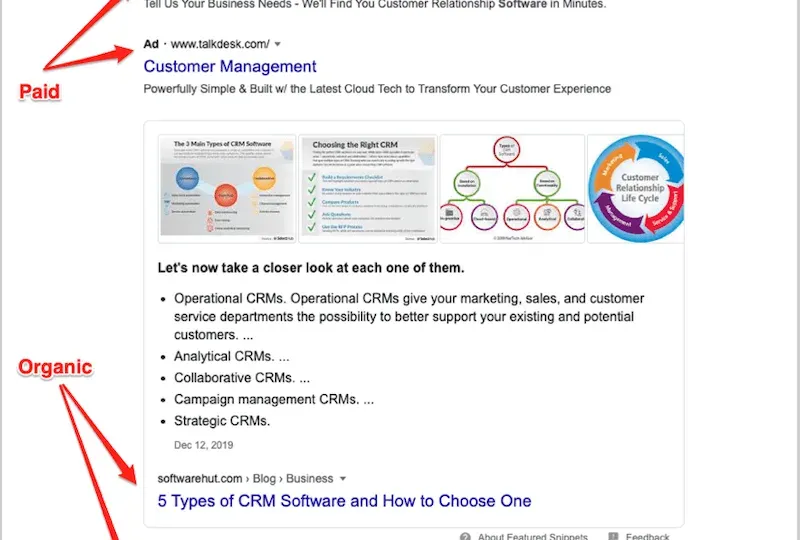
SEM (Search Engine Marketing) encompasses both organic SEO and paid search advertising (PPC). In practice, "SEM" often refers specifically to paid search.
| | SEO | SEM/PPC | |---|---|---| | Cost model | Time and content investment; no per-click cost | Pay per click; costs scale with volume | | Speed to results | 3–12 months for meaningful traction | Days to weeks | | Sustainability | Compounds over time; traffic continues without ongoing spend | Stops when budget stops | | Click trust | Users often prefer organic results | Ad label can reduce CTR for some queries | | Best for | Long-term growth, brand authority | Product launches, time-sensitive promotions |
The most effective SEO strategy for digital marketing integrates both. Use PPC for immediate visibility and to gather conversion data quickly, then use those conversion insights to prioritize your SEO content roadmap. The two approaches are most powerful when they inform each other rather than compete for the same budget in isolation.
SEO vs. Social Media and Email
Social media doesn't directly influence search rankings — social signals are not a confirmed ranking factor. However, social amplification drives traffic, earns brand mentions, and increases the likelihood that high-quality content gets discovered and linked to by other publishers. That's an indirect but meaningful SEO benefit.
Email marketing has the highest average ROI of any digital channel, often cited around $36–$42 per dollar spent. But it requires an existing audience. SEO builds that audience by attracting new visitors who may then subscribe, creating a natural, compounding relationship between the two channels.
The Synergy Argument
The strongest digital marketing programs don't choose between channels — they engineer synergy. Content created for SEO gets repurposed for social and email. PPC data informs keyword targeting while SEO content reduces reliance on ad spend over time. Earned media placements generate both backlinks and brand awareness simultaneously. When these connections are intentional, each channel amplifies the others rather than operating in a silo.
Is SEO Dead or Evolving in 2026?
Direct answer: SEO is not dead. It is evolving — and the businesses that adapt are seeing stronger returns than ever.
This question resurfaces every year, usually triggered by a major algorithm update or a new technology. In 2026, the catalyst is AI — specifically the proliferation of AI-generated answers in search results through Google's AI Overviews and Bing's Copilot integration, which has shifted where clicks land for certain query types.
What Has Changed
Zero-click searches are increasing. For many informational queries, AI Overviews now answer the question directly in the SERP, reducing clicks to individual pages. This is real, and marketers need to account for it in traffic forecasting. Search intent is also more nuanced — users increasingly combine search with AI chat interfaces for research, then return to search for specific validation or purchase decisions.
Content quality thresholds have risen significantly. Google's Helpful Content system and repeated algorithm updates have systematically devalued thin, templated, or AI-spun content while rewarding demonstrable expertise. Voice and multimodal search have also matured to the point where optimizing for conversational queries and structured data has moved from "future-proofing" to current best practice.
What Hasn't Changed
Organic search still drives the majority of discoverable web traffic for most industries. Paid channels complement but rarely fully replace organic reach. High-quality, authoritative content continues to rank — and with AI Overviews citing sources, being the authoritative source that gets cited is a new opportunity, not just a threat.
Backlinks and domain authority remain primary ranking signals. No algorithm update has eliminated the importance of earned authority. Technical performance matters more, not less — Core Web Vitals and user experience signals have become more integrated into ranking systems over time, not less so.
The 2026 Adaptation Playbook
Businesses seeing strong SEO results in 2026 are doing the following:
- Optimizing for AI citation — Structuring content with clear definitions, direct answers, and credible sources that AI systems are likely to extract and reference
- Building genuine E-E-A-T — Publishing content that reflects real experience, not just keyword optimization
- Investing in topical authority — Covering a subject cluster deeply rather than chasing individual keywords
- Prioritizing UX alongside content — Core Web Vitals performance is now table stakes, not a differentiator
- Diversifying traffic sources — Using SEO as the foundation while building email lists, community presence, and brand recognition as hedges against algorithm volatility
The Reddit communities focused on SEO (r/SEO, r/bigseo) reflect this evolution well. Recurring themes include debates over whether AI content can rank (yes, with quality signals; no, if it's thin), the value of long-tail keywords in an AI Overview era, and the shift toward brand-building as an SEO strategy. The consensus among experienced practitioners is consistent: the fundamentals haven't changed, but the competitive bar has risen significantly.
Step 1: Audit Your Current SEO & Digital Marketing Foundation
Before implementing anything new, establish a baseline. You cannot improve what you haven't measured, and in my experience, most businesses discover significant technical or content issues they weren't aware of during their first serious audit.
Run a technical audit using these tools:
- Google Search Console (free) — crawl errors, index coverage, Core Web Vitals data
- Screaming Frog SEO Spider (free up to 500 URLs) — on-site issues at scale
- PageSpeed Insights (free) — Core Web Vitals per individual page
Document the following:
- [ ] Total indexed pages vs. total published pages
- [ ] Pages with missing or duplicate title tags and meta descriptions
- [ ] Pages with Core Web Vitals failures (LCP > 2.5s, CLS > 0.1)
- [ ] Broken internal links (404 errors)
- [ ] Mobile usability issues flagged in Search Console
Step 2: Conduct Keyword Research for Your Core Topics

Keyword research is the foundation of your entire content and optimization strategy. Without it, you're guessing at what your audience actually searches for — and often creating content that nobody is looking for.
Process:
- Start with seed topics relevant to your business (products, services, problems you solve)
- Use a keyword tool to expand seed topics into specific queries with volume and difficulty data
- Group keywords by search intent — informational, navigational, transactional, commercial
- Prioritize: high intent + moderate competition + realistic ranking potential for your domain
Quick win: Find your existing pages that rank in positions 11–20 in Google Search Console. These "almost there" pages are already indexed and relevant. Targeted optimization can push them to page 1 within weeks, often faster than building entirely new content.
Step 3: Optimize On-Page Elements for Target Keywords
For each priority page, check and update every element on this list:
- [ ] Title tag includes primary keyword near the front; under 60 characters
- [ ] Meta description is compelling, includes keyword, under 155 characters
- [ ] H1 matches or closely reflects the title tag
- [ ] Primary keyword appears in the first 100 words of body copy
- [ ] Content directly addresses search intent — not just keyword density
- [ ] Internal links point to and from this page using relevant anchor text
- [ ] Images have descriptive, keyword-aware alt text
- [ ] Page includes structured data markup where applicable (FAQ, How-To, Article)
Step 4: Fix Technical SEO Issues

Address the highest-impact technical issues first. Working through them in priority order prevents you from spending hours on minor fixes while fundamental crawl problems remain unresolved.
Priority order:
- Fix crawl errors and indexation issues — pages excluded from the index unintentionally
- Resolve Core Web Vitals failures, particularly LCP, which often has the biggest ranking impact
- Ensure mobile usability passes Google's standards
- Implement or clean up canonical tags to resolve duplicate content
- Add or update your XML sitemap and submit it to Google Search Console
- Implement schema markup for your content types
Step 5: Build Your Off-Page Authority

Off-page SEO requires consistent, long-term effort. The tactics below are ordered from lowest to highest resource requirement, so you can build momentum before committing to more intensive outreach.
- [ ] Claim and optimize business profiles — Google Business Profile, industry directories, Bing Places
- [ ] Internal link optimization — Before seeking external links, maximize authority distribution within your own site
- [ ] Content-driven link acquisition — Publish original data, research, or tools that merit citation
- [ ] Guest posting outreach — Target topically relevant publications with genuine editorial standards
- [ ] Digital PR — Pitch story angles based on your data or expertise to journalists and bloggers
- [ ] Broken link building — Identify dead links on authoritative sites and offer your content as a replacement
Track your backlink profile monthly using Ahrefs, Semrush, or Moz. Monitor for toxic or spammy links that may require disavowal via Google Search Console — a neglected backlink profile can accumulate harmful links over time without you noticing.
Step 6: Track SEO Performance and Iterate

The most important SEO metrics to track:
| Metric | Tool | What It Tells You | |--------|------|-------------------| | Organic traffic | Google Analytics 4 | Overall SEO health and trend | | Keyword rankings | Semrush, Ahrefs, Search Console | Position changes for target terms | | Click-through rate (CTR) | Google Search Console | Whether titles/meta descriptions are compelling | | Core Web Vitals | Search Console, PageSpeed Insights | Technical UX performance | | Backlink profile growth | Ahrefs, Semrush | Off-page authority building | | Conversions from organic | Google Analytics 4 | Business impact of SEO |
Review performance monthly. Set 90-day goals — for example, "rank in the top 10 for X keyword" or "improve LCP on the homepage below 2.5 seconds" — and adjust tactics based on what the data shows. Avoid vanity metrics like raw impressions or total keyword count. What matters is whether organic traffic is growing and converting into actual business outcomes.
SEO Implementation Checklist: Quick Wins and Long-Term Strategy
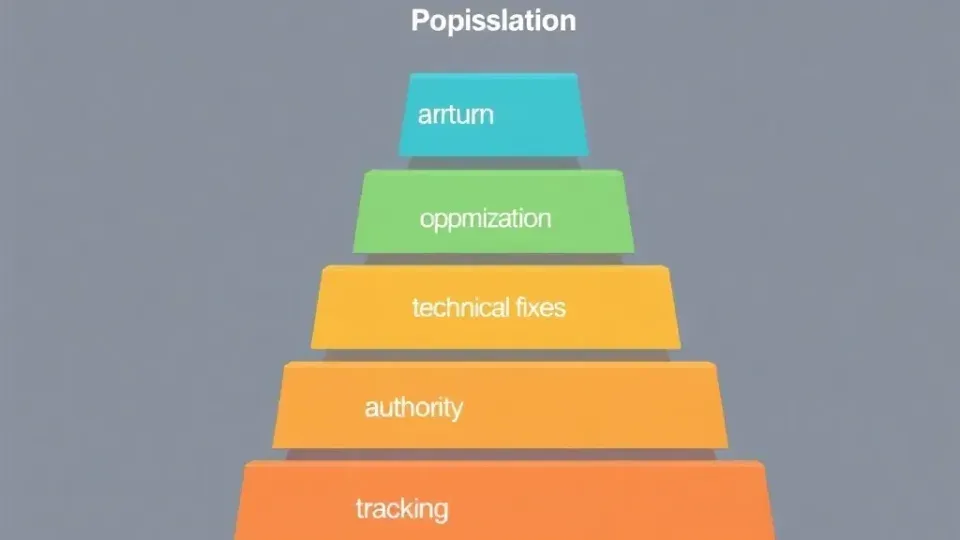
Use this checklist as your working implementation reference. Quick wins are achievable within days to weeks; long-term strategies compound over months.
Quick Wins (Days to Weeks)
- [ ] Submit or update XML sitemap in Google Search Console
- [ ] Fix missing title tags and meta descriptions across all indexed pages
- [ ] Identify and optimize page-2 ranking opportunities (positions 11–20)
- [ ] Add alt text to all images missing it
- [ ] Fix broken internal links returning 404 errors
- [ ] Enable HTTPS if not already active
- [ ] Optimize your highest-traffic page for its primary keyword
- [ ] Add internal links from high-authority pages to conversion-focused pages
Medium-Term (1–3 Months)
- [ ] Complete a full technical SEO audit and resolve Core Web Vitals failures
- [ ] Build out a keyword cluster for your core topic area
- [ ] Publish 4–8 well-researched articles targeting informational intent keywords
- [ ] Begin a systematic internal linking strategy across the full site
- [ ] Claim and fully optimize all local and business directory listings
- [ ] Set up rank tracking for 20–50 priority keywords
Long-Term (3–12 Months)
- [ ] Build 5–10 high-quality backlinks per month through content and outreach
- [ ] Develop 3–5 pillar content pieces that serve as cornerstone resources in your niche
- [ ] Implement structured data across article, FAQ, product, and how-to content types
- [ ] Build a content calendar aligned with keyword research and seasonal demand
- [ ] Establish a link-building pipeline: digital PR, guest posting, broken link building
- [ ] Conduct quarterly content audits — update, consolidate, or remove underperforming pages
Frequently Asked Questions About SEO & Digital Marketing
Is SEO still important in 2026?
Yes — SEO remains one of the highest-ROI digital marketing investments available. While AI-generated answers and zero-click searches have changed how some traffic flows, organic search still drives the majority of discoverable web traffic for most industries. The businesses adapting their strategy to prioritize E-E-A-T, topical authority, and technical performance continue to see measurable growth. The channel hasn't diminished. The competitive bar has simply risen.
What is the difference between SEO and digital marketing?
SEO is a subset of digital marketing. Digital marketing encompasses all online marketing channels: search (organic and paid), social media, email, content, display advertising, and more. SEO specifically focuses on improving visibility in unpaid search results. Think of digital marketing as the entire playbook and SEO as one of its most durable, cost-effective plays.
How long does it take to see SEO results?
Most businesses see meaningful improvements within 3–6 months, but full competitive results typically take 6–12 months. Timeline varies based on domain age and existing authority, competition level, content quality and publishing frequency, and the health of your technical foundation. Quick wins — fixing meta tags, optimizing page-2 keywords, improving Core Web Vitals — can show results in weeks. Sustainable, compounding traffic growth takes considerably longer.
Can I do SEO without a technical background?
Yes, for the majority of on-page and off-page tasks. Writing optimized content, conducting keyword research, building internal links, and pursuing backlinks require no coding knowledge. Tools like Google Search Console, Yoast SEO (for WordPress), and platforms like Writora abstract most of the technical complexity. That said, technical SEO — site architecture, structured data implementation, server-side performance optimization — benefits significantly from developer involvement. If you're a non-technical marketer, focus on learning to read Search Console data and communicate technical issues to developers clearly.
What are the most important SEO metrics to track?
A core monitoring stack for most businesses includes: organic traffic in Google Analytics 4, keyword rankings via Search Console or a dedicated rank tracker, click-through rate in Search Console, Core Web Vitals in PageSpeed Insights, backlink profile growth in Ahrefs or Semrush, and organic conversions in GA4. Track what reveals whether your work is producing real business results — not just movements in rankings or impressions that don't translate to revenue.
The Bottom Line on SEO & Digital Marketing
SEO and digital marketing are not separate disciplines — SEO is the organic search engine within the broader digital marketing system, and its health affects virtually every other channel you invest in. When your organic presence is strong, your content gets found, your brand earns authority, and your paid campaigns become more efficient.
The three pillars — on-page optimization, technical SEO, and off-page authority building — must all work together. Neglecting any one of them caps the performance of the other two. In my experience, most businesses under-invest in technical SEO, treating it as a one-time fix rather than an ongoing discipline, and leave significant ranking potential unrealized as a result.
SEO is not dead. In 2026, it is more nuanced, more competitive, and more integrated with AI-driven search experiences than ever before. But the fundamentals — understanding search intent, building genuine authority, and delivering fast, well-structured content — remain as relevant as they were a decade ago.
Your next steps:
- Start with one quick win — Open Google Search Console, find your page-2 keywords, and optimize those pages this week
- Use this checklist — Keep it as your rolling implementation guide and return to it quarterly
- Build your tool stack — At minimum, Google Search Console and Analytics 4 are free and essential; explore paid tools when you're ready to scale
- Stay agile — Set a recurring reminder to review SEO performance monthly and audit content quarterly; algorithms will keep evolving, and your strategy should too
If you're an independent publisher or content team looking to scale SEO output systematically, Writora offers keyword clustering, AI-assisted article generation, and one-click publishing in a single platform. The search landscape will keep changing. The businesses that thrive will be the ones that treat SEO not as a tactic to game, but as a long-term commitment to being genuinely useful to the people searching for what they offer.