SEO for Professionals: Essential Strategies and Tools in 2026
What Is SEO for Professionals? SEO for professionals is the strategic application of search optimization to achieve measurable business outcomes—from org...

What Is SEO for Professionals?
SEO for professionals is the strategic application of search optimization to achieve measurable business outcomes—from organic traffic growth to lead generation and revenue. Unlike general SEO best practices aimed at beginners, professional SEO strategies demand a deeper understanding of competitive landscapes, technical infrastructure, algorithm behavior, and ROI justification.
If you're a marketing director, business owner, or C-suite executive evaluating whether to invest in SEO, this guide bridges the gap between foundational knowledge and strategic decision-making. We'll cover advanced techniques, hiring frameworks, ROI metrics, and 2026-specific trends that separate professional-grade SEO from commodity approaches.
How Professional SEO Differs from General Best Practices
General SEO guidance focuses on basics: optimize your title tags, write good content, build a few backlinks. SEO for business professionals goes much further. It demands competitive analysis at scale, technical audits for enterprise websites, content strategy tied to revenue goals, and continuous measurement against business KPIs.
In my experience working with B2B SaaS companies and established brands, the difference comes down to intent alignment. Professionals map SEO to specific business outcomes: qualified leads in sales pipelines, improved customer acquisition cost (CAC), or revenue-per-visitor. Beginners often focus on vanity metrics like total traffic or ranking position without connecting those metrics to business value.
Professional-grade SEO also accounts for algorithm sophistication in 2026. Search engines now reward advanced SEO techniques like topical authority signaling, entity-focused content, Core Web Vitals optimization, and AI-aligned content depth. Professionals must stay ahead of these shifts and implement them systematically across large websites or competitive niches.
Why Businesses Invest in Professional SEO
Companies invest in professional SEO because the ROI justifies the spend. For high-value industries—legal services, financial advisory, B2B SaaS, healthcare—organic search generates qualified traffic with lower customer acquisition costs than paid advertising.
Consider this: a mid-market B2B SaaS company investing $50,000 annually in professional SEO might generate an additional $500,000 to $750,000 in annual revenue within 18 months, depending on conversion rates and deal size. That's a 10:1 to 15:1 return. By contrast, paid search (PPC) requires continuous spend to maintain visibility; organic search compounds over time.
Businesses also invest in professional SEO to:
- Build defensible competitive moats — organic visibility is harder for competitors to replicate than paid positioning
- Reduce long-term customer acquisition costs — organic traffic scales without per-click fees
- Establish thought leadership and authority — topical dominance signals market expertise
- Improve customer lifetime value — organic visitors often have higher intent and lower churn
Is SEO Dead or Evolving in 2026?

SEO is not dead in 2026; it is evolving. The question itself reflects confusion between "SEO is changing" (true) and "SEO no longer works" (false).
Search behavior has shifted. Generative AI, including Google's own Search Generative Experience (SGE), now appears alongside traditional links in results. Users increasingly ask questions conversationally rather than typing keywords. Artificial intelligence is reshaping how Google crawls, indexes, and ranks content.
But here's what matters for professionals: businesses still need to be found in search, and SEO remains the primary mechanism for organic visibility. The strategies have evolved, but the discipline persists.
The Role of AI and Generative Search in Modern SEO
Google's integration of generative AI results into search (SGE and related features) has fundamentally changed how professionals approach SEO strategy. When Google synthesizes answers from multiple sources into an AI-generated summary, keyword rankings matter less than being cited as a source in that summary.
This shift favors professionals who:
- Create authoritative, deeply researched content — Google's AI pulls from sources it deems trustworthy; generic, thin content doesn't qualify
- Establish topical authority — the AI model learns that your site is the authority on a specific topic area and preferentially cites you
- Optimize for entity recognition — search engines now index entities (people, brands, concepts) and relationships between them; content that clearly defines and links entities ranks better
- Prioritize source attribution — being cited by Google's AI has become as valuable as ranking #1 in traditional results
In my experience consulting with agencies on this transition, the most successful teams pivoted from keyword-centric to source authority-centric strategies. They built content hubs (topic clusters) that establish depth and credibility rather than chasing individual keyword rankings.
The professional SEO landscape in 2026 rewards those who combine keyword research rigor with AI-awareness. You still need to target high-intent keywords, but you must also create content worth citing—original research, expert insights, comprehensive guides, or unique data analysis.
The Four Pillars of Professional SEO
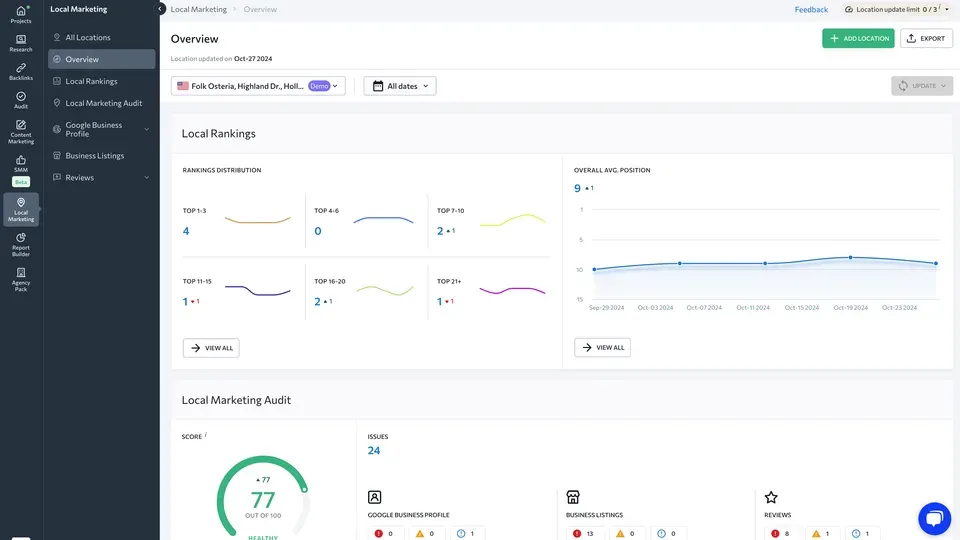
Professional SEO rests on four interconnected pillars. Neglect any one, and your strategy will underperform. Master all four, and you build a defensible, scalable organic engine.
Technical SEO for Enterprise-Scale Optimization
Technical SEO is the practice of optimizing website infrastructure, server performance, crawlability, and indexation to help search engines understand and rank content. For professionals, this is non-negotiable.
Technical SEO includes:
- Site architecture and crawlability — ensuring Google can efficiently crawl and index all important pages without hitting resource bottlenecks
- Core Web Vitals — optimizing Largest Contentful Paint (LCP), Cumulative Layout Shift (CLS), and First Input Delay (FID) to meet Google's page experience standards
- Structured data and schema markup — implementing JSON-LD schema to help search engines understand content types, entities, and relationships
- Mobile optimization — ensuring full functionality and fast performance on mobile devices (Google's primary ranking index)
- HTTPS, SSL certificates, and security — basic trust signals that Google rewards
- XML sitemaps and robots.txt — guiding search engine crawlers to important content while excluding crawl waste
A common mistake I see is businesses treating technical SEO as a one-time audit. In reality, technical debt accumulates. Website migrations, new features, and plugin conflicts introduce crawl inefficiencies and ranking losses. Professionals implement ongoing technical monitoring using tools like Google Search Console, Screaming Frog, and Botify.
For large enterprises, technical SEO directly impacts crawl budget. If your site has structural problems, Google allocates less crawl capacity to new or updated content. The payoff from technical excellence is measurable: faster indexation, improved rankings, and more efficient resource allocation.
On-Page SEO and Content Strategy
On-Page SEO is optimization of individual web pages including title tags, meta descriptions, header structure, keyword placement, content quality, and user experience signals. It's the most directly controllable SEO lever professionals have.
Professional on-page SEO strategy includes:
- Title tags and meta descriptions — clear, keyword-inclusive, written for click-through rate from SERPs (aim for 50-60 characters for titles, 150-160 for descriptions)
- Header hierarchy (H1, H2, H3) — organizing content logically while signaling topic structure to search engines
- Keyword placement — targeting primary and secondary keywords naturally in the first 100 words, headers, and body content (avoid keyword stuffing)
- Content depth and topical coverage — ensuring content comprehensively addresses search intent and covers related subtopics
- Internal linking strategy — linking to related content using descriptive anchor text to distribute authority and guide crawlers
The biggest on-page mistake I see is writing for search engines rather than humans. Google's ranking systems now reward content that genuinely satisfies user intent. If your content is stuffed with keywords but doesn't answer the question, rankings will stagnate or decline.
In 2026, search intent alignment is critical. When optimizing for a target keyword, you must first understand why people search for it. Are they looking to learn? Buy? Compare? Find local services? Your content structure and messaging must match that intent precisely. Title tags and headers should mirror the language users employ in search queries.
Off-Page SEO and Link Building
Off-Page SEO is building authority and relevance through external signals, primarily backlinks, brand mentions, and social proof. It's the pillar professionals find most challenging because it requires outreach, relationship-building, and creative thinking beyond their own website.
Professional link-building strategies include:
- Earning links through content — creating original research, comprehensive guides, or tools worth linking to
- Relationship and PR outreach — pitching journalists, bloggers, and industry influencers to generate coverage and backlinks
- Digital PR and brand mentions — securing mentions in industry publications, analyst reports, and authority sites
- Guest posting and contributor content — writing articles on authoritative sites with a relevant link back to your site
- Broken link building — finding broken links on authority sites, offering a better replacement from your site
- Competitor link analysis — identifying where competitors are getting links and pursuing similar opportunities
High-quality backlinks from authoritative, relevant domains carry significant ranking weight. But Google has become sophisticated at filtering artificial links. Bulk link-buying, private blog networks (PBNs), and manipulative link schemes now trigger manual penalties or algorithmic devaluation.
The professional approach to link-building is patient and strategic. You identify 20-50 high-value link targets quarterly and pursue them through genuine relationship-building or exceptional content. Quality beats quantity: 5 links from authoritative industry publications outweigh 100 links from low-authority directories.
Content Strategy and Topic Clustering
Content Clustering is organizing content into pillar pages (broad topics) and cluster pages (related subtopics) to establish topical authority and improve internal linking. This is the most modern of the four pillars and increasingly critical in 2026.
The logic is straightforward: search engines reward sites that comprehensively cover a topic area. If you write one article about "technical SEO" but nothing else on the topic, Google learns less about your expertise. But if you have a pillar page on "technical SEO" linked to a cluster of 20-30 related articles (Core Web Vitals, site speed, structured data, crawlability, etc.), you signal authoritative, comprehensive coverage.
Professional content clustering involves:
- Pillar page creation — broad, evergreen pages covering the main topic (e.g., "Technical SEO: A Complete Guide for Professionals")
- Cluster content production — writing 15-50 related subtopic articles targeting long-tail keywords and semantic variations
- Strategic internal linking — linking cluster pages back to the pillar page and cross-linking between related clusters
- Topical silo structure — organizing URL architecture and navigation to reflect topic relationships
In my experience, businesses that implement content clustering see 30-50% improvement in rankings for target topic areas within 6-12 months. The SEO benefit compounds as the cluster grows because each new article reinforces topical authority and creates new entry points to the pillar topic.
This strategy also improves user experience: visitors can discover related content without leaving your site, reducing bounce rate and increasing time-on-site—signals Google rewards.
Is Paying Someone to Do SEO Worth It?

The short answer: for most businesses, professional SEO delivers positive ROI within 6–12 months. But the decision depends on your industry competitiveness, in-house expertise, budget, and timeline.
Cost-Benefit Analysis and ROI Metrics
Before investing in professional SEO, calculate expected ROI. Here's the framework:
Step 1: Estimate current organic revenue. How many customers came from organic search last year? What's their average deal size or lifetime value?
Step 2: Project improvement potential. In your industry, what's a realistic organic traffic increase? If competitors rank for 500 keywords and you rank for 50, a 300-400% improvement might be realistic over 18 months.
Step 3: Calculate revenue impact. If a 300% traffic increase translates to a 10% conversion improvement (more qualified traffic), what's the incremental revenue?
Step 4: Subtract SEO investment cost. Professional SEO ranges from $3,000-$10,000/month for agencies to $50,000-$150,000+/year for in-house specialists. Calculate your payback period.
Example: A B2B SaaS company with $500K annual revenue from organic search invests $80K/year in professional SEO. Within 18 months, they increase organic revenue to $1.2M (a 140% increase). Net gain: $620K—an 775% ROI on the SEO investment. Payback period: 1.5 months.
For high-value industries (legal, finance, healthcare, B2B SaaS), 300–500% ROI is common. Lower-value industries or highly saturated niches may see 100–200% ROI but still justify investment.
Professional ROI metrics to track:
- Organic traffic growth — month-over-month and year-over-year improvements
- Keyword rankings — number of tracked keywords ranking in top 10, top 5, position 1
- Conversion rate from organic — organic traffic divided by organic leads or sales
- Cost-per-acquisition (CPA) from organic — total SEO investment divided by new customers from organic
- Customer lifetime value (LTV) from organic — total revenue from organic customers divided by number of organic customers
- Crawl budget efficiency — indexed pages divided by crawl rate (critical for large sites)
- Core Web Vitals scores — percentage of pages meeting Google's good threshold
DIY SEO vs. Hiring Freelancers vs. Agencies vs. In-House Teams
Each path has tradeoffs. Here's the decision matrix:
DIY SEO
Pros: No external cost; full control; learning opportunity; good for small sites or entry-level optimization
Cons: Time-intensive; limited expertise; misses competitive opportunities; hard to scale; high opportunity cost
Best for: Small businesses with <$1M annual revenue, founders willing to learn, non-competitive niches, companies with available in-house time
Freelancers
Pros: Lower cost than agencies ($1,500–$5,000/month); flexible; relationship-driven; can specialize in specific areas
Cons: Quality varies wildly; limited accountability; potential red flags (black-hat tactics, overpromising); difficulty scaling; less robust reporting
Best for: Small-to-medium businesses; supplementing in-house teams; specific project work; budget-constrained teams
Agencies
Pros: Full-service (strategy, execution, reporting); established processes; accountability; diverse expertise; scalability
Cons: Higher cost ($5,000–$20,000+/month); less personal; slower decision-making; potential for one-size-fits-all approach
Best for: Mid-market to enterprise companies; complex competitive environments; need for multiple expertise areas; companies with limited in-house resources
In-House Specialist
Pros: Deep company knowledge; strategic continuity; full alignment with business goals; cost-effective at scale ($60,000–$120,000/year salary)
Cons: Hiring and onboarding challenge; expertise gaps in emerging areas; dependency on one person; vacation/turnover risk
Best for: Enterprise companies; companies with >$10M revenue from organic; long-term SEO commitment; industries where SEO is core to strategy
Hybrid Approach (Most Common)
Many professionals use a hybrid: in-house SEO specialist handles strategy and content oversight, paired with an agency for technical audits and link-building, or freelancers for content production. This balances expertise, cost, and control.
Essential Tools and Platforms for Professional SEO

Professional-grade SEO requires robust tooling. Here are the category leaders:
Keyword Research and Competitive Analysis
- Ahrefs — comprehensive competitive analysis, backlink research, keyword difficulty assessment ($99-$999/month; industry standard for agencies)
- Semrush — all-in-one platform with site audits, PPC insights, content gap analysis ($120-$1,200/month)
- Moz Pro — keyword research, rank tracking, site audits ($99-$599/month; strong in SMB market)
Technical SEO Auditing
- Screaming Frog — crawls your entire site to identify technical issues, broken links, duplicate content ($259/year; desktop application)
- Google Search Console — free, essential for indexation monitoring, manual action alerts, Core Web Vitals data
- Botify — enterprise-level crawl analytics and log file analysis ($500-$5,000+/month; for very large sites)
Content Optimization and Clustering
- Writora — AI-driven keyword clustering, content generation, and one-click publishing for SEO professionals building content clusters at scale (Free trial at https://www.writora.online/)
- Clearscope — content brief generation based on top-ranking articles and semantic analysis
- MarketMuse — content planning and gap analysis at enterprise scale
Rank Tracking and Monitoring
- Google Search Console — free rank tracking for your own site
- Rank Tracker — advanced rank tracking, competitor monitoring, local rank tracking ($25-$250/month)
- SEMrush Rank Tracker — included in Semrush suite
Link Building and Outreach
- Ahrefs Site Explorer — identify backlink opportunities, competitor links
- Pitchbox — automated outreach platform for guest posting and link-building campaigns
- BuzzStream — relationship management for influencer outreach and link-building
Analytics and ROI Measurement
- Google Analytics 4 — free customer journey and conversion tracking (GA4 setup is essential for attributing revenue to organic)
- HubSpot — CRM and marketing automation that ties organic traffic to pipeline and revenue
A common mistake I see is professionals overwhelming themselves with too many tools. Start with Google Search Console, one competitive analysis tool (Ahrefs or Semrush), and one rank tracker. Add specialized tools as needs emerge.
For content clustering specifically, Writora stands out because it integrates keyword clustering, AI content generation, and publishing—automating the repetitive parts of cluster execution so your team can focus on strategy and quality control.
How to Build or Validate Professional SEO Expertise

If you're hiring an SEO professional or evaluating your own expertise, credentials and track record matter.
Certifications and Credentials for SEO Professionals
Industry-recognized certifications that validate SEO expertise:
- Google Analytics Certification (IQ) — foundational analytics knowledge; quick to obtain but doesn't deep-dive into SEO strategy
- Google Ads Certification — useful for paid search professionals but not specifically SEO
- HubSpot Inbound Certification — covers inbound methodology including SEO; respected by agencies
- Moz SEO Essentials Certification — comprehensive SEO training from Moz; highly regarded in the industry
- Yoast SEO Certification — WordPress-focused SEO; good for publishers and agencies managing WordPress sites
- SEMrush Academy Certifications — multiple courses covering technical SEO, content marketing, competitive analysis
In my experience, certifications are a necessary but insufficient signal. A professional with a Moz certification and zero case studies is less valuable than a self-taught professional with documented success stories. Look for certifications combined with portfolio evidence.
Evaluating an SEO Professional's Track Record
When vetting an SEO professional or agency, ask for case studies that demonstrate:
- Quantified results — "increased organic traffic 150% in 12 months" beats "improved rankings"
- Timeline transparency — realistic expectation-setting (avoid anyone promising top-10 rankings in 30 days)
- Industry relevance — prior work in your industry or competitive vertical
- Technical depth — case studies should mention technical improvements, not just "wrote good content"
- ROI-focused thinking — evidence they tracked business metrics (leads, revenue), not just traffic or rankings
Red flags:
- Guarantees of #1 rankings (impossible; Google doesn't allow external SEO guarantees)
- Excessive promises ("triple your organic traffic in 90 days")
- Black-hat tactics (private blog networks, keyword stuffing, buying links)
- Poor communication or opacity about strategy
- No portfolio or case studies
Advanced SEO Strategies for Competitive Markets

In saturated competitive niches, basic SEO tactics are table-stakes. Professionals need differentiation strategies.
Topical Authority and Entity-Focused Optimization
In 2026, Google's entity-recognition systems have matured. The search engine now understands entities (brands, people, concepts, products) and relationships between them. Professional SEO in competitive markets requires building entity authority.
Instead of targeting individual keywords, professionals build comprehensive entity profiles: your brand, your expertise areas, your team, your products. This is done through:
- Structured data and schema markup — marking up your content with Schema.org vocabulary so Google understands entities and relationships
- Author authority signals — building individual author profiles with byline, bio, credentials, and topical focus
- Topic hub authority — dominating entire topic areas (e.g., "technical SEO expert" or "enterprise CMS strategies")
A B2B SaaS company in the competitive project management space might build topical authority around "remote team collaboration," creating a content hub of 50+ articles on that specific topic area. This signals to Google that the company is a specialized authority, not a generalist. Higher CTR, better rankings, and more qualified traffic follow.
Competitive Differentiation Through Content Depth
In crowded markets, outranking competitors requires better content. "Better" means:
- Original research and data — conducting surveys, analyzing datasets, publishing exclusive insights competitors can't replicate
- Expert interviews and perspectives — bringing first-hand expertise and viewpoints to add credibility
- Comprehensive coverage — writing 3,000-5,000+ word definitive guides instead of 800-word overviews
- Visual assets — including custom charts, infographics, or interactive tools competitors haven't created
The ROI of this approach: content that 50 other sites link to and cite as authoritative. When Moz publishes a 10,000-word SEO guide backed by original research, sites link to it for years. That's not an accident; it's strategic content depth.
AI-Aware Content Optimization
As generative search results become more prevalent, professionals must optimize for being cited by AI. This means:
- Clarifying source information — stating who wrote the content, with what credentials, and when (recency matters to AI systems)
- Defining entities clearly — using schema markup to define concepts, relationships, and entities
- Providing data and evidence — original research, statistics, and findings that AI prefers over opinion
- Ensuring accuracy and expertise — AI systems learn to trust sources with consistent accuracy; missteps damage authority
FAQ: Common SEO Questions for Professionals

Is SEO dead in 2026 or is it still worth the investment?
SEO is not dead; it is evolving. Yes, generative AI has changed how results appear and how professionals must approach search optimization. However, businesses still rely on SEO to drive qualified, low-cost organic traffic. The shift from keyword-centric to authority-centric strategies is challenging but creates opportunity for professionals who adapt. Investment in SEO remains justified for most industries—especially B2B SaaS, healthcare, legal, and finance.
How long does it take to see ROI from professional SEO efforts?
Typical timeline: 3-6 months for early wins (initial keyword improvements and traffic growth), 6-12 months for meaningful revenue attribution. Highly competitive industries may require 12-18 months to see significant organic traffic improvement. ROI depends on baseline position, competition level, and budget. A site already ranking on page 2 might see results faster than a new site starting from zero.
What certifications should I look for in an SEO professional?
Look for Google Analytics Certification, HubSpot Inbound Certification, or Moz SEO Essentials Certification. Certifications alone aren't sufficient; prioritize professionals with case studies showing measurable business results. Ask about their experience in your industry, their approach to SEO strategy, and their track record with technical SEO implementation—not just content.
Is it better to hire an in-house SEO expert, freelancer, or agency?
This depends on your company size and SEO maturity. Small businesses (<$2M revenue) often start with freelancers or DIY. Mid-market companies benefit from a hybrid: an in-house SEO specialist managing strategy paired with an agency for technical audits and specialized services. Enterprise companies typically need full in-house teams to manage large-scale optimization. Agencies excel at scale and expertise breadth; in-house teams excel at continuity and strategic alignment.
What are the top 5 metrics professionals should track to measure SEO success?
- Organic traffic growth — month-over-month and YoY improvement
- Keyword rankings — number of keywords in top 10 and top 3, particularly high-intent commercial keywords
- Organic conversion rate — organic visitors divided by organic leads or customers
- Cost-per-acquisition from organic — total SEO investment divided by new customers acquired from organic search
- Revenue attributed to organic search — tracked through GA4 and CRM integration to connect organic visitors to closed deals
Implementing Professional SEO: A Quick Checklist
To assess your current SEO maturity and next steps:
- [ ] Technical foundation — site is crawlable, mobile-optimized, Core Web Vitals are good (75+)
- [ ] Keyword research — documented target keywords with search volume and competitive difficulty assessed
- [ ] Content strategy — content clustered around pillar topics; internal linking strategy mapped
- [ ] Tracking infrastructure — GA4 installed, UTM tagging standardized, revenue attribution functional
- [ ] Competitive baseline — competitive sites analyzed; gap opportunities identified
- [ ] Team or vendor — decision made on DIY vs. freelancer vs. agency vs. in-house hire
- [ ] Quarterly review process — KPIs defined; monthly reporting and strategy adjustment cycle established
Conclusion
SEO for professionals is a strategic, long-term investment with quantifiable ROI when executed with technical rigor, competitive intelligence, and business alignment. In 2026, the landscape has evolved—generative search, AI-powered insights, and topical authority now define success—but the fundamentals persist: professionals who understand search intent, build authoritative content, optimize technical infrastructure, and measure business impact continue to see significant organic growth.
The decision to invest in professional SEO strategies is not binary. It's a matter of timing, competitive position, and budget allocation. High-value industries and mid-to-large organizations see ROI within 6-18 months. Early-stage or low-value-per-customer businesses may need longer payoff periods but can still justify investment through long-term organic moats.
Start by auditing your current SEO maturity against the four pillars: technical SEO, on-page optimization, off-page authority, and content clustering. Identify your largest gap. Then decide: do you have the in-house expertise to close it, or do you need external support? If external, are you building an exploratory relationship with a freelancer, scaling with an agency, or hiring a specialist?
Advanced SEO techniques—topical authority, entity optimization, AI-aware content—are no longer optional for competitive markets. Professionals who master these strategies and combine them with solid fundamentals will build defensible, scalable organic engines that compound over years.
Ready to assess your SEO strategy? Download our Professional SEO Implementation Checklist (PDF) and start with a technical audit. If you're building content clusters or scaling optimization across multiple topics, tools like Writora automate keyword clustering and content generation—freeing your team to focus on strategy and quality control. Try it free at https://www.writora.online/.
The 2026 SEO landscape rewards professionals who move fast, adapt to algorithm changes, and prioritize business outcomes over vanity metrics. Your competition isn't standing still. Neither should you.