SEO for Women: Build Authority & Drive Traffic to Your Business
SEO (Search Engine Optimization) is the practice of optimizing your website's content, structure, and authority so it ranks higher in organic search resu...

SEO (Search Engine Optimization) is the practice of optimizing your website's content, structure, and authority so it ranks higher in organic search results for the keywords your customers actually use. For women seo isn't just a technical exercise—it's a proven pathway to compete with larger brands, build credibility, and generate revenue without depending on paid ads. Whether you're a solopreneur launching your first online store, a marketer navigating career growth, or a founder scaling a team, SEO gives you compounding visibility that works around the clock.
This guide covers everything you need to get started and level up: SEO fundamentals with practical implementation steps, the thriving communities and career pathways available to women in tech SEO, niche applications for industries like fashion and e-commerce, and a quick-start checklist you can apply to your site today. Let's build your search authority from the ground up.
What Is SEO for Women—and Why Does It Matter?

SEO helps women-owned businesses grow online by driving qualified, intent-driven traffic to their websites without the ongoing cost of paid advertising. When someone searches "sustainable jewelry brand" or "business coach for startups," SEO determines which websites appear at the top. Ranking well means more clicks, more leads, and more revenue—organically.
The reason this conversation matters specifically for women is twofold: women-led businesses are growing faster than ever, yet women remain underrepresented in the SEO and digital marketing industry itself. According to diversity surveys conducted within the search marketing community, women hold fewer senior SEO roles and are paid less on average than male counterparts. Closing this gap starts with access to knowledge, mentorship, and community—all of which this guide addresses.
SEO as a Business Growth Tool for Women Entrepreneurs
SEO for women entrepreneurs delivers a measurable return on investment that few other channels can match. Research from BrightEdge has consistently shown that organic search drives over 50% of all website traffic across industries. For small businesses operating on lean marketing budgets, that's transformative.
In my experience working with women-led brands, the businesses that invest in SEO early see three key benefits:
- Lower customer acquisition cost — Organic traffic doesn't require per-click spending, unlike Google Ads or Meta campaigns.
- Compounding returns — A well-optimized blog post or product page can generate traffic for years, not just the duration of an ad campaign.
- Credibility and trust — Ranking on page one signals authority to potential customers, especially when combined with strong E-E-A-T (Experience, Expertise, Authoritativeness, Trustworthiness) signals that Google's quality framework rewards.
Is SEO Still Relevant in 2026?
SEO remains a core digital strategy in 2026. While AI-powered search features (like Google's AI Overviews), social media discovery, and paid ads all play important roles, SEO continues to deliver qualified, intent-driven traffic that converts at higher rates than most channels.
What has evolved is how SEO works:
- AI search summaries now pull content from authoritative pages, making structured, well-sourced content more important than ever.
- Voice search continues to grow, rewarding conversational, question-based content.
- E-E-A-T signals carry more weight—Google prioritizes content written by people with genuine experience and expertise.
- Zero-click searches have increased, but businesses that optimize for featured snippets and direct answers still capture brand awareness and traffic.
The fundamentals of matching content to user intent remain unchanged. If anything, the rise of AI search makes high-quality, human-authored SEO content more valuable because AI systems preferentially cite authoritative, well-structured sources.
SEO Fundamentals: A Beginner's Breakdown
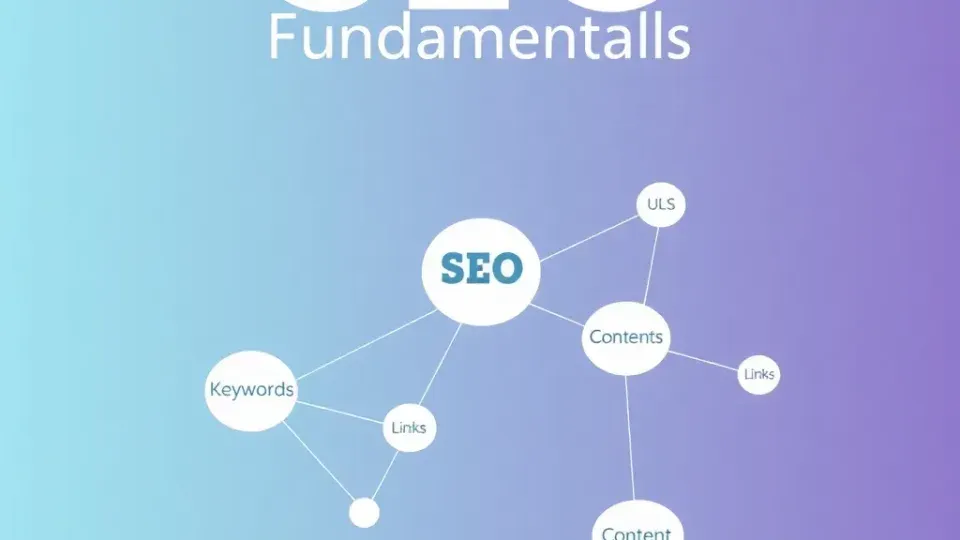
You don't need a computer science degree to learn SEO. The core concepts are straightforward, and the tools available today make implementation accessible to anyone willing to invest consistent effort.
Keyword Research: Finding What Your Audience Searches For
Keyword research is the process of identifying the exact search terms your target audience types into Google, then using that data to shape your content strategy. It's the foundation of every successful SEO effort.
Here's a practical process you can follow today:
- Brainstorm seed keywords — List 10-15 terms related to your business. If you're a wellness coach, examples might include "stress management techniques," "wellness coaching for women," or "online health coach."
- Use free tools to expand your list — Google Search Console (completely free), Ubersuggest's free tier, and Google's "People Also Ask" section all reveal what your audience is searching for. For a more streamlined workflow, platforms like Writora offer keyword clustering that groups related terms automatically, saving hours of manual organization.
- Evaluate search volume and competition — Focus on keywords with decent monthly search volume (100-1,000 for small businesses) and low to medium competition. Long-tail keywords like "affordable wellness coaching for busy moms" are typically easier to rank for than broad terms.
- Map keywords to content — Assign one primary keyword per page or blog post. This prevents cannibalization (multiple pages competing for the same term).
For a deeper dive into tools and strategy, check out our keyword research for beginners guide.
On-Page SEO Essentials for Your Website
On-page SEO refers to the optimizations you make directly on your web pages. These are the elements you have full control over:
- Title tags — Keep them under 60 characters and include your primary keyword near the beginning. Example: "Sustainable Jewelry | Handmade Ethical Rings & Necklaces."
- Meta descriptions — Write compelling 150-160 character summaries that include your keyword and a reason to click.
- Header structure — Use H1 for your page title (one per page), H2 for main sections, and H3 for subsections. This hierarchy helps both search engines and readers.
- Internal linking — Link related pages together to distribute authority and help visitors navigate your site.
- Image optimization — Compress images, use descriptive file names (not "IMG_4532.jpg"), and write alt text that describes what the image shows.
- Content quality — Write for your reader first. Answer their questions thoroughly, use specific examples, and demonstrate genuine expertise.
A common mistake I see is optimizing for keywords without actually satisfying user intent. If someone searches "how to start a candle business," they want a step-by-step guide—not a 200-word overview with a sales pitch. Match the depth and format of your content to what the searcher actually needs.
Technical SEO Basics You Need to Know
Technical SEO ensures search engines can crawl, index, and render your website properly. You don't need to become a developer, but understanding these basics prevents invisible problems from undermining your content efforts:
| Technical Factor | What It Means | How to Check | |---|---|---| | Site speed | Pages should load in under 2.5 seconds | Google PageSpeed Insights (free) | | Mobile-friendliness | Your site must work seamlessly on phones | Google's Mobile-Friendly Test | | SSL certificate | Your URL should start with "https://" | Check your browser's address bar | | XML sitemap | A file that tells search engines which pages to crawl | Most CMS platforms generate this automatically | | Crawl errors | Broken links or pages that return 404 errors | Google Search Console |
If your website runs on WordPress, Shopify, or Squarespace, many technical SEO essentials are handled by default. Focus your energy on site speed, fixing broken links, and ensuring your sitemap is submitted to Google Search Console.
Women in SEO: Community, Mentorship & Career Pathways

The SEO industry has a gender gap that mirrors broader tech and marketing disparities. Women hold fewer leadership positions, are underrepresented at industry conferences, and often lack the peer networks that accelerate career growth. But this is changing—driven by dedicated communities and professionals who are actively building more inclusive spaces.
Finding Your Tribe: Women in Tech SEO Networks & Communities
Women in Tech SEO is the largest and most recognized global community dedicated to women and non-binary individuals working in search, marketing, and tech. With over 12,000 members (per their official community data), it offers:
- Slack channels for peer support, job sharing, and technical Q&A — explore the Women in Tech SEO Slack
- Annual and regional conferences featuring talks from women practitioners — browse upcoming women SEO conferences
- Mentorship programs pairing junior professionals with experienced SEO leaders
- Job boards curated for roles at companies committed to diversity
The women SEO community extends beyond this single organization. Other valuable networks include:
- Superpath — A content marketing community with strong representation from women in SEO and content strategy.
- SEO Twitter/X communities — Following women SEO leaders like Areej AbuAli (founder of Women in Tech SEO), Lily Ray, and Marie Haynes provides real-time industry insights.
- Local meetups — Cities including Portland, Philadelphia, London, and Berlin host regular Women in Tech SEO gatherings.
After years of working in digital marketing, I can tell you that joining a community early is the single highest-leverage move for career acceleration. The technical knowledge matters, but the relationships, referrals, and real-time advice you get from peers are irreplaceable.
Career Opportunities and Job Search Strategies in SEO
Women in marketing SEO careers span a wide range of roles, from content strategist and technical SEO specialist to head of organic growth and VP of marketing. Entry pathways are more accessible than many people realize:
- Build foundational knowledge — Free courses from Google Digital Garage, Moz Academy, and HubSpot provide structured learning paths.
- Get certified — Google Analytics and Google Ads certifications are free and widely recognized. Semrush and HubSpot also offer respected SEO certifications.
- Build a portfolio — Optimize your own website, volunteer for a nonprofit, or take on a small freelance project. Practical results speak louder than credentials.
- Apply strategically — Use the Women in Tech SEO job board and LinkedIn. Tailor each application to show specific SEO results you've achieved, even on your own site.
- Negotiate confidently — Research salary benchmarks on Glassdoor and Payscale. The gender pay gap in SEO is real, and knowing market rates gives you leverage.
Mentorship and Professional Development Resources
Mentorship accelerates growth in ways that self-study alone cannot. Structured mentorship programs within Women in Tech SEO pair mentees with experienced practitioners for guided career development over several months.
Additional professional development resources include:
- SEO conferences — MozCon, BrightonSEO, and Women in Tech SEO's own conferences feature workshops, networking, and career advice. Find women-focused SEO conferences.
- Online courses — Ahrefs Academy and Semrush Academy offer free, in-depth SEO training.
- Books — The Art of SEO (Enge, Spencer, Stricchiola) remains the definitive technical reference.
- Podcasts — "Women in Tech SEO" podcast and "Search Off the Record" (by Google) are excellent for staying current.
SEO for Women in Fashion, E-Commerce & Niche Industries

SEO principles are universal, but execution varies by industry. Fashion, wellness, and e-commerce—verticals where women-led businesses are especially prevalent—require tailored strategies.
Practical example: SEO for a women's fashion e-commerce brand
Imagine you run an online boutique selling sustainable women's workwear. Here's how SEO applies:
- Product keyword targeting — Optimize product pages for specific, intent-rich terms: "organic cotton blazer women" rather than just "blazer." Tools like Google Search Console reveal which queries are already driving impressions to your site.
- Category page optimization — Your "Sustainable Workwear" category page should target a mid-volume keyword, include a 200-300 word description with related terms, and link to individual products.
- Visual search optimization — Fashion shoppers increasingly use Google Lens and image search. Use high-quality product images with descriptive alt text ("navy organic cotton blazer front view") and structured product data (schema markup).
- User-generated content — Customer reviews on product pages serve double duty: they provide fresh, keyword-rich content and build E-E-A-T trust signals.
- Blog content strategy — Publishing articles like "How to Build a Sustainable Work Wardrobe" targets informational queries, drives top-of-funnel traffic, and establishes your brand as an authority.
This same framework—specific product keywords, category optimization, visual search, UGC, and informational content—applies to wellness brands, handmade goods on Etsy, beauty e-commerce, and other female-dominated verticals. The key is always matching your content to how your specific audience searches.
DIY SEO vs. Hiring a Specialist: What's Right for You?

This is one of the most common questions I hear from women business owners. The honest answer: it depends on your budget, timeline, and the competitiveness of your market.
| Factor | DIY SEO | Hiring a Specialist | |---|---|---| | Cost | Low (time investment + free/affordable tools) | $500-$5,000+/month for agencies or consultants | | Timeline to results | 3-6 months with consistent effort | 3-6 months, but with faster strategic execution | | Best for | Small businesses, solopreneurs, low-competition niches | Competitive markets, complex sites, scaling businesses | | Control | Full control over strategy and content | Requires trust and clear communication | | Learning curve | Moderate — expect 20-40 hours to learn fundamentals | Minimal — specialist handles execution | | Risk | Slower progress if strategy is off | Costly if you hire the wrong person |
My recommendation for most women entrepreneurs: Start with DIY SEO to build foundational knowledge and prove initial traction. Use free tools like Google Search Console, Google Analytics, and Ubersuggest. For content creation and keyword clustering at scale, Writora streamlines the process with AI-powered article generation and one-click publishing—making it particularly useful for independent publishers who need to produce consistent content without a large team.
As revenue grows and your time becomes more constrained, consider hiring a specialist for technical audits, link building, or competitive markets. Many successful women entrepreneurs operate in a hybrid model: managing content strategy themselves while outsourcing technical work.
Red flags when hiring an SEO specialist:
- Guaranteeing specific rankings (no one can guarantee this)
- Using vague language about their methods
- Refusing to share access to analytics
- Promising results in under 30 days
SEO Quick-Start Checklist for Women Business Owners
Bookmark this checklist and work through it over the next 30 days:
- [ ] Set up Google Search Console and submit your sitemap
- [ ] Set up Google Analytics (GA4) to track traffic and conversions
- [ ] Conduct keyword research — Identify 10-20 target keywords using free tools or Writora's keyword clustering
- [ ] Audit your top 5 pages — Check title tags, meta descriptions, header structure, and image alt text
- [ ] Fix technical basics — Test site speed (PageSpeed Insights), verify mobile-friendliness, and confirm HTTPS is active
- [ ] Create one high-quality content piece targeting a primary keyword your audience searches for
- [ ] Build 3-5 internal links between related pages on your site
- [ ] Claim your Google Business Profile (if you have a local business)
- [ ] Join a community — Sign up for Women in Tech SEO Slack or a local SEO meetup
- [ ] Set a monthly review — Check Search Console for impressions, clicks, and ranking changes every 30 days
This isn't a one-time exercise. SEO is iterative—each month you'll refine your keyword targets, publish new content, and improve existing pages based on real performance data.
Frequently Asked Questions About SEO for Women

What is the gender gap in SEO and why does it matter?
The gender gap in SEO reflects the broader underrepresentation of women and non-binary individuals in tech and marketing roles. Women hold fewer senior positions, earn less on average for equivalent roles, and have historically been less visible at industry conferences. This matters because diverse teams produce better work—research consistently shows that companies with gender-diverse leadership outperform less diverse peers. Communities like Women in Tech SEO are actively working to close this gap through mentorship, visibility, and advocacy.
How long does it take to see results from SEO?
Most websites begin seeing measurable improvements in organic traffic within 3-6 months of consistent SEO work. However, competitive keywords in established markets can take 6-12 months or longer. SEO is a long-term investment—unlike paid ads, results compound over time rather than disappearing when you stop spending.
Can I learn SEO as a beginner with no technical background?
Absolutely. SEO is one of the most accessible digital marketing disciplines. The majority of successful SEO professionals I've worked with came from non-technical backgrounds—journalism, marketing, small business ownership, and even teaching. Start with free courses from Google Digital Garage or Moz Academy, practice on your own website, and join a supportive community for guidance.
What are the best free SEO tools for women entrepreneurs?
- Google Search Console — Monitor how Google sees your site, track keyword rankings, and identify crawl errors. It's free and essential.
- Google Analytics (GA4) — Track visitor behavior, traffic sources, and conversions.
- Ubersuggest (free tier) — Basic keyword research and competitor analysis.
- Google PageSpeed Insights — Test and improve your site's loading speed.
- AnswerThePublic — Discover questions your audience is asking around any topic.
Each of these tools has limitations in their free versions (particularly Ubersuggest's daily query caps), but together they provide a solid foundation for DIY SEO.
How do I find mentorship or join a Women in SEO community?
The most direct path is joining Women in Tech SEO, which offers structured mentorship programs, Slack channels, and regional meetups. You can also find mentors through LinkedIn by reaching out to women SEO leaders with a specific, thoughtful message about what you'd like to learn. Many SEO professionals are generous with their time—especially within communities designed for mutual support.
Final Thoughts

SEO for women is not a niche strategy—it's a core business growth discipline that levels the playing field for entrepreneurs, marketers, and professionals of every background. The path forward follows three repeatable steps: research the keywords your audience uses, optimize your content and website to match their intent, and measure results so you can improve continuously.
For women seo represents both a practical toolkit and a career pathway with strong demand, flexible work options, and growing community support. Whether you're optimizing product pages for your e-commerce store or pursuing your first SEO role, the resources and networks available today—from Women in Tech SEO's 12,000+ member community to free tools like Google Search Console—make this more achievable than at any point in the industry's history.
Your next step is simple: pick one action from the quick-start checklist above and do it this week. Join the Women in Tech SEO Slack community for peer support. Audit your homepage using the on-page essentials outlined in this guide. Or run your first keyword research session using Writora to cluster your topics and start publishing. SEO rewards consistency, and the best time to start is now.