SEO Meaning: What Is Search Engine Optimization and How Does It Work?
If someone asked you to explain SEO meaning in plain language, here's the simplest way to think about it: imagine a massive library with billions of book...

If someone asked you to explain SEO meaning in plain language, here's the simplest way to think about it: imagine a massive library with billions of books but no catalog. Search Engine Optimization (SEO) is the practice of organizing, labeling, and presenting your "book" so the librarian—Google, Bing, or any search engine—knows exactly where to shelve it and when to recommend it.
SEO (Search Engine Optimization) is the practice of improving a website's visibility and ranking in organic search results through technical, content, and authority-building strategies. The goal is to attract relevant traffic by helping search engines understand and rank your content higher for user queries.
This guide covers the full search engine optimization definition, explains how it works under the hood, and walks you through practical applications across marketing, business, YouTube, and career contexts. Whether you're a complete beginner or a marketer looking to sharpen your understanding, you'll leave with a clear framework and an actionable checklist.
What Does SEO Mean? Quick Answer

SEO stands for Search Engine Optimization. It is the process of optimizing websites, content, and digital properties to improve visibility in organic (non-paid) search engine results.
The term was first widely used in the mid-1990s, around the time webmasters realized that the order of results on early search engines like AltaVista and Yahoo wasn't random—it could be influenced. Danny Sullivan, one of the earliest search industry journalists, helped popularize the acronym through his publication Search Engine Watch starting in 1997.
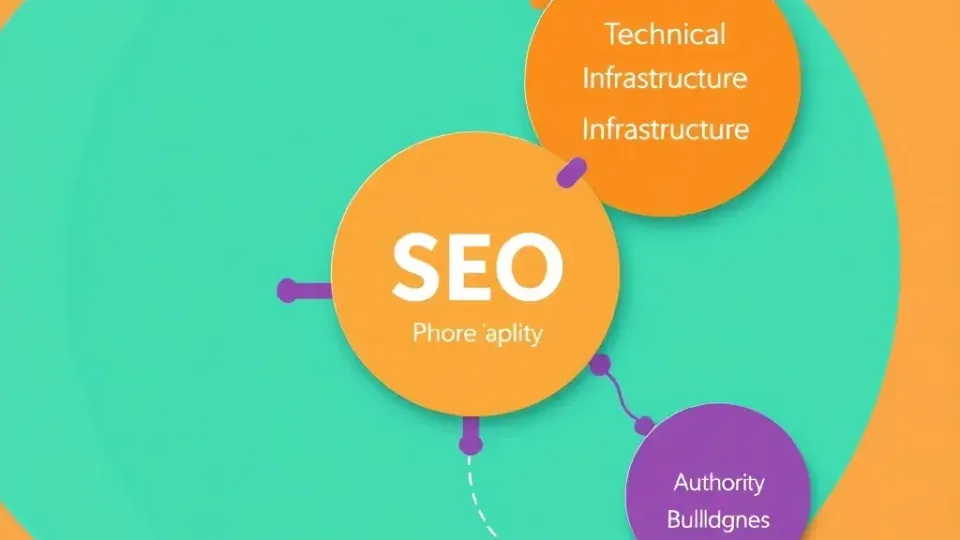
Today, what is SEO in practice? It's a blend of three disciplines:
- Content optimization — creating pages that answer what people actually search for.
- Technical infrastructure — making sure search engines can find, crawl, and understand your site.
- Authority building — earning signals from other websites and users that your content is trustworthy.
Every time you type a query into Google, the engine evaluates hundreds of factors to decide which pages deserve the top spots. SEO is the discipline of aligning your content and website with those factors.
Why SEO Matters: How Search Engines Work
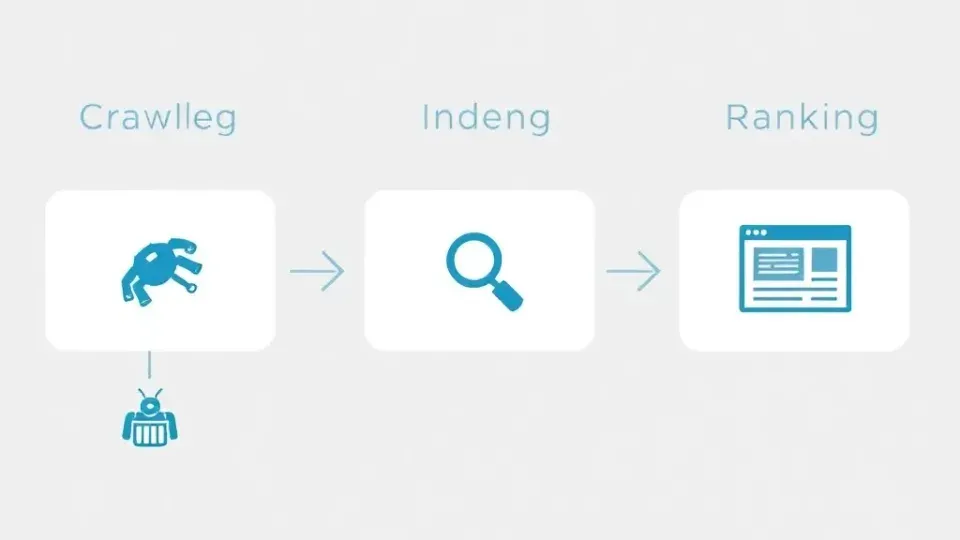
Before diving into tactics, you need to understand the system you're optimizing for. Search engines operate in three stages:
- Crawling — Automated bots (like Googlebot) discover pages by following links across the web.
- Indexing — The engine stores and organizes the content it finds in a massive database.
- Ranking — When a user enters a query, the engine retrieves the most relevant, high-quality results from its index.
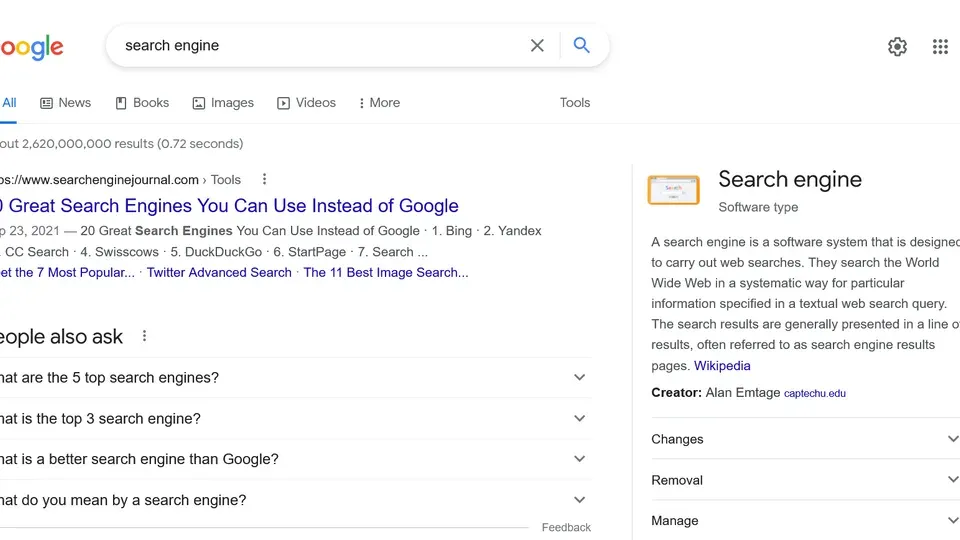
Organic search—the non-paid listings on a Search Engine Results Page (SERP)—remains one of the largest traffic sources for most websites. According to Google's own Search Central documentation, organic search is designed to surface the most helpful, relevant results for any given query. Industry analyses consistently show that organic search drives the majority of trackable website traffic across most sectors, far outpacing social media or paid channels.
That's why SEO matters: if your pages aren't optimized, they're effectively invisible to the people actively looking for what you offer.
The Role of Algorithms in Ranking
A search engine algorithm is a set of rules and mathematical processes used to evaluate and rank web pages based on hundreds of ranking factors. Google's algorithm, for example, considers signals like:
- Relevance — Does the page match the user's query intent?
- Quality — Is the content accurate, comprehensive, and well-written?
- Authority — Do other reputable sites link to this page?
- User experience — Does the page load quickly, work on mobile, and avoid intrusive elements?
Google updates its core algorithm several times per year, with major updates (like the Helpful Content system) reshaping rankings for millions of sites. In my experience working with SEO across various niches, the sites that weather algorithm updates best are the ones focused on genuine usefulness rather than gaming specific signals.
The Three Pillars of SEO

The SEO industry organizes optimization work into three interconnected pillars. Here's how they compare:
| Pillar | Focus Area | Key Activities | Primary Goal | |---|---|---|---| | On-Page SEO | Content & HTML elements | Keyword research, meta tags, headings, internal linking | Match content to user intent | | Off-Page SEO | External signals & reputation | Link building, brand mentions, digital PR | Build authority and trust | | Technical SEO | Site infrastructure | Crawlability, site speed, structured data, mobile-friendliness | Ensure search engines can access and understand content |
On-Page SEO
On-page SEO is everything you control directly on your web pages. It starts with understanding keywords—the words and phrases users type into search engines. A keyword is the foundation of SEO strategy, connecting user intent to content discovery.
Core on-page elements include:
- Title tags and meta descriptions — The headline and summary that appear in search results.
- Header structure (H1, H2, H3) — Organizing content so both readers and crawlers understand the hierarchy.
- Content quality and depth — Addressing the user's question comprehensively, not just hitting a word count.
- Internal linking — Connecting related pages on your site to distribute authority and guide users.
- Image optimization — Using descriptive alt text and compressed file sizes.
A common mistake I see is keyword stuffing—cramming a target phrase into every sentence. Modern algorithms detect this and may actually demote the page. Instead, use semantic variations naturally. For a deeper dive, see our guide on on-page SEO techniques.
Off-Page SEO
Off-page SEO refers to signals that come from outside your website—primarily backlinks. A backlink is a hyperlink from one website to another, used by search engines as a signal of credibility and authority.
Think of backlinks as votes of confidence. When a respected industry publication links to your article, Google interprets that as an endorsement. Not all links are equal, though:
- Quality over quantity — One link from a high-authority site (like a major news outlet or university) often outweighs dozens of links from low-quality directories.
- Relevance matters — A link from a site in your industry carries more weight than one from an unrelated niche.
- Natural acquisition — Google's guidelines explicitly discourage buying links or participating in link schemes.
Beyond links, off-page SEO includes brand mentions, social signals, and reputation management. If you're looking to strengthen this pillar, our guide on building backlinks covers proven, ethical approaches.
Technical SEO
Technical SEO ensures that search engine bots can efficiently crawl, index, and render your site. After years of working with technical audits, I can tell you this pillar is where many sites have their biggest untapped opportunities.
Key technical SEO components include:
- Crawlability — Is your robots.txt configured correctly? Are important pages blocked from crawlers? Is your XML sitemap submitted and up to date?
- Indexing — Are your pages actually appearing in Google's index? Use Google Search Console's "URL Inspection" tool to verify.
- Site speed — Google has confirmed that page experience signals, including Core Web Vitals (Largest Contentful Paint, Interaction to Next Paint, and Cumulative Layout Shift), influence rankings. Aim for LCP under 2.5 seconds.
- Mobile-friendliness — Google uses mobile-first indexing, meaning it primarily evaluates the mobile version of your site for ranking.
- Structured data — Schema markup (like FAQ, Article, or HowTo schemas) helps search engines understand your content's context and can enable rich results.
- HTTPS security — A confirmed ranking signal since 2014.
For a step-by-step approach, our technical SEO audit guide walks through the full process.
SEO Meaning in Marketing and Business
The term "SEO" shows up in both marketing strategy decks and business operations plans, but it carries slightly different weight in each context.
SEO in Digital Marketing Strategy
In marketing, SEO meaning in marketing centers on channel strategy. SEO is one component of a broader digital marketing mix that includes paid search (SEM), social media marketing, email marketing, and content marketing.
What makes SEO unique among marketing channels:
- Compounding returns — Unlike paid ads that stop generating traffic the moment you pause spending, a well-ranked page can drive organic traffic for months or years.
- Intent-based targeting — Users who find you through organic search are actively looking for what you offer, making them high-quality prospects.
- Cost efficiency — While SEO requires investment in content, technical work, and tools, the cost per acquisition typically decreases over time as your organic presence grows.
According to Google's Search Central documentation, creating helpful, reliable, people-first content is the most important factor for success in Google Search. In practice, this means SEO and content marketing are deeply intertwined—your content strategy should be informed by keyword research and search intent analysis.
SEO in Business Operations
The SEO meaning in business extends beyond the marketing department. For business leaders, SEO impacts:
- Brand visibility and credibility — Appearing on the first page of Google for industry-relevant searches builds trust before a prospect ever contacts you.
- Customer acquisition cost — Organic traffic reduces dependence on paid channels, improving overall unit economics.
- Competitive intelligence — SEO analysis reveals what competitors are ranking for, what content gaps exist, and where market demand is shifting.
- Scalability — A strong SEO foundation scales with your business without proportional increases in spend.
In my experience advising businesses of various sizes, the companies that treat SEO as a core business function—not just a marketing tactic—see the strongest long-term results. This means allocating budget for technical infrastructure, content creation, and ongoing optimization.
SEO Across Different Platforms
SEO isn't limited to traditional websites. The principles of optimization apply wherever a search function exists.
Website SEO
This is the foundation most people think of: optimizing pages on your domain to rank in Google, Bing, and other search engines. Everything covered in the three pillars above applies here. The key differentiator is that website SEO gives you full control over technical elements, content structure, and user experience.
YouTube SEO
YouTube is the world's second-largest search engine. YouTube SEO follows similar principles but with platform-specific signals:
- Video title and description — Include target keywords naturally, front-loading the most important terms.
- Tags and categories — Help YouTube's algorithm understand your video's topic.
- Watch time and engagement — YouTube prioritizes videos that keep viewers watching. A video with high average view duration ranks better than one with more views but lower retention.
- Thumbnails and CTR — Click-through rate from search results signals relevance.
- Closed captions and transcripts — Provide additional text for YouTube's algorithm to index.
YouTube's official Creator Academy guidance confirms that search and discovery optimization is a core growth lever, making SEO principles directly applicable.
Social Media and SEO
Social media platforms like Instagram, TikTok, LinkedIn, and Pinterest have their own internal search algorithms. While social media activity doesn't directly impact Google rankings (Google has stated social signals aren't a direct ranking factor), the indirect benefits are significant:
- Content amplification — Social sharing increases visibility, which can lead to natural backlinks.
- Brand search volume — Strong social presence drives branded searches, a positive signal.
- Platform-native SEO — TikTok and Pinterest, in particular, function as visual search engines where keyword-optimized captions and descriptions improve discoverability.
The takeaway: optimize your content for each platform's search function, and use social media as a distribution channel that feeds your broader SEO strategy.
Is ChatGPT Bad for SEO? Debunking Common Myths
This is one of the most common questions in SEO right now, and it deserves a direct answer.
ChatGPT and similar AI tools are not inherently bad for SEO. They can help with brainstorming, creating outlines, drafting initial content, and generating meta descriptions. However, AI-generated content must be reviewed, fact-checked, and edited for accuracy and uniqueness.
Here's what Google has officially stated, per their Search Central guidance on AI-generated content (published in February 2023 and updated since): Google's ranking systems reward original, high-quality content that demonstrates E-E-A-T (Experience, Expertise, Authoritativeness, Trustworthiness), regardless of how it's produced. The focus is on the quality of the content, not the method of production.
| Myth | Reality | |---|---| | "Google penalizes all AI content" | Google penalizes low-quality, spammy content—whether human or AI-written. Helpful AI-assisted content is fine. | | "AI will replace SEO professionals" | AI accelerates workflows but can't replace strategic thinking, original expertise, or quality assurance. | | "ChatGPT content ranks automatically" | Raw AI output often lacks specificity, original data, and the nuance that ranking content requires. | | "Using AI tools is cheating" | Google explicitly said it doesn't ban AI content; it bans unhelpful content. |
The key principle: Use AI as an assistant, not a replacement for human expertise and quality assurance. When I test AI-generated drafts against carefully edited and expert-reviewed versions, the edited versions consistently outperform on engagement metrics and rankings.
Tools like Writora integrate AI article generation with keyword clustering and publishing workflows, but the platform is designed to support human editorial oversight—not bypass it. This approach aligns with Google's guidance: leverage AI for efficiency, then layer in expertise and originality.
SEO Meaning in Job Titles and Careers
If you've seen job postings for "SEO Specialist" or "SEO Manager" and wondered what those roles entail, here's the breakdown:
- SEO Specialist — Handles day-to-day optimization: keyword research, on-page optimization, content briefs, and technical fixes. Typically 1–3 years of experience.
- SEO Analyst — Focuses on data: tracking rankings, analyzing traffic trends, measuring ROI, and reporting performance. Strong analytics skills are essential.
- SEO Manager / Director — Leads strategy, manages teams or agencies, sets priorities across on-page, off-page, and technical work. Usually 5+ years of experience.
- SEO Content Writer — Specializes in creating content optimized for search intent and on-page best practices.
- Technical SEO Engineer — A more specialized role focused on site architecture, JavaScript rendering, crawl budget optimization, and structured data implementation.
What SEO skills do employers look for? Based on common job postings, the most in-demand skills include:
- Keyword research and competitive analysis
- Google Analytics and Google Search Console proficiency
- Content strategy and writing ability
- HTML/CSS basics and technical audit capabilities
- Data analysis and reporting
- Familiarity with SEO tools (Ahrefs, Semrush, Screaming Frog, or similar)
- Understanding of Python or SQL (increasingly common for senior roles)
SEO careers are accessible because much of the learning happens through practice and experimentation. Many successful SEO professionals started by optimizing their own blogs or small business websites.
Getting Started with SEO: A Practical Checklist

Whether you're launching a new site or improving an existing one, this checklist covers the essential first steps. Work through it in order—each step builds on the previous one.
- Set up Google Search Console and Google Analytics — These free tools are non-negotiable. Search Console shows how Google sees your site; Analytics tracks user behavior.
- Conduct keyword research — Identify the terms your audience actually searches for. Start with a keyword research guide to learn how to evaluate search volume, intent, and competition.
- Audit your existing content — Map current pages to target keywords. Identify gaps where you have no content for high-value queries.
- Optimize title tags and meta descriptions — Every page should have a unique, keyword-relevant title (under 60 characters) and a compelling meta description (under 160 characters).
- Fix technical foundations — Submit an XML sitemap, check robots.txt, ensure HTTPS is active, and test mobile-friendliness using Google's tools.
- Improve page speed — Compress images, enable browser caching, and minimize render-blocking JavaScript. Target Core Web Vitals thresholds.
- Create a content calendar — Plan content around your keyword clusters. Aim for consistency—publishing one excellent article per week beats five mediocre ones.
- Build internal links — Connect related pages on your site. This helps users navigate and distributes ranking authority.
- Start earning backlinks — Create link-worthy content (original research, comprehensive guides, useful tools) and promote it through outreach and relationships.
- Monitor, measure, and iterate — Check Search Console weekly for indexing issues and ranking changes. Review Analytics monthly for traffic trends. Adjust strategy based on data, not assumptions.
If you want to streamline steps 2, 7, and the publishing process, Writora combines keyword clustering, AI-assisted article drafting, and one-click publishing into a single platform—worth exploring during their free trial, especially for independent publishers managing multiple sites.
Frequently Asked Questions About SEO
What is the main goal of SEO?
The primary goal of SEO is to increase the quantity and quality of organic (non-paid) traffic to your website by improving your visibility in search engine results. It's not just about ranking #1—it's about ranking for the right queries that bring visitors who are genuinely interested in your content, products, or services.
Is ChatGPT bad for SEO, or can I use AI to create content?
ChatGPT and AI tools are not bad for SEO when used responsibly. Google's official guidance states that content quality matters more than how it was produced. Use AI for brainstorming, outlines, and initial drafts, but always add original expertise, fact-check claims, and edit for accuracy and voice. AI-only content published without human review risks being generic and underperforming.
How long does SEO take to show results?
SEO is a long-term strategy. Initial visibility improvements may appear in 3–6 months, but significant ranking gains typically take 6–12 months or longer, depending on competition, site age, content quality, and consistency. Google's own documentation acknowledges that SEO improvements take time to be reflected in search results. Continuous optimization and monitoring are essential—SEO is never truly "done."
What is the difference between SEO and SEM (search engine marketing)?
SEO focuses on earning organic (free) rankings through content and technical optimization. SEM (Search Engine Marketing) is a broader term that includes SEO and paid search advertising (like Google Ads). In common usage, "SEM" often refers specifically to paid search. The key difference: SEO earns traffic through relevance and authority; SEM buys visibility through ad spend. Most effective digital strategies use both.
Can small businesses benefit from SEO, or is it only for large companies?
Small businesses can absolutely benefit from SEO—and often have a competitive advantage. Local SEO, which optimizes for geographic-specific searches (e.g., "plumber near me"), levels the playing field. Small businesses can also target long-tail keywords (more specific, lower-competition phrases) that large companies overlook. In my experience, local businesses that invest in Google Business Profile optimization, local citations, and a handful of well-optimized service pages can dominate their geographic market within months.
Final Thoughts
Understanding SEO meaning is the first step toward building a sustainable online presence. As we've covered, SEO extends far beyond a single definition—it's a discipline that spans websites, marketing strategy, business operations, platforms like YouTube, and an entire career landscape.
At its core, SEO is both a technical and creative discipline. The technical side ensures search engines can find and understand your content. The creative side ensures that content is genuinely worth finding—helpful, accurate, and better than the alternatives.
SEO evolves with every algorithm update, every new platform, and every shift in user behavior. But the core principle has remained constant since the 1990s: create valuable, discoverable, relevant content for the people searching for it.
Your next step? Work through the checklist above. Start with Google Search Console, do your keyword research, and publish your first optimized piece of content. If you want an all-in-one platform to accelerate the process—from keyword clustering to publishing—give Writora a free try and see how it fits your workflow.
The best time to start SEO was years ago. The second best time is today.