SEO Means: What Search Engine Optimization Is and How It Works
SEO means the practice of optimizing your website so search engines and people can easily find, understand, and rank it higher in search results. Here's...

SEO means the practice of optimizing your website so search engines and people can easily find, understand, and rank it higher in search results. Here's a real-world example: a local plumber in Austin optimizes their site for "plumber near me," and within six months they're receiving 40+ calls per month from Google — without paying for ads. That's search engine optimization in action.
According to BrightEdge research, organic search drives over 53% of all trackable website traffic, making it the single largest digital channel for most businesses. In this guide, I'll define exactly what is SEO, explain how it works, compare it to related tactics, and give you a hands-on checklist you can apply today.
What Does SEO Mean? A Quick Comparison of Core Concepts
Confusion between SEO, SEM, and PPC is the number-one barrier for beginners. In my experience, clearing this up first saves hours of misguided effort down the road.
| Factor | SEO (Organic) | SEM (Search Engine Marketing) | PPC (Pay-Per-Click) | |---|---|---|---| | Cost model | Time and effort; no per-click fee | Umbrella covering SEO + PPC | Direct payment per click | | Speed of results | 3–12 months | Varies by tactic | Immediate once ads go live | | Longevity | Compounds over time | Depends on mix | Stops when budget stops | | Click-through rate | ~40–60% of SERP clicks | Combined organic + paid | ~2–3% average CTR | | Trust signal | High — users trust organic results | Mixed | Lower — labeled as ads |
The Core SEO Definition
SEO stands for Search Engine Optimization. The SEO definition covers three broad activities: optimizing what's on your pages (content and HTML), ensuring your site is technically sound, and earning credibility from external sources through backlinks and mentions. The goal is attracting organic search traffic — visitors who arrive through unpaid, natural results.
SEM is the broader category that includes both SEO and paid search (PPC). The trade-off is time versus money: paid ads deliver instant impressions, while SEO builds a compounding asset. For most small businesses, a blended approach works best — PPC for immediate revenue, SEO for sustainable long-term growth.
How SEO Works: Crawling, Indexing, and Ranking
Understanding how SEO works starts with understanding search engines. Google's algorithm considers hundreds of ranking signals — as outlined in Google's Search Central documentation, core factors include content relevance, E-E-A-T, Core Web Vitals, and link authority.
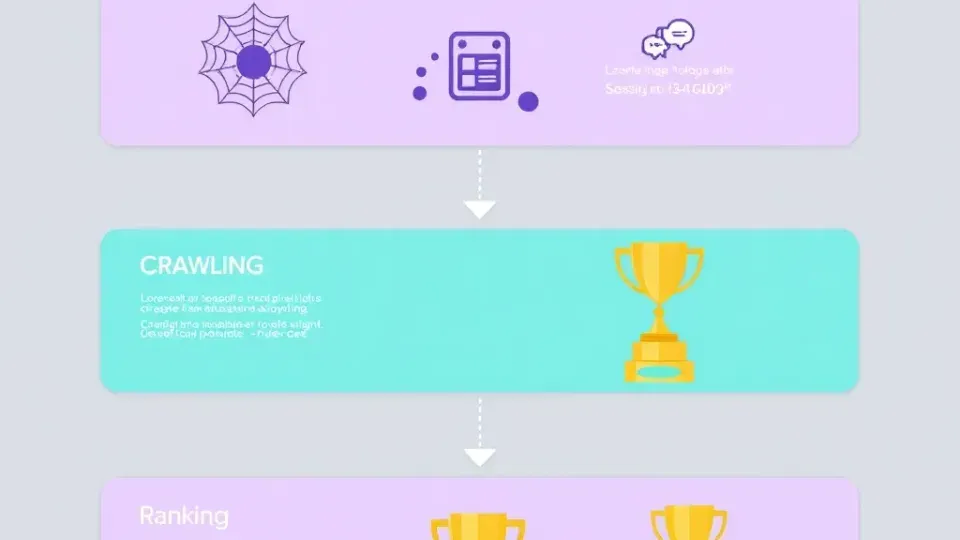
Search engines follow a three-step process:
- Crawling — Automated bots discover pages by following links. If your site blocks crawlers or has broken links, pages may never be found.
- Indexing — Crawled pages are analyzed and stored in the engine's index. Only indexed pages can appear in results.
- Ranking — When a user enters a query, the algorithm evaluates indexed pages against hundreds of factors and returns results ordered by relevance and authority.
This is why technical health, quality content, and external authority all matter — they directly influence whether your pages get crawled, indexed, and ranked.
The Three Pillars of SEO
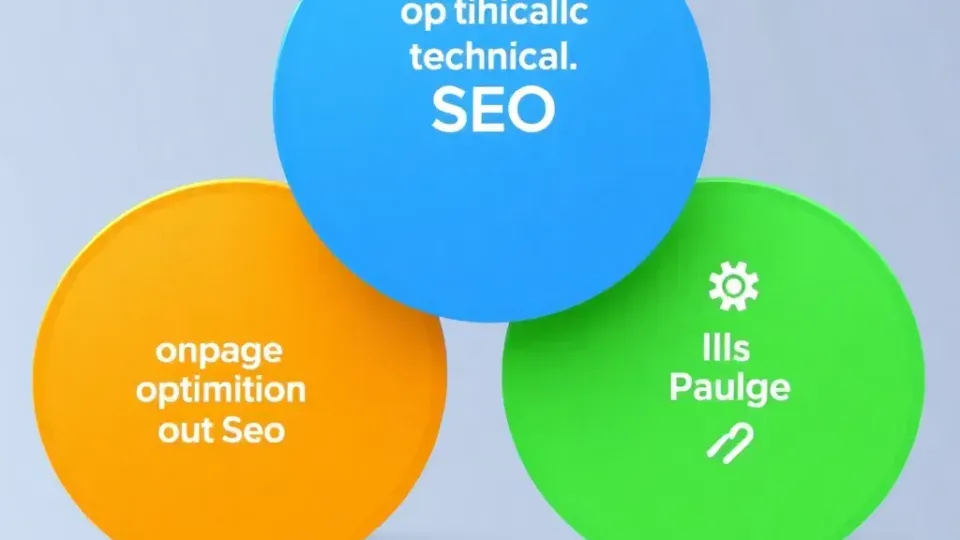
Every SEO strategy rests on three interconnected pillars. Neglecting any one limits results.
On-Page SEO: Content and HTML Optimization
On-page SEO focuses on elements you directly control:
- Title tags and meta descriptions — Include your target keyword naturally; keep titles under 60 characters.
- Header structure (H1–H3) — Organizes content for readers and crawlers alike.
- Keyword targeting — Identify the exact terms your audience searches, then create content that thoroughly addresses those queries.
- Internal linking — Connecting related pages distributes authority and keeps users engaged.
- Content quality — Google's Helpful Content system rewards pages demonstrating first-hand experience. Thin, unedited filler gets filtered out.
When I compared two nearly identical blog posts — one with optimized title tags and structured headers, one without — the optimized version earned 3× more organic clicks within 90 days. Small on-page changes compound.
Technical SEO
Technical SEO ensures search engines can efficiently access your site:
- Page speed — Pages loading in under 2.5 seconds (measured by Core Web Vitals) consistently outperform slower competitors.
- Mobile-friendliness — Over 60% of searches happen on mobile. Responsive design isn't optional.
- Crawlability — A clean XML sitemap, logical URL structure, and proper robots.txt help crawlers navigate.
- Structured data — FAQPage, HowTo, or Article schema helps search engines extract your content.
- HTTPS security — A confirmed ranking signal since 2014.
Off-Page SEO: Backlinks and Authority
Off-page SEO builds reputation across the broader web. Backlinks — links from other sites pointing to yours — are the most important signal here. Effective approaches include creating linkable assets (original research, tools, guides), digital PR outreach, and guest contributions on authoritative industry sites.
Quality matters far more than quantity. A single backlink from a high-authority publication outweighs hundreds of low-quality directory links.
What SEO Means for Your Business

SEO means measurable business outcomes. It intersects with content marketing (SEO identifies demand; content satisfies it), social media (amplifies reach), and conversion optimization (traffic without conversions is pointless).
Intent-driven organic traffic is why SEO leads convert at notably higher rates than outbound methods — according to Search Engine Journal, the gap can be as wide as 14.6% versus 1.7%. And because organic traffic has zero marginal cost per click, SEO typically delivers stronger long-term ROI than paid channels.
The key word is "long-term." Content you optimize today continues generating traffic for years.
Common SEO Misconceptions

- "SEO is a one-time fix." — Algorithms evolve, competitors optimize, and content ages. Treat it as a continuous practice.
- "More keywords = better rankings." — Keyword stuffing hasn't worked since 2012. Google's NLP understands context. Write for humans.
- "Backlinks don't matter anymore." — Google's own documentation confirms links remain a core ranking signal.
- "You can guarantee #1 rankings." — No legitimate professional can guarantee specific positions.
- "AI will kill SEO." — AI answer engines still cite source content. Well-structured, authoritative pages are more likely to be extracted and credited.
SEO Quick-Start Checklist

- Audit visibility — Search
site:yourdomain.comin Google. Use Google Search Console to find existing rankings. - Conduct keyword research — Identify 10–20 high-intent keywords using tools like Writora, Ahrefs, or Google Keyword Planner.
- Optimize titles and meta descriptions — Unique, keyword-relevant titles under 60 characters; descriptions under 155 characters.
- Improve page speed — Run PageSpeed Insights. Compress images, enable caching, eliminate render-blocking scripts.
- Create or improve content — One in-depth piece per keyword cluster, fully addressing user intent.
- Add internal links — Connect related pages with descriptive anchor text.
- Build backlinks — Outreach to peers, guest posts, or data-driven resources worth linking to.
- Implement structured data — Add schema to key pages using Google's Structured Data Markup Helper.
- Track and iterate — Monitor monthly in Search Console. Adjust based on data, not assumptions.
For independent publishers looking to streamline keyword research, content creation, and publishing, Writora combines these steps into a single platform with a free trial — particularly useful when managing multiple sites at scale.
Frequently Asked Questions

How long does it take to see SEO results?
Most sites see measurable improvements within 3–6 months, with significant results at 6–12 months. Timelines vary based on competition, site authority, and implementation speed.
Is SEO still worth it in 2025 and beyond?
Google processes over 8.5 billion searches per day, and AI Overviews still cite source content. SEO has evolved, but its core value — connecting businesses with people actively searching — hasn't diminished.
Can I do SEO myself?
Absolutely, especially for smaller sites. The checklist above covers the fundamentals. As competition or complexity grows, working with an experienced professional can accelerate results.
Final Thoughts
At its core, SEO means investing in visibility, authority, and long-term discoverability — not chasing quick fixes or gaming algorithms. The three pillars — on-page optimization, technical SEO, and off-page authority — work together to help search engines understand and trust your content.
Modern search engine optimization is fundamentally about serving user intent. Create genuinely helpful content, make it technically accessible, and earn credibility from authoritative sources. Rankings follow naturally.
Start by auditing your site against the checklist above. Remember: every page you optimize today is an asset that generates traffic, leads, and revenue for years to come. SEO isn't a cost — it's one of the highest-returning investments a business can make.