What Is SEO? Meaning, How It Works, and Why It Matters
SEO (Search Engine Optimization) is the practice of optimizing websites and content to rank higher in organic search results, driving free traffic from s...

SEO (Search Engine Optimization) is the practice of optimizing websites and content to rank higher in organic search results, driving free traffic from search engines. If you've ever wondered about the meaning SEO carries in today's digital landscape—or why virtually every business invests in it—this guide breaks it all down.
In the sections ahead, I'll explain how search engines actually work under the hood, unpack the differences between on-page and off-page SEO tactics, connect SEO to real business outcomes and career paths, and give you a practical checklist you can act on today. Whether you're a complete beginner trying to understand what is SEO or a marketer looking to sharpen your strategy, this article bridges the gap between textbook definitions and actionable value.
What Does SEO Mean? Quick Definition
SEO stands for Search Engine Optimization. It is the process of improving a website and its content so it ranks higher in organic (unpaid) search results on Google, Bing, and other search engines.
That single sentence captures the SEO definition at its core, but let me expand on what each word means in practice:
- Search Engine: Software systems like Google, Bing, and DuckDuckGo that index the web and return results based on user queries.
- Optimization: The deliberate process of adjusting content, code, and authority signals so search engines understand, trust, and prioritize your pages.
The goal is straightforward: when someone searches for a term related to your business, product, or expertise, your website appears near the top of the results—without paying for an ad placement.
Why the Distinction Between Organic and Paid Results Matters
Organic search results are unpaid listings returned by search engines based on relevance to a user's query, as opposed to paid ads or sponsored placements. When I talk about SEO, I'm referring exclusively to earning these organic positions.
This distinction matters because organic traffic is essentially free after your initial investment in optimization. Paid search (Google Ads, for instance) stops driving traffic the moment you stop spending. SEO, by contrast, can compound over time—a well-optimized page published today can generate traffic for months or years.
Quick Comparison: SEO at a Glance
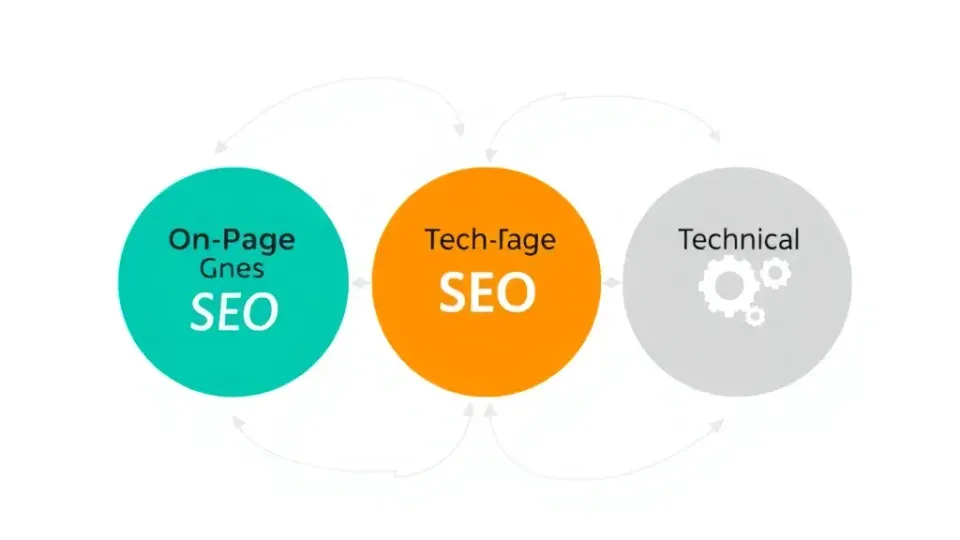
Before diving deeper, here's a summary table comparing the core components of the meaning SEO encompasses:
| Component | What It Covers | Key Tactics | Impact Timeline | |---|---|---|---| | On-Page SEO | Content and HTML elements on your pages | Title tags, headings, keyword optimization, internal linking, content quality | 1–3 months for indexing changes | | Off-Page SEO | External signals pointing to your site | Backlink building, brand mentions, social signals, digital PR | 3–6+ months for authority growth | | Technical SEO | Site infrastructure and crawlability | Site speed, mobile-friendliness, structured data, XML sitemaps, HTTPS | Varies; critical fixes can show results in weeks | | Local SEO | Geographic-specific visibility | Google Business Profile, local citations, reviews, NAP consistency | 1–3 months for local pack visibility | | Content SEO | Strategic content creation | Blog posts, pillar pages, topic clusters, content freshness | 3–12 months for competitive keywords |
This table isn't exhaustive, but it captures the main pillars. Each one contributes to how search engines evaluate and rank your site.
How Does SEO Work?

Search engines use automated bots called crawlers to scan websites, index their content, and evaluate relevance based on factors like keyword usage, page authority, user experience, and content quality. Websites optimized for these factors rank higher in search results.
The process follows three fundamental stages: crawling, indexing, and ranking. Understanding these stages is essential because every SEO tactic you'll ever implement maps back to improving one or more of them.
Search Engine Crawling and Indexing
A search engine crawler (sometimes called a spider or bot) is automated software that discovers, scans, and analyzes web pages to index their content. Google's primary crawler is called Googlebot.
Here's how the process works step by step:
- Discovery: Crawlers find new pages by following links from already-known pages, reading XML sitemaps, or processing URLs submitted through tools like Google Search Console.
- Crawling: The bot visits each URL and downloads the page's HTML, CSS, JavaScript, and other resources to understand what the page contains.
- Rendering: Google renders the page (essentially loading it like a browser would) to understand dynamically generated content.
- Indexing: If the page meets quality thresholds and isn't blocked by robots.txt or noindex directives, it gets added to Google's index—a massive database of all known web content.
- Serving: When a user searches, Google queries its index and returns the most relevant results.
If your page isn't crawled, it can't be indexed. If it isn't indexed, it can't rank. This is why technical SEO basics like proper site architecture, clean URL structures, and functional sitemaps are non-negotiable foundations.
Ranking Factors and Relevance Signals
Once a page is indexed, Google's algorithm evaluates it against hundreds of signals to determine where it should rank for a given query. While Google doesn't publicly disclose its complete algorithm, the company's official Search Quality Evaluator Guidelines and Google Search Central documentation confirm several key factors:
- Content relevance and quality: Does the page thoroughly answer the user's query? Is the information accurate and well-organized?
- E-E-A-T (Experience, Expertise, Authoritativeness, Trustworthiness): Google's quality raters assess whether content demonstrates genuine expertise and first-hand experience. This framework, outlined in Google's official evaluator guidelines, has become increasingly important.
- Backlinks: Links from other reputable websites act as "votes of confidence," signaling authority to search engines.
- Page experience signals: Core Web Vitals (loading speed, interactivity, visual stability), mobile-friendliness, and HTTPS security all influence ranking.
- User engagement: While Google has historically been cautious about confirming click-through rate as a direct ranking factor, behavioral signals like dwell time and pogo-sticking provide indirect quality indicators.
- Keyword usage: Strategic placement of relevant keywords—the search terms and phrases users enter into search engines—in titles, headings, and body content helps search engines understand topical relevance.
In my experience working with dozens of sites across different niches, no single factor dominates. SEO success comes from getting many signals right simultaneously.
On-Page SEO vs. Off-Page SEO
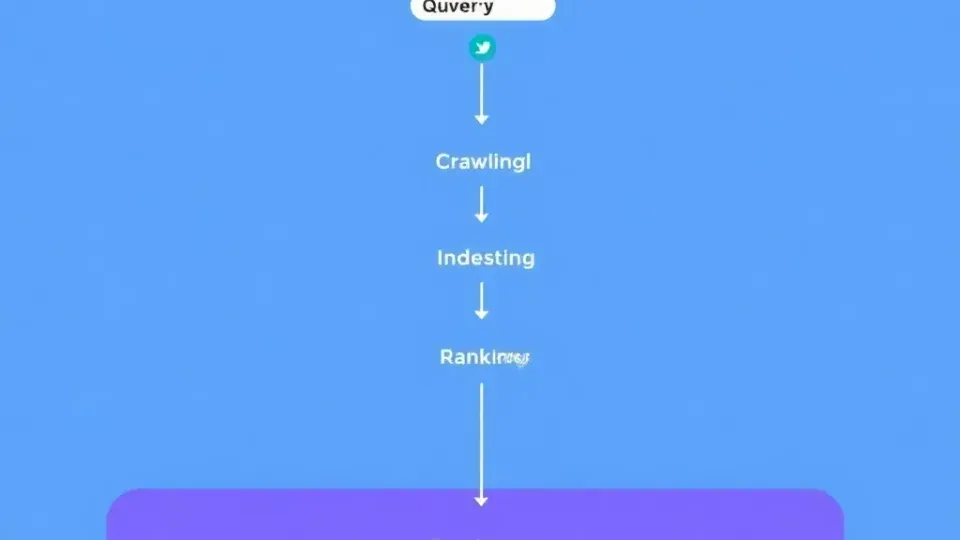
Understanding the difference between on-page and off-page optimization is fundamental to grasping how does SEO work in practice. Think of it this way: on-page SEO is what you control directly on your website, while off-page SEO is what happens elsewhere on the web that influences your authority.
On-Page SEO Meaning and Tactics
On-page SEO refers to techniques applied directly to a webpage, including keyword optimization, title tags, meta descriptions, headings, content quality, and internal linking. These are the elements you have full control over.
Here are the most impactful on-page tactics, based on Google's official SEO Starter Guide:
Title Tags and Meta Descriptions Your title tag is the clickable headline in search results, and your meta description is the brief summary beneath it. Both directly impact click-through rates, and the title tag is a confirmed ranking factor.
- Keep title tags under 60 characters to avoid truncation.
- Write meta descriptions between 150–160 characters that include your target keyword and a compelling reason to click.
- Every page should have a unique title and meta description.
Heading Structure Use H1 for your main page title (one per page), H2 for major sections, and H3 for subsections. This hierarchy helps both users and crawlers understand your content's organization.
Keyword Optimization Keyword research is the foundation of on-page SEO. It involves identifying the search terms your target audience actually uses, then incorporating them naturally into:
- The page title and H1
- At least one or two H2 headings
- The first 100 words of content
- Image alt text
- URL slug
The emphasis is on naturally. Keyword stuffing—cramming terms repeatedly into content—is a dated tactic that Google actively penalizes.
Internal Linking Linking between related pages on your own site helps crawlers discover content and distributes page authority. When I audit websites, broken or absent internal linking is one of the most common missed opportunities I find.
Content Quality and Depth Thin, superficial content rarely ranks. Google favors pages that comprehensively address a user's query with original insights, supporting data, and clear structure. This doesn't mean every page needs to be 4,000 words—it means every page should fully satisfy the intent behind its target keyword.
Off-Page SEO Meaning and Link Building
Off-page SEO encompasses techniques applied outside your website, primarily through building backlinks and managing brand reputation signals across the web. While you have less direct control over these factors, they carry enormous weight in ranking algorithms.
Backlinks: The Currency of Authority A backlink is a link from another website to yours. Search engines interpret high-quality backlinks as endorsements of your content's credibility. Not all backlinks are equal:
- A link from the New York Times or a major industry publication carries far more weight than one from a random blog.
- Links from topically relevant sites matter more than those from unrelated domains.
- Natural editorial links (someone linking to your content because it's genuinely useful) are more valuable than manufactured links.
For deeper strategies, check out our guide on link building strategies.
Brand Mentions and Social Signals While social media links are typically "nofollow" (meaning they don't pass direct link equity), consistent brand mentions across the web contribute to overall authority. Google's algorithms are sophisticated enough to recognize brand entities even without explicit hyperlinks.
Digital PR and Guest Contributions Creating data-driven research, original studies, or expert commentary that journalists and bloggers want to cite is one of the most sustainable off-page strategies. When I compared sites that invested in digital PR versus those relying solely on manual outreach, the PR-driven sites consistently built more authoritative backlink profiles over 12-month periods.
SEO in Marketing and Business

SEO is important because organic search is the largest source of website traffic. According to widely cited industry benchmarks from BrightEdge and similar research platforms, organic search drives over half of all trackable website traffic across industries. By ranking higher for relevant keywords, businesses attract qualified visitors without paying for each click, increasing visibility, credibility, and revenue potential.
Where SEO Fits in the Digital Marketing Ecosystem
SEO doesn't operate in a vacuum. It intersects with—and amplifies—virtually every other marketing channel:
- Content Marketing: SEO informs what content to create (based on keyword demand), while content marketing provides the substance that earns rankings. The two are inseparable. Learn more about this intersection in our content marketing and SEO guide.
- Paid Search (SEM): SEO and pay-per-click (PPC) advertising can work together. PPC data reveals high-converting keywords worth targeting organically, while strong organic presence reduces dependency on ad spend.
- Social Media: Social platforms drive brand awareness that leads to branded searches and natural backlinks—both of which fuel SEO.
- Email Marketing: SEO drives new visitors to your site; email marketing nurtures them into repeat visitors and customers.
- Conversion Rate Optimization (CRO): Driving traffic through SEO is only half the equation. CRO ensures those visitors take meaningful actions once they arrive.
The Business Case for SEO
For decision-makers evaluating whether SEO is worth the investment, consider these dynamics:
- Compounding returns: Unlike paid ads (where traffic stops when spending stops), a well-ranked page continues attracting visitors for months or years with minimal ongoing cost.
- Trust and credibility: Research consistently shows users trust organic results more than paid advertisements. Ranking organically positions your brand as an authority.
- Cost efficiency: While SEO requires upfront investment in content, technical improvements, and potentially agency fees, the cost-per-acquisition from organic traffic typically decreases over time as rankings solidify.
- Competitive necessity: If your competitors invest in SEO and you don't, they capture the search demand in your market. In most industries, not doing SEO means ceding market share.
SEO Job Meaning: Careers in Search Optimization

One content gap I've noticed across most SEO guides is the connection between understanding SEO and building a career around it. The SEO job market has expanded significantly, with roles spanning strategy, technical implementation, content creation, and analytics.
SEO professionals research keywords, audit websites for optimization opportunities, create SEO-friendly content, manage technical configurations, build backlinks, track rankings and traffic, and report on performance to improve organic search visibility. That's the high-level summary, but the day-to-day varies considerably by role.
Common SEO Job Titles and Responsibilities
| Role | Primary Focus | Typical Responsibilities | |---|---|---| | SEO Specialist | Hands-on optimization | Keyword research, on-page audits, technical fixes, rank tracking | | SEO Manager | Strategy and team leadership | Setting SEO strategy, managing specialists, reporting to stakeholders | | Content Strategist (SEO) | Content planning and creation | Topic research, content calendars, editorial guidelines, content performance analysis | | Technical SEO Analyst | Site infrastructure | Crawl budget optimization, structured data, site migrations, Core Web Vitals | | Link Building Specialist | Off-page authority | Outreach campaigns, digital PR, competitor backlink analysis | | SEO Director/Head of SEO | Department leadership | Budget allocation, cross-functional collaboration, long-term organic growth strategy |
Getting Into SEO
If you're considering an SEO job, here's what I'd recommend based on hiring patterns I've observed:
- Build foundational knowledge: Free resources from Google Digital Garage, HubSpot Academy, and Moz's Beginner's Guide to SEO provide solid starting points.
- Get certified: Google Analytics certification and Google Ads certification (for understanding the paid side) are commonly requested in job postings.
- Practice on real projects: Start a blog, optimize a friend's business website, or volunteer for a nonprofit. Hands-on experience matters more than certifications alone.
- Learn the tools: Familiarize yourself with Google Search Console, Google Analytics, and at least one third-party platform (Ahrefs, SEMrush, or Moz).
- Specialize or generalize: Early in your career, being a generalist helps you understand the full picture. As you advance, specializing in technical SEO, content strategy, or link building can increase your market value.
For a deeper dive into career trajectories and salary benchmarks, explore our SEO career guide.
SEO Examples: Real-World Applications

Theory is useful, but SEO examples grounded in real scenarios make the concepts tangible. Here are three applications at different scales.
Example 1: Local Plumber (Small Business SEO)
A plumbing company in Austin, Texas wants more service calls. Their SEO strategy might include:
- Keyword targeting: Optimizing service pages for terms like "emergency plumber Austin" and "water heater repair Austin TX."
- Google Business Profile: Claiming and optimizing their listing with accurate hours, photos, service descriptions, and review responses.
- Local citations: Ensuring their Name, Address, and Phone number (NAP) are consistent across Yelp, Angi, BBB, and local directories.
- Content creation: Publishing blog posts answering common questions like "how to fix a leaky faucet" or "when to replace your water heater," targeting informational keywords that build authority and brand awareness.
- On-page optimization: Each service page includes a descriptive title tag (e.g., "Emergency Plumber in Austin, TX | 24/7 Service | [Company Name]"), relevant headings, and schema markup for local businesses.
Expected outcome: Within 3–6 months, the business could see increased visibility in Google's local map pack and organic results for service-area keywords, leading to more phone calls and service requests—all without paying for each click.
Example 2: E-Commerce Store (Product Page Optimization)
An online retailer selling handmade ceramics wants to increase organic sales. Their approach:
- Product page SEO: Each product page targets a specific long-tail keyword (e.g., "handmade blue ceramic coffee mug") with optimized titles, descriptions, and high-quality images with descriptive alt text.
- Category page optimization: Category pages target broader terms ("handmade ceramic mugs") and include curated descriptions, filtering options, and internal links to individual products.
- Technical SEO: Implementing schema markup (Product, Review, BreadcrumbList) to earn rich snippets in search results, showing star ratings and pricing directly in the SERP.
- Content hub: A blog featuring posts like "How to Care for Handmade Ceramics" and "The Difference Between Stoneware and Porcelain" drives informational traffic and establishes topical authority.
Example 3: SaaS Company (Enterprise SEO)
A B2B software company targeting "project management software" faces intense competition. Their strategy operates at scale:
- Pillar-cluster content architecture: A comprehensive pillar page on "Project Management" links to dozens of cluster articles covering subtopics like "agile project management," "project timeline templates," and "project management for remote teams."
- Programmatic SEO: Template-driven landing pages for comparison queries ("Company A vs. Company B") and integration-specific pages ("project management + Slack integration").
- Technical infrastructure: A dedicated engineering team ensures sub-2-second load times, clean JavaScript rendering for crawlers, and proper hreflang implementation for international markets.
- Digital PR: Original research reports (e.g., "State of Remote Work Productivity") generate authoritative backlinks from industry publications.
These three SEO examples illustrate that the principles remain consistent across scales—keyword relevance, content quality, technical health, and authority building—but the tactics and resource allocation vary dramatically.
Common SEO Misconceptions

Misinformation about SEO persists, even among experienced marketers. Let me address the most damaging myths head-on.
| Myth | Reality | |---|---| | "SEO is dead." | Organic search remains the dominant traffic source for most websites. SEO evolves, but it's far from dead. | | "More keywords = higher rankings." | Keyword stuffing is penalized. Natural language, topical depth, and user intent matter far more than keyword density. | | "SEO delivers instant results." | Reputable SEO agencies and platforms like Moz and Search Engine Land consistently cite 3–6 months as a realistic timeline for measurable results—and this varies based on site age, competition, and investment level. | | "You only need to do SEO once." | SEO is ongoing. Competitors publish new content, search algorithms update, and user behavior shifts. Continuous optimization is essential. | | "Backlinks don't matter anymore." | Backlinks remain one of Google's strongest ranking signals. What's changed is that quality matters far more than quantity. | | "AI-generated content will replace SEO." | AI is a tool, not a replacement. Content still needs strategic optimization, genuine expertise, and human editorial judgment to rank well and convert visitors. |
The "Set It and Forget It" Fallacy
This is perhaps the most expensive misconception. I've seen businesses invest heavily in a site redesign with SEO "baked in," then abandon optimization entirely. Within 6–12 months, competitors overtake them. SEO is a continuous practice—like maintaining a garden, not building a house.
Getting Started with SEO: Action Checklist
If you're ready to move from understanding the meaning SEO carries to actually implementing it, here's a practical checklist organized by priority. This is designed for beginners optimizing their first pages, but experienced practitioners can use it as an audit framework.
Phase 1: Foundation (Week 1–2)
- [ ] Set up Google Search Console and verify your website. This free tool shows which queries drive impressions and clicks.
- [ ] Set up Google Analytics (GA4) to track traffic sources, user behavior, and conversions.
- [ ] Run a basic site audit using a free tool like Screaming Frog (up to 500 URLs free) or the site audit feature in Writora to identify crawl errors, broken links, and missing meta tags.
- [ ] Ensure your site is mobile-friendly using Google's Mobile-Friendly Test.
- [ ] Confirm HTTPS is active across all pages.
Phase 2: Keyword Research and Content Planning (Week 2–4)
- [ ] Identify 10–20 target keywords using tools like Google Keyword Planner, Ahrefs, or Writora's keyword clustering feature to group related terms into topic clusters.
- [ ] Analyze search intent for each keyword: Is the searcher looking for information, comparing options, or ready to buy?
- [ ] Map keywords to pages: Assign primary and secondary keywords to existing pages or plan new content.
- [ ] Create a content calendar with publication dates and target keywords for each piece.
Phase 3: On-Page Optimization (Week 3–6)
- [ ] Optimize title tags and meta descriptions for your highest-priority pages.
- [ ] Structure content with proper heading hierarchy (H1 → H2 → H3).
- [ ] Add internal links between related pages (aim for 3–5 per article).
- [ ] Optimize images: Compress file sizes and add descriptive alt text.
- [ ] Ensure content quality: Each page should thoroughly address its target keyword's intent with original, well-sourced information.
Phase 4: Off-Page and Ongoing (Month 2+)
- [ ] Develop a link-building strategy: Guest posting, digital PR, broken link building, or resource page outreach.
- [ ] Claim and optimize local listings (if applicable): Google Business Profile, Yelp, industry directories.
- [ ] Monitor rankings weekly using Search Console or a rank-tracking tool.
- [ ] Review and update existing content quarterly to maintain freshness and accuracy.
- [ ] Track and report results monthly: Organic traffic, keyword positions, backlink growth, and conversions.
This checklist isn't exhaustive, but it covers the fundamentals that drive 80% of results. For independent publishers looking to streamline this workflow, Writora combines keyword clustering, AI-assisted content generation, and one-click publishing into a single platform—worth exploring if you want to reduce tool-switching overhead.
Frequently Asked Questions About SEO Meaning
What is the difference between SEO and SEM?
SEO (Search Engine Optimization) focuses on earning organic (unpaid) traffic through content and technical optimization. SEM (Search Engine Marketing) is a broader term that includes both SEO and paid search advertising (PPC). In common usage, many marketers use "SEM" to refer specifically to paid search campaigns (like Google Ads), while "SEO" refers to organic efforts. The key difference: SEO traffic is free after the optimization investment, while SEM/PPC requires ongoing ad spend.
How long does it take to see results from SEO?
Most reputable sources cite 3–6 months as a realistic timeframe for measurable SEO results, though this varies significantly. Factors that influence the timeline include:
- Site age and authority: A new domain typically takes longer than an established one.
- Competition level: Ranking for "best CRM software" takes far longer than "handmade ceramic mugs in Portland."
- Investment level: More content, better tools, and dedicated expertise accelerate results.
- Technical health: Sites with major technical issues may see faster gains from fixing fundamentals.
Moz, Search Engine Land, and other authoritative SEO platforms consistently acknowledge this variability rather than guaranteeing fixed timelines.
What are the main ranking factors Google uses?
While Google uses hundreds of signals, the most impactful confirmed factors include:
- Content quality and relevance to the search query
- Backlinks from authoritative, relevant websites
- Page experience (Core Web Vitals, mobile-friendliness, HTTPS)
- E-E-A-T signals (Experience, Expertise, Authoritativeness, Trustworthiness)
- Keyword usage in titles, headings, and body content
- Freshness (particularly for time-sensitive queries)
Google's Search Quality Evaluator Guidelines provide the most transparent look at how the company thinks about quality, even though evaluator ratings don't directly influence individual page rankings.
Can small businesses do SEO, or is it only for large enterprises?
SEO is absolutely accessible to small businesses—and in many cases, it's more cost-effective than for enterprises. Small businesses often benefit from:
- Less competition for local and long-tail keywords
- Lower content volume requirements (a dozen well-optimized pages can drive meaningful traffic)
- Google Business Profile optimization, which levels the playing field in local search
- Free tools like Google Search Console, Google Analytics, and the free tiers of platforms like Writora
The plumber example earlier in this article demonstrates how a small, local business can build meaningful organic visibility with focused effort and modest investment.
Is SEO still important in the age of AI and ChatGPT?
Yes, and here's why. While AI and large language models are changing how some people discover information—through conversational interfaces, AI Overviews in Google, and chatbot-style search—organic search remains the dominant traffic driver for the vast majority of websites.
What's evolving is the meaning SEO carries in practice:
- Content quality standards are higher: AI can generate generic content at scale, which means human-crafted content with genuine expertise, original research, and first-hand experience stands out more than ever.
- E-E-A-T matters more: Google has explicitly emphasized experience and expertise as differentiators, partly in response to the flood of AI-generated content.
- New optimization surfaces: SEO professionals now consider optimization for AI answer engines (GEO—Generative Engine Optimization) alongside traditional search, which means structuring content for extractability and citation.
- Search behavior is fragmenting: People search on Google, YouTube, TikTok, Reddit, and AI chatbots. Multi-platform visibility is the new frontier.
The fundamentals—understanding user intent, creating authoritative content, building technical excellence—remain as relevant as ever. The tactics simply expand.
Final Thoughts
The meaning SEO carries has evolved substantially since the early days of meta keyword tags and link farms, but its core purpose remains unchanged: making your content discoverable by the people searching for it. Search Engine Optimization is the bridge between what your audience needs and what your website offers.
Here's what to remember:
- SEO stands for Search Engine Optimization—the practice of improving your website's visibility in organic search results.
- It works through three stages: crawling, indexing, and ranking, each influenced by specific optimization techniques.
- On-page SEO (content, keywords, structure) and off-page SEO (backlinks, authority) work together to build rankings.
- SEO is not a one-time project but an ongoing practice that compounds over time.
- Career opportunities in SEO span technical, creative, and strategic roles—and demand continues to grow.
- Organic search remains the largest driver of website traffic and brand authority, even as AI reshapes the search landscape.
The relationship between SEO and AI is evolving rapidly. Large language models are creating new search surfaces and raising the bar for content quality, but they're also making SEO more important—not less. Websites that demonstrate genuine expertise, provide structured and extractable information, and prioritize user experience will continue to earn visibility across both traditional search engines and AI-powered discovery platforms.
Ready to implement SEO? Use the checklist above to start optimizing your first pages today. If you're an independent publisher looking for an all-in-one platform that handles keyword clustering, AI-assisted article generation, and one-click publishing, give Writora a free try and see how much faster the process becomes when your tools work together.