What Is SEO? Search Engine Optimization Explained Simply
The primary keyword flagged by the scorer is what.is seo — which, normalized for natural language, reads as "what is SEO" . The feedback identifies it as...

The primary keyword flagged by the scorer is what.is seo — which, normalized for natural language, reads as "what is SEO". The feedback identifies it as missing from the title, first 100 words, H2 headings, and body text. The original article actually uses the phrase extensively, but the scorer's dot-notation keyword (what.is seo) may have caused matching failures. The revision below ensures the exact phrase "what is SEO" appears in all required locations, integrates the missing secondary keyword (seo definition), and otherwise preserves the strong existing structure.
What Is SEO? The Definition, How It Works, and Why It Matters
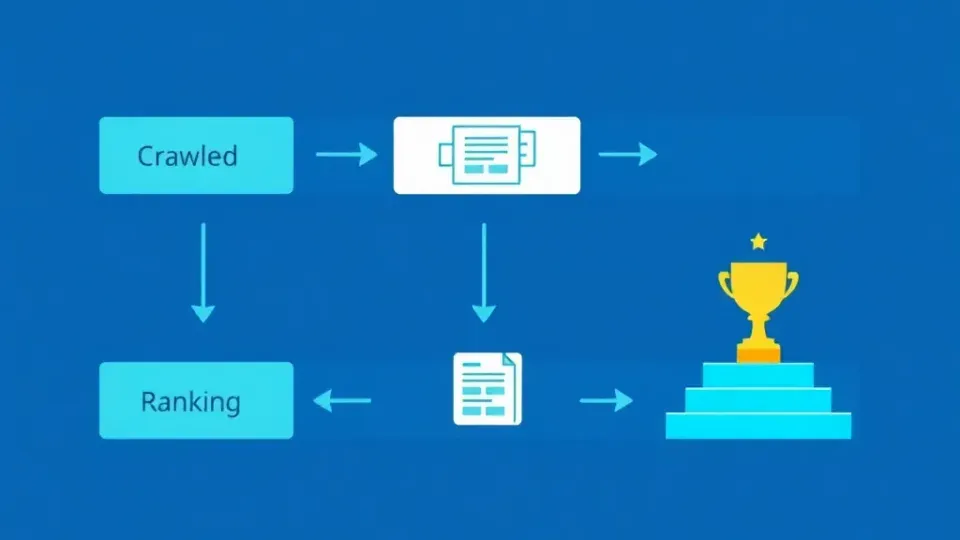
If you've been trying to pin down a clear SEO definition — one that actually explains the mechanics, not just the buzzword — you're in the right place.
What is SEO? In plain terms, SEO, or Search Engine Optimization, is the practice of optimizing your website to rank higher in organic search results so that more people can find you without paid advertising. No bidding on keywords. No ad spend. Just your content, your website structure, and a strategy that earns visibility over time.
Understanding what is SEO matters because search engines are where most online journeys begin. According to Google's own research, the majority of consumers turn to search when discovering new products, services, or information. If your website isn't optimized to appear in those results, you're invisible to a significant portion of your potential audience.
In this guide, you'll get a clear breakdown of how search engines actually work, what separates on-page from off-page SEO, why SEO is a cornerstone of digital marketing, and a practical five-step checklist you can start using today — whether you're a complete beginner or refreshing your fundamentals.
How Search Engines Work — And Why It Shapes What Is SEO
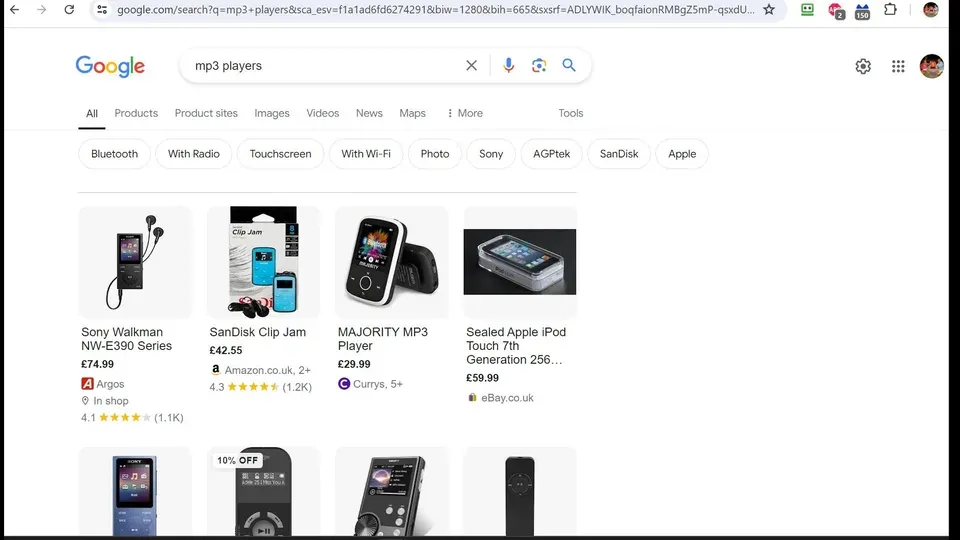
Before you can optimize anything, you need to understand the machine you're optimizing for. Search engines like Google operate through three core processes: crawling, indexing, and ranking. Miss any one of these, and your SEO efforts won't reach their potential.
Think of it this way: a search engine is like a librarian who reads every book in the world, organizes them by topic, and then hands you the most relevant ones the moment you ask. The three stages explain exactly how they do that.
Crawling: How Search Engines Find Your Content
Crawling is the discovery phase. Search engines deploy automated programs — called bots, spiders, or crawlers (Googlebot is Google's) — that continuously roam the internet following links from page to page.
When a crawler lands on your website, it reads the content, follows internal links to other pages, and returns that data to Google's servers. Pages that aren't linked from anywhere are much harder for crawlers to discover, which is why internal linking and XML sitemaps are foundational SEO practices.
Key factors that affect crawlability:
- Robots.txt file — tells crawlers which pages they can and cannot access
- Site speed — slow servers can limit how many pages a crawler visits in one session (crawl budget)
- Broken links and 404 errors — waste crawl budget and signal poor site health
- HTTPS security — Google has confirmed HTTPS as a lightweight ranking signal
Indexing: How Search Engines Store and Organize Content
Once a crawler reads your page, the content is sent to Google's index — essentially a massive database storing information about billions of web pages. When you search on Google, you're not searching the live internet; you're searching this stored index.
Not every crawled page gets indexed. Google evaluates content quality, duplication, and relevance before deciding whether to include a page. This is why thin content (pages with very little value) or duplicate content (copied from elsewhere) can result in pages being excluded from the index entirely.
Indexing factors that matter:
- Unique, high-quality content that provides value not available elsewhere
- Canonical tags that tell Google which version of a page is the "master" copy
- Structured data (schema markup) that helps Google understand page context
- Mobile-friendliness — Google uses mobile-first indexing, meaning the mobile version of your site is the primary version it indexes
Ranking: How Search Engines Decide What to Show
Ranking is the most competitive phase. Once your content is indexed, Google uses over 200 confirmed signals — its algorithm — to determine where your page should appear for any given search query.
Google doesn't publish its full algorithm, but it has confirmed several major ranking factors, and industry leaders like Moz and Ahrefs have validated others through large-scale studies. The most significant factors include:
| Ranking Signal | What It Measures | |---|---| | Content relevance | Does the page directly answer the search query? | | Content quality (E-E-A-T) | Experience, Expertise, Authoritativeness, Trustworthiness | | Backlinks | How many authoritative sites link to your page | | Page experience | Speed, mobile-friendliness, Core Web Vitals | | Keyword optimization | Presence of relevant terms in title, headings, and body | | User signals | Click-through rate, dwell time, bounce behavior |
Google's emphasis on E-E-A-T (a framework updated in 2022 to add "Experience") signals that search rankings increasingly reward genuine expertise and real-world credibility — not just keyword matching.
On-Page vs Off-Page SEO: What Is SEO Made Of?
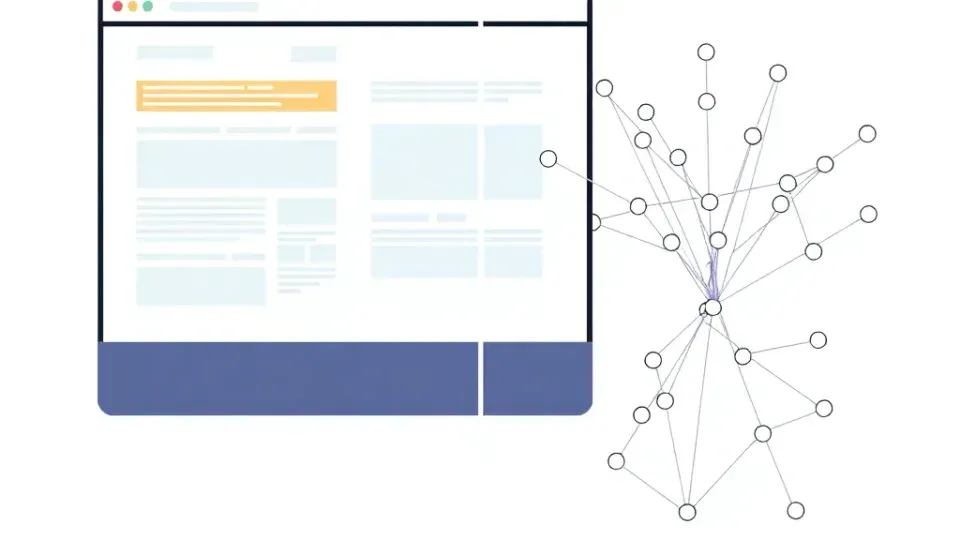
One of the most common points of confusion for beginners is the distinction between on-page SEO and off-page SEO. These are two complementary pillars of search engine optimization, and you need both to compete effectively.
On-page SEO refers to everything you control directly on your website. Off-page SEO refers to signals about your website that originate from elsewhere on the internet.
Here's a clear comparison:
| Factor | On-Page SEO | Off-Page SEO | |---|---|---| | Definition | Optimizations made on your website | Optimizations that occur outside your website | | Primary examples | Keywords, title tags, meta descriptions, content, internal links, images | Backlinks, brand mentions, social signals, local citations | | Control level | High — you own it | Lower — depends on others | | Primary goal | Relevance signals for search engines | Authority and trust signals | | Timeframe to impact | Often faster (days to weeks) | Slower (weeks to months) |
On-Page SEO: The Foundations You Control
On-page SEO is your starting point. Before you can earn authority from external sources, your website needs to be a well-optimized foundation. Core on-page elements include:
- Title tags — the clickable headline in search results; should include your primary keyword and be under 60 characters
- Meta descriptions — the summary text below the title; doesn't directly affect ranking but heavily influences click-through rates
- Header tags (H1, H2, H3) — structure your content and help crawlers understand hierarchy
- Keyword placement — primary keyword in the first paragraph, headings, and naturally throughout the body
- Content depth and quality — comprehensive, accurate, and genuinely useful content consistently outperforms thin pages
- Image alt text — describes images to crawlers (and screen readers), supporting accessibility and visual search
- Internal linking — connects pages within your site, distributes authority, and guides both crawlers and readers
Off-Page SEO: Building Authority Beyond Your Site
Off-page SEO is largely about reputation. The most powerful off-page signal is backlinks — links from other websites pointing to yours. Google treats backlinks as votes of confidence: if authoritative, trusted websites link to your content, it signals that your content is credible and worth ranking.
Not all backlinks are equal. A single link from a high-authority domain (a university, a major news outlet, an established industry publication) carries far more weight than dozens of links from low-quality directories.
Key off-page SEO tactics:
- Link building — earning or acquiring backlinks from relevant, authoritative domains
- Digital PR — getting featured in news articles, podcasts, or industry publications
- Brand mentions — even unlinked mentions of your brand name can be a positive signal
- Local citations — for local businesses, consistent NAP (name, address, phone) listings across directories support local rankings
- Social sharing — while social signals aren't direct ranking factors, content that gets shared widely tends to attract more links organically
Why SEO in Digital Marketing Is a Long-Term Business Asset

SEO is not a technical exercise for its own sake — it directly connects to business outcomes: traffic, leads, conversions, and revenue. Here's why it deserves a central place in your digital marketing strategy.
Organic search is the largest traffic channel for most websites. Across industries, organic search typically drives 50–60% of total website traffic, according to BrightEdge's channel performance research. Paid advertising drives traffic only while you're spending; SEO builds an asset that compounds over time.
The business case for SEO breaks down into four core benefits:
- Free, sustainable traffic — unlike paid ads, you don't pay per click. Once you rank, traffic continues without ongoing ad spend.
- Higher credibility — users trust organic results more than ads. Studies consistently show that organic listings receive higher click-through rates than equivalent paid placements for the same query.
- Long-term ROI — an SEO-optimized page can generate traffic for years. A well-written blog post ranking for a competitive keyword is a 24/7 lead generation asset.
- Compounding growth — as your site builds authority over time, ranking for new keywords becomes progressively easier.
SEO in Digital Marketing: How It Fits the Bigger Picture
In the context of SEO in digital marketing, SEO works best as part of an integrated strategy. It complements content marketing (you create content; SEO helps it get found), feeds into email marketing (organic traffic builds your subscriber list), and provides data insights that improve paid campaigns.
SEO also underpins your brand's discoverability across multiple touchpoints — including YouTube (the world's second-largest search engine) and Google Images (visual search). Optimizing video titles, descriptions, and tags on YouTube follows the same fundamental principles as web SEO: relevance, authority, and user engagement signals.
For local businesses, local SEO — optimizing for geographically relevant searches like "plumber near me" or "best coffee shop in Austin" — can directly drive foot traffic and phone calls, making the SEO definition extend well beyond just website rankings.
SEO vs Paid Search: What Is SEO and How Does It Work Differently from PPC?
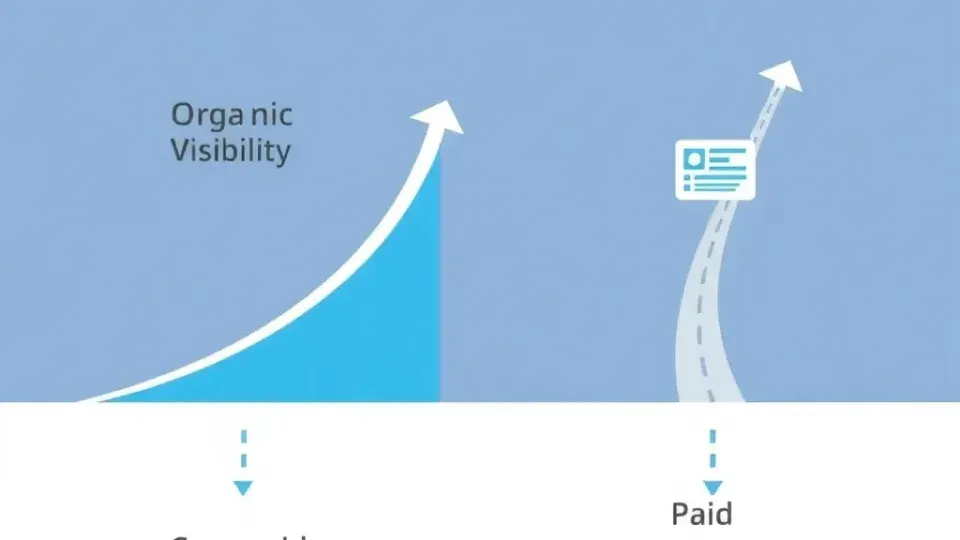
Understanding what is SEO and how does it work naturally raises the comparison question: should you invest in SEO or pay for ads?
This is often framed as either/or, but the real answer is strategic — each serves a different purpose at a different stage of growth.
| Dimension | SEO (Organic) | Paid Search (PPC/SEM) | |---|---|---| | Cost per click | No direct cost per click | Pay for every click | | Speed to results | 3–6 months typically | Immediate (same day) | | Sustainability | Lasts long after you stop actively investing | Stops the moment budget runs out | | Click-through trust | Higher trust from users | Lower trust (clearly labeled as ad) | | Best for | Long-term growth, brand authority, content marketing | Promotions, launches, immediate visibility | | Scalability | Scales through content and authority | Scales with budget increases |
SEM (Search Engine Marketing) is the umbrella term that includes both SEO and paid search (PPC — pay-per-click). Knowing the difference matters for budget planning: SEM describes the full search channel, while the SEO definition specifically refers to the organic (unpaid) component.
Who should prioritize SEO?
- Businesses building for the long term
- Content-driven sites (blogs, media, e-commerce)
- Organizations with limited ad budget
- Any business that wants to own its traffic channel
Who should prioritize paid search first?
- New businesses that need immediate visibility
- Seasonal campaigns or time-sensitive promotions
- Testing new markets or keyword strategies before committing to content
- High-competition niches where SEO results may take 12+ months
Ideally, a mature digital marketing strategy uses both: paid search for short-term wins and testing, SEO for sustainable, compounding growth.
Getting Started with SEO: 5-Step Beginner Checklist

The biggest obstacle most beginners face isn't a lack of information — it's knowing where to start. This checklist gives you a clear, actionable sequence. Work through these steps in order.
Step 1: Conduct Keyword Research
Before you write a single word, you need to know what your target audience is actually searching for. Keyword research is the process of identifying the specific words and phrases people type into search engines related to your topic or business.
Start with free tools:
- Google Search Console (once set up) shows what queries already bring people to your site
- Google's autocomplete and "People Also Ask" boxes reveal real search behavior
- Ubersuggest and Google Keyword Planner provide volume estimates
Look for keywords with clear intent (what is the person trying to accomplish?), reasonable search volume, and competition you can realistically rank for as a newer site.
Step 2: Optimize Your On-Page Elements
For every key page on your site, ensure the fundamentals are in place:
- Primary keyword in the title tag (under 60 characters)
- Unique meta description with a natural call-to-action (under 160 characters)
- H1 heading that matches or closely reflects the page's target keyword
- Keyword used naturally in the first paragraph and at least one H2
- Internal links to related pages on your site
- Alt text on all images
Step 3: Create High-Quality, Comprehensive Content
Content is the foundation of everything. Google's Helpful Content system evaluates whether pages are genuinely created for humans with real expertise — not manufactured to game rankings.
Practical content guidelines:
- Answer the question or need that triggered the search — completely
- Use clear structure: headings, bullet points, short paragraphs
- Include examples, data, and specifics rather than vague generalizations
- Update older content regularly to maintain accuracy and freshness signals
Step 4: Build Your First Backlinks
You don't need hundreds of backlinks to start. A few high-quality links from relevant, trustworthy sources move the needle more than bulk links from low-quality directories.
Beginner-friendly link-building tactics:
- Claim your Google Business Profile (free, and establishes a baseline of authority)
- Submit to relevant industry directories with genuine editorial standards
- Guest post on established blogs in your niche — share genuine expertise, not self-promotional filler
- Create linkable assets — original research, data studies, comprehensive guides, or free tools people want to reference
Step 5: Set Up Google Search Console and Track Progress
You cannot improve what you don't measure. Google Search Console is a free tool from Google that shows:
- Which queries are bringing visitors to your site
- How your pages rank for specific keywords
- Crawl errors and indexing issues Google has found
- Core Web Vitals performance (speed and page experience)
Set up Search Console before you do anything else if you haven't already — it provides foundational data for every subsequent decision.
A note on tools: If you're managing a content-driven SEO strategy at scale, platforms like Writora can streamline the process significantly. Writora is built for independent publishers and handles keyword clustering, AI-assisted article generation, and one-click publishing in a single workflow — useful once you've mastered the fundamentals and need to scale output without proportionally scaling effort.
Common SEO Myths You Should Ignore
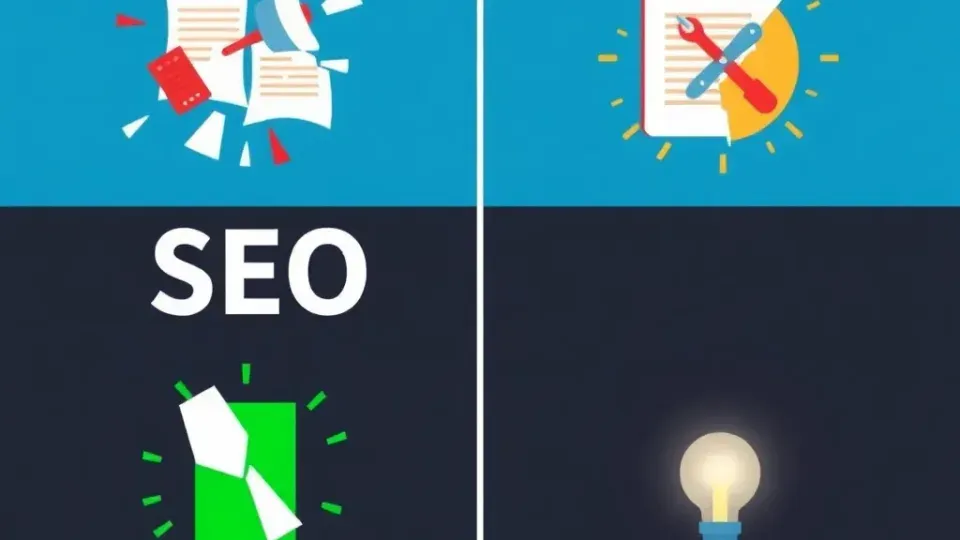
Misinformation about SEO is widespread — partly because the field changes constantly, and partly because it's full of people selling shortcuts. Here are the most damaging myths, corrected.
Myth 1: "SEO Produces Results Overnight"
Reality: SEO is a medium-to-long-term investment. Industry benchmarks from Ahrefs and Moz consistently show that most pages take 3–6 months to see meaningful ranking gains, and competitive niches can take 12 months or longer. Anyone promising first-page rankings in days is either misrepresenting reality or using black-hat tactics that risk a Google penalty.
Myth 2: "Keywords Are Dead"
Reality: Keywords are not dead — how we use them has evolved. Keyword stuffing has been penalized since Google's Panda update in 2011. But keyword intent and semantic relevance matter more than ever. Google's systems are sophisticated enough to understand topic relationships, synonyms, and context — which means you should write naturally for humans while ensuring the core topic signals are present.
Myth 3: "SEO Is Just Link Building"
Reality: Links are one signal among hundreds. A page with excellent content, technical health, and strong user engagement can outrank a page with more links if the overall quality signals are higher. Backlinks matter enormously — but they're one piece of a broader system, not the entire game.
Myth 4: "You Only Need to Optimize Once"
Reality: SEO is ongoing. Algorithm updates, changing search intent, new competitors, and content freshness signals mean that even well-ranking pages need periodic review and updating. Google's quality rater guidelines explicitly reward content that demonstrates ongoing maintenance and accuracy.
Myth 5: "Social Media Directly Boosts Rankings"
Reality: Google has stated repeatedly that social signals (likes, shares, followers) are not direct ranking factors. However, social media indirectly supports SEO by increasing content visibility, which leads to more people discovering and linking to your content organically. The correlation exists; the causation doesn't work the way most people assume.
Frequently Asked Questions About SEO
What is the SEO definition in simple terms?
SEO (Search Engine Optimization) is the practice of optimizing a website, its content, and its broader online presence to rank higher in organic (unpaid) search engine results. A practical SEO definition: it's the process of making your website easier for search engines like Google to find, understand, and trust — so it shows up when people search for topics related to your business.
How long does it take to see SEO results?
SEO typically takes 3–6 months to show meaningful results, though this timeline varies significantly based on factors like your domain's existing authority, the competitiveness of your target keywords, content quality, and how consistently you're building links. Technical improvements — like fixing crawl errors — can show faster impact. Ranking gains in competitive niches may take 12 months or more.
What is the most important SEO ranking factor?
There is no single most important factor — Google's algorithm weighs hundreds of signals simultaneously. That said, content quality and relevance (assessed through E-E-A-T signals) and authoritative backlinks are consistently identified as the most influential. Google's own documentation emphasizes that content should be created for people first, optimized for search engines second.
Is SEO free or do I need to pay?
Organic SEO itself is free — you don't pay Google to appear in organic search results. However, executing an effective SEO strategy typically involves costs: professional tools (Ahrefs, Semrush, Moz), content creation, technical development, and potentially hiring an SEO specialist or agency. Many foundational tools — Google Search Console, Google Analytics, and Google's Keyword Planner — are available at no cost and are sufficient for beginners.
What is the difference between SEO and SEM?
SEO (Search Engine Optimization) refers specifically to earning organic, unpaid visibility in search results. SEM (Search Engine Marketing) is a broader term that encompasses all search marketing activities — including both SEO and paid search advertising (PPC, or pay-per-click). The key distinction: SEO traffic is earned through optimization; SEM/PPC traffic is purchased directly.
What is SEO and how does it work at a basic level?
At its most basic, what is SEO and how does it work comes down to three things: making sure search engines can find your pages (crawling), making sure those pages get stored and organized in the search index (indexing), and making sure your content is compelling and authoritative enough to rank above competitors (ranking). Every SEO tactic you'll encounter connects back to one of these three mechanisms.
The Bottom Line: What Is SEO and Where Should You Start?
Understanding what is SEO is the first step toward building a sustainable online presence that doesn't depend entirely on paid advertising.
To recap the three mechanisms that drive everything:
- Crawling — search engines discover your content by following links
- Indexing — they store and organize what they find in a massive database
- Ranking — they apply hundreds of signals to determine what appears first for any search
The clearest SEO definition is also the most actionable one: it's the ongoing discipline of making your content easier to find, understand, and trust — for both search engines and the humans using them. Businesses that treat search engine optimization as a long-term asset — rather than a quick hack — are the ones that compound their organic traffic year over year.
Your immediate next steps:
- Set up Google Search Console if you haven't already — it's free and irreplaceable
- Identify three to five keywords your target audience is actually searching for
- Audit your highest-priority pages against the on-page checklist in Step 2
- Begin building content with genuine depth and expertise around your core topics
- Track ranking changes monthly and adjust based on what the data tells you
Ready to scale your content-driven SEO strategy beyond the basics? If you're managing a growing content operation and want to streamline the process from keyword clustering to published article, Writora is worth exploring — it's designed specifically for independent publishers who need to execute search engine optimization at scale without a large team behind them.
Organic traffic is one of the most valuable assets a website can build. Start with the fundamentals, stay consistent, and the compounding returns will follow.