What is SEO? A Complete Guide to Search Engine Optimization
SEO stands for Search Engine Optimization —the practice of improving your website or content so it ranks higher in search results. If you've ever wondere...

SEO stands for Search Engine Optimization—the practice of improving your website or content so it ranks higher in search results. If you've ever wondered what is SEO and why every marketer, business owner, and content creator talks about it, this guide will give you a clear, jargon-free answer.
Here's the business case in a single stat: according to BrightEdge research, organic search drives 53% of all trackable website traffic, making it the single largest source of visitors for most businesses. That means more than half of your potential audience finds you through Google, Bing, or another search engine—not through ads or social media.
In this guide, you'll learn exactly how search engines work, the three pillars of search engine optimization (on-page, technical, and off-page), why SEO matters across platforms like YouTube and Instagram, and how to get started with a practical checklist you can use today.
What Is SEO? Quick Answer
SEO (Search Engine Optimization) is the practice of improving a website's content, structure, and authority so that search engines like Google rank it higher in organic (non-paid) search results. The goal is to drive more relevant traffic from search engines to your website without paying for ads.
Think of it this way: when you type a question into Google, the search engine returns a list of results it considers most helpful. SEO is the set of strategies and techniques that help your pages become one of those top results.
A few key distinctions to set the foundation:
- Organic search results are the free, non-paid listings that appear on search engine results pages (SERPs). They are earned through SEO, not bought.
- Paid search results (ads) appear at the top of SERPs with an "Ad" or "Sponsored" label. These are part of SEM (Search Engine Marketing), not SEO.
- Search engines include Google, Bing, Yahoo, YouTube, and even platform-specific search systems like Instagram's Explore algorithm.
In my experience working with publishers and small businesses, the biggest misconception about SEO is that it's a one-time task. It's not. SEO is an ongoing process of creating valuable content, maintaining a healthy website, and building your site's reputation over time.
How Does SEO Work? The Three Core Processes
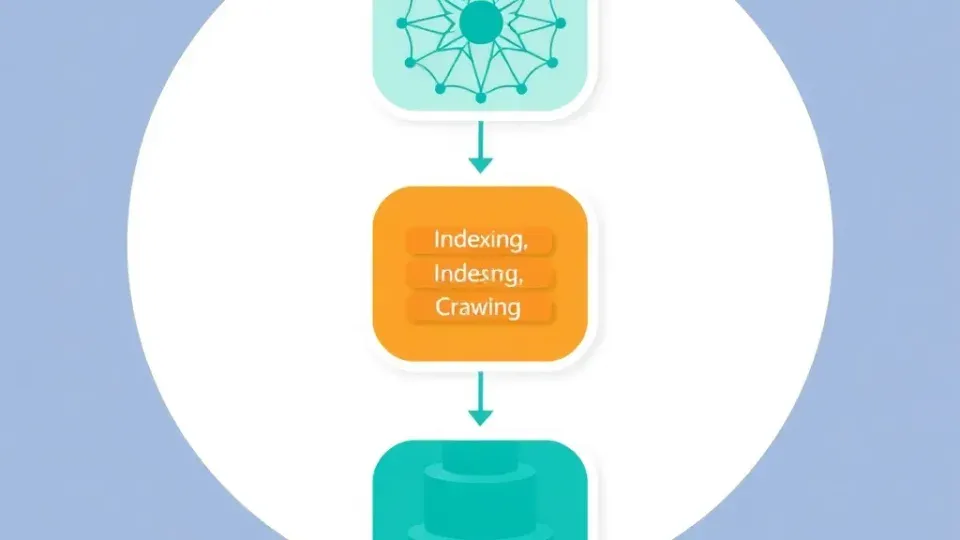
To understand what is SEO and how does it work, you need to understand how search engines operate. Search engines use three core processes—crawling, indexing, and ranking—to discover, organize, and present web content. Google's own Search Central documentation describes these as the fundamental stages of Search.
Crawling: How Search Engines Find Your Content
Crawling is the process by which search engine bots (also called spiders or crawlers) discover web pages by following links across the internet. Googlebot, for example, starts with a list of known URLs and follows every hyperlink it finds, hopping from page to page like a librarian walking through an endless library.
What this means for you:
- If search engines can't crawl your site, your pages won't appear in results—period.
- A clear site structure with internal links helps crawlers find all your important pages.
- Your robots.txt file and XML sitemap tell crawlers which pages to access and where to look.
Indexing: How Search Engines Organize Content
Indexing is the process of storing, analyzing, and cataloging the content of web pages that search engines have crawled. Once Googlebot crawls a page, it analyzes the text, images, and metadata to understand what the page is about, then adds it to Google's index—a massive database of web content.
A page that isn't indexed simply doesn't exist in Google's eyes. Common indexing issues include:
- Duplicate content that confuses search engines about which version to show
- Thin or low-quality content that doesn't provide enough value to index
- Technical errors like noindex tags that accidentally block pages from the index
Ranking: How Search Engines Order Results
Ranking is the process by which search engines order indexed pages by relevance and authority in response to a user's search query. When someone searches "best running shoes," Google doesn't just pull up every page about running shoes—it evaluates hundreds of factors to determine which pages deserve the top spots.
Key ranking factors include:
- Content relevance: Does your page match the searcher's intent?
- Backlinks: How many quality sites link to your page? (A backlink is a hyperlink from one website to another, signaling authority and trust to search engines.)
- Page experience: Is your site fast, mobile-friendly, and secure (HTTPS)?
- Content quality: Is the information accurate, comprehensive, and original?
Google has confirmed that mobile-friendliness and page speed are ranking factors through its Core Web Vitals update and mobile-first indexing rollout. These aren't optional optimizations—they directly impact where your pages appear.
The Three Pillars of SEO: On-Page, Technical, and Off-Page
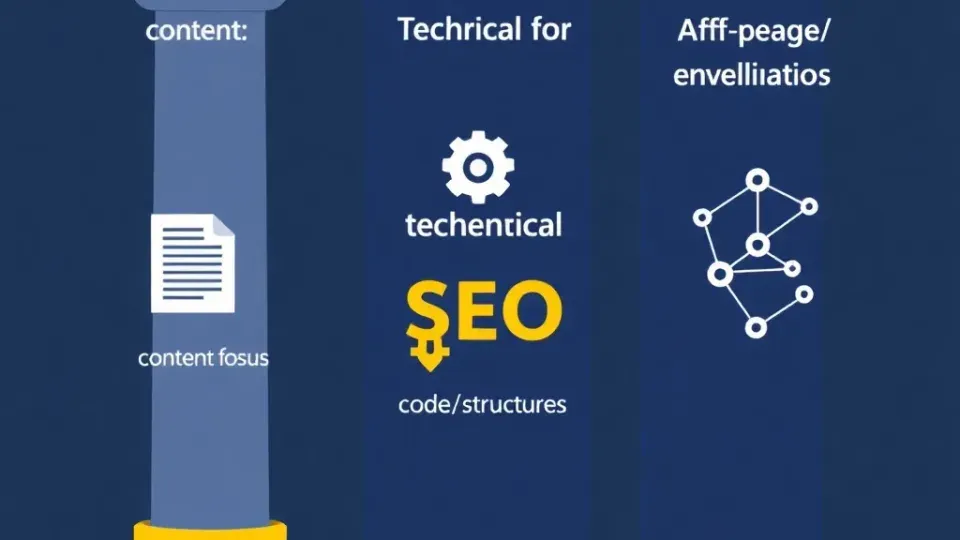
The SEO industry, as documented by authoritative sources like Moz, Ahrefs, and Google's own guidance, organizes search engine optimization into three main pillars. Each pillar addresses a different aspect of how search engines evaluate your site.
| Pillar | Focus Area | Key Activities | |---|---|---| | On-Page SEO | Content and keywords | Keyword targeting, meta tags, content quality, internal linking | | Technical SEO | Site performance and structure | Site speed, crawlability, mobile-friendliness, schema markup | | Off-Page SEO | Authority and reputation | Backlinks, brand mentions, social signals, digital PR |
On-Page SEO: Content and Keywords
On-page SEO covers everything you do on your website to help search engines understand and rank your content. It's the pillar you have the most direct control over.
Keywords are the foundation. These are the words and phrases your target audience types into search engines. Effective on-page SEO starts with thorough keyword research to identify terms with meaningful search volume and manageable competition.
Once you've identified your target keywords, apply them strategically:
- Title tag: Include your primary keyword near the beginning. This is the clickable headline in search results.
- Meta description: Write a compelling 150–160 character summary that includes your keyword and encourages clicks.
- Headings (H1, H2, H3): Use headings to organize content logically and include keywords where they fit naturally.
- Body content: Write comprehensive, genuinely helpful content. Keyword density should stay between 1–2%—never stuff keywords unnaturally.
- Image alt text: Describe images using relevant keywords so search engines (and screen readers) understand them.
- Internal links: Link to related pages on your site to help search engines discover content and distribute authority.
A common mistake I see is writers obsessing over keyword count instead of search intent. Google's helpful content system evaluates whether your page satisfies the reason behind a search, not just whether it mentions the right words. If someone searches "what is SEO," they want a clear explanation—not a page that repeats "SEO" fifty times.
Technical SEO: Site Performance and Structure
Technical SEO ensures that search engines can efficiently crawl, index, and render your website. You can have the best content in the world, but if your site is slow, broken, or poorly structured, search engines won't rank it well.
Critical technical SEO elements include:
- Site speed: Google's Core Web Vitals measure loading performance (Largest Contentful Paint), interactivity (Interaction to Next Paint), and visual stability (Cumulative Layout Shift). According to Google, pages meeting all three thresholds see measurably better search performance.
- Mobile-friendliness: With Google's mobile-first indexing, the mobile version of your site is the primary version Google evaluates. If your site isn't responsive, you're at a serious disadvantage.
- Crawlability: A clean URL structure, proper robots.txt configuration, and an up-to-date XML sitemap help search engines navigate your site.
- HTTPS security: Google has confirmed HTTPS as a ranking signal. An unsecured site erodes both trust and rankings.
- Structured data (Schema markup): Adding schema markup (like FAQPage, HowTo, or Article schema) helps search engines understand your content and can earn rich results in SERPs.
If you're new to technical SEO, start with a technical SEO audit to identify and prioritize issues on your site.
Off-Page SEO: Authority and Backlinks
Off-page SEO encompasses everything that happens outside your website to build its authority and reputation. The most important off-page factor is backlinks—links from other websites pointing to yours.
Search engines treat backlinks like votes of confidence. A link from a reputable, relevant site (like a major news outlet or industry publication) carries far more weight than dozens of links from low-quality directories.
Effective off-page SEO strategies include:
- Creating link-worthy content: Original research, comprehensive guides, and unique data attract natural backlinks.
- Digital PR and outreach: Pitching stories, expert commentary, or original data to journalists and bloggers.
- Guest posting: Contributing valuable content to authoritative sites in your niche.
- Brand mentions and citations: Being referenced across the web—even without a direct link—signals authority.
After years of working with content-focused businesses, I can tell you that backlink quality consistently outweighs quantity. One link from a domain with high authority in your niche is worth more than 100 links from irrelevant or spammy sites. For a deeper dive, explore our backlink strategy guide.
What Is SEO in Digital Marketing?
A question I hear frequently from marketing professionals: is SEO the same as digital marketing? No. SEO is one component—arguably the most foundational one—within a broader digital marketing strategy.
Digital marketing is the umbrella term that includes:
- SEO (organic search visibility)
- PPC/SEM (paid search advertising like Google Ads)
- Social media marketing (paid and organic social campaigns)
- Email marketing (newsletters, drip campaigns, lifecycle emails)
- Content marketing (blogs, videos, podcasts, whitepapers)
SEO in digital marketing functions as a long-term, compounding investment. Unlike paid advertising—where traffic stops the moment you stop paying—organic traffic from SEO continues to deliver visitors months and years after you publish and optimize content.
Here's how the ROI comparison typically plays out in practice:
| Channel | Time to Results | Cost Model | Traffic Durability | |---|---|---|---| | SEO | 3–6 months | Time and content investment | Compounds over time | | PPC (Google Ads) | Immediate | Pay per click | Stops when budget ends | | Social Media | Variable | Ongoing content creation | Declines rapidly | | Email Marketing | Days to weeks | List building investment | Dependent on list health |
The most effective digital marketing strategies integrate SEO with other channels. For example, SEO-driven content fuels email newsletters, social media posts, and even paid campaigns. In my experience, businesses that treat SEO as their content foundation—rather than an isolated tactic—consistently outperform those that silo their channels.
SEO Beyond Websites: YouTube, Instagram, and Social Media

One of the most overlooked aspects of how SEO works is that its principles extend far beyond traditional websites. Any platform with a search function has its own version of SEO.
YouTube SEO is arguably the second most important search optimization after Google (YouTube is the world's second-largest search engine by query volume). YouTube's Creator Academy documents several ranking factors specific to video:
- Video title and description: Include target keywords naturally.
- Tags and categories: Help YouTube understand your video's topic.
- Watch time and engagement: YouTube prioritizes videos that keep viewers watching and interacting.
- Thumbnails: While not a direct ranking factor, click-through rate from thumbnails influences how YouTube surfaces your content.
For a complete walkthrough, check out our YouTube SEO guide.
Instagram SEO has grown significantly as the platform has invested in its search functionality. According to Instagram's Business Help Center, the platform's search algorithm considers:
- Username and bio keywords: Include terms your audience searches for.
- Caption text and hashtags: Relevant keywords in captions improve discoverability.
- Alt text on images: Instagram allows custom alt text, which functions similarly to website image alt tags.
- Engagement signals: Likes, comments, saves, and shares influence how content surfaces in Explore and search.
Other platforms with SEO dynamics include Pinterest (image search optimization), TikTok (caption and hashtag optimization), Amazon (product listing optimization), and app stores (App Store Optimization, or ASO).
The core principle is universal: understand what your audience searches for, then optimize your content to match that intent on whatever platform they use.
Why Is SEO Important for Your Business?

Beyond the general claim of "more traffic," here's a concrete breakdown of why SEO matters for businesses of every size:
1. Organic search is the largest driver of website traffic. BrightEdge data shows organic search accounts for 53% of all trackable web traffic across industries. For B2B companies, that number climbs even higher.
2. SEO delivers compounding returns. A blog post optimized for SEO can generate traffic for years. In contrast, a paid ad campaign stops delivering the moment you pause spending. After working with publishers for several years, I've seen individual articles drive tens of thousands of visits per month for 3+ years without additional investment.
3. High-intent traffic converts better. People searching for specific solutions on Google are actively looking for answers—they have intent. According to Search Engine Journal, organic search leads have a 14.6% close rate, compared to 1.7% for outbound leads (direct mail, print advertising).
4. SEO levels the playing field. You don't need a massive advertising budget to rank well. Small, focused websites can outrank larger competitors by producing more relevant, higher-quality content for specific topics. This is especially true for long-tail keywords (longer, more specific search phrases with lower competition).
5. SEO builds brand authority and trust. Ranking on the first page of Google signals credibility to potential customers. Research from Backlinko shows the top three organic results capture approximately 54.4% of all clicks—and users inherently trust these positions more than paid placements.
SEO Checklist: Getting Started Today
Whether you're launching a new site or optimizing an existing one, this actionable checklist covers the essentials. Work through it systematically—each item builds on the previous one.
Foundation
- Set up Google Search Console — It's free and gives you direct data on how Google sees your site, including indexing issues and search queries.
- Set up Google Analytics — Track your organic traffic, user behavior, and conversion paths.
- Submit your XML sitemap to Google Search Console so crawlers can find all your important pages.
On-Page Essentials
- Conduct keyword research — Identify 10–20 target keywords relevant to your business. Use tools like Ahrefs, SEMrush, or platforms like Writora for keyword clustering and content planning.
- Optimize title tags — Include your primary keyword, keep titles under 60 characters, and make them compelling.
- Write meta descriptions — Summarize each page in 150–160 characters with a clear value proposition and keyword.
- Use heading hierarchy properly — One H1 per page, H2s for main sections, H3s for subtopics.
- Create comprehensive, high-quality content — Answer the searcher's question better than any competing page.
- Add internal links — Link related content across your site to help users and crawlers navigate.
Technical Health
- Test page speed — Use Google PageSpeed Insights and aim for Core Web Vitals "Good" thresholds.
- Ensure mobile responsiveness — Test on multiple devices or use Google's Mobile-Friendly Test.
- Fix broken links and 404 errors — Use a crawling tool like Screaming Frog to identify issues.
- Implement HTTPS — Secure your site with an SSL certificate.
- Add structured data — Use relevant schema markup (Article, FAQPage, HowTo) where appropriate.
Off-Page Growth
- Audit your backlink profile — Identify existing links and opportunities using Ahrefs or Moz.
- Create link-worthy content — Original research, tools, and comprehensive guides naturally attract links.
- Start outreach — Pitch guest posts, expert commentary, and resource page inclusions to relevant sites.
Ongoing Maintenance
- Monitor rankings weekly — Track your target keywords and note trends.
- Update content quarterly — Refresh outdated statistics, add new information, and improve underperforming pages.
- Analyze competitors monthly — Study what top-ranking competitors do well and identify gaps you can fill.
If you're a solo publisher or small team looking to streamline this process, Writora combines keyword clustering, AI-assisted content creation, and one-click publishing into a single platform—making it easier to manage the end-to-end SEO workflow without juggling a dozen separate tools.
Frequently Asked Questions About SEO
Is SEO still important in 2026?
Absolutely. As long as people use search engines to find information, products, and services, SEO will remain critical. In fact, the rise of AI-generated answers in search results (like Google's AI Overviews) has made SEO more important, not less—because the content that AI systems reference and cite still comes from well-optimized, authoritative web pages. The fundamentals haven't changed: create valuable content, ensure technical health, and build authority.
How long does it take to see results from SEO?
SEO is a long-term strategy. Most websites see measurable improvements in 3–6 months, depending on competition, site age, domain authority, and the effort invested. According to an Ahrefs study analyzing 2 million keywords, only 5.7% of newly published pages reach Google's top 10 within one year for at least one keyword. Highly competitive keywords may take 6–12 months or longer. Less competitive, long-tail keywords can show results faster—sometimes within weeks.
What is the difference between SEO and SEM (paid search)?
SEO focuses on earning organic (free) search rankings through content optimization, technical improvements, and authority building. SEM (Search Engine Marketing) typically refers to paid search advertising, like Google Ads, where you bid on keywords and pay for each click. The key difference: SEO traffic is free but takes time; SEM traffic is immediate but costs money per visitor. Most effective strategies use both in combination.
Can I do SEO myself, or do I need to hire an expert?
You can absolutely start doing SEO yourself, especially with the wealth of free resources available from Google Search Central, Moz, and Ahrefs. Basic on-page SEO—writing quality content, optimizing title tags, improving site speed—doesn't require expert help. However, for competitive industries, complex technical issues, or large-scale link building, hiring an experienced SEO professional or agency can accelerate results significantly. A common mistake I see is businesses delaying all SEO work because they think they need to hire an expert first—don't let perfect be the enemy of good.
What are the biggest SEO mistakes to avoid?
Based on years of auditing websites, here are the most damaging and common errors:
- Ignoring search intent: Targeting keywords without understanding why people search for them leads to content that ranks poorly.
- Keyword stuffing: Overloading pages with keywords hurts readability and triggers search engine penalties.
- Neglecting technical SEO: Slow load times, broken links, and crawl errors silently destroy your rankings.
- Buying low-quality backlinks: Google's spam detection is sophisticated. Purchased links from link farms risk manual penalties.
- Not updating old content: Outdated pages lose rankings over time. Regular content refreshes are essential.
- Skipping analytics: If you're not measuring performance, you can't improve. Always track rankings, traffic, and conversions.
Final Thoughts
Understanding what is SEO is the first step toward building sustainable online visibility. At its core, search engine optimization combines three disciplines: on-page content optimization, technical site health, and off-page authority building. Together, these pillars determine where your pages appear when someone searches for topics relevant to your business.
The most important takeaway? SEO is not optional in digital marketing—it's foundational. And you don't need a massive budget or a Fortune 500 brand to succeed. Small, focused websites consistently outrank larger competitors by producing more relevant content, maintaining faster and cleaner sites, and earning quality backlinks from their niche.
SEO is also a long-term investment that compounds. Every piece of optimized content you publish is an asset that can drive traffic for years. Every technical improvement makes your entire site more competitive. Every quality backlink strengthens your domain's authority across all your pages.
Use the checklist above to audit your site today, or explore our guides on keyword research and backlink strategy to deepen your SEO skills. If you want to streamline your workflow from keyword research through content creation and publishing, give Writora a try—it's built specifically for independent publishers who want to do SEO right without the complexity of managing multiple tools.
The best time to start optimizing was yesterday. The second best time is right now.