What SEO Is: A Comprehensive Guide to Search Engine Optimization
What Is SEO? Quick Answer SEO — Search Engine Optimization — is the practice of improving a website's content, structure, and authority so it ranks highe...

What Is SEO? Quick Answer

SEO — Search Engine Optimization — is the practice of improving a website's content, structure, and authority so it ranks higher in organic search results and attracts more targeted traffic without paying for ads.
Think of it like organizing a public library. A well-organized library makes it easy for visitors to find exactly the book they need. SEO does the same for your website: it signals to search engines that your content is relevant, trustworthy, and worth surfacing when someone asks a question your page can answer.
Understanding what SEO is matters whether you're a marketing beginner trying to make sense of digital jargon or a business leader deciding where to allocate your Q3 budget. Both audiences will find practical clarity here.
Verdict at a Glance
| Dimension | Summary | |---|---| | Core purpose | Increase organic (unpaid) visibility on search engines | | Primary components | On-page, off-page, and technical SEO | | Time to results | 3–6 months for meaningful traction | | Cost model | Time/resource investment; no per-click fees | | Best suited for | Any business with an online presence |
How Does Search Engine Optimization Work?
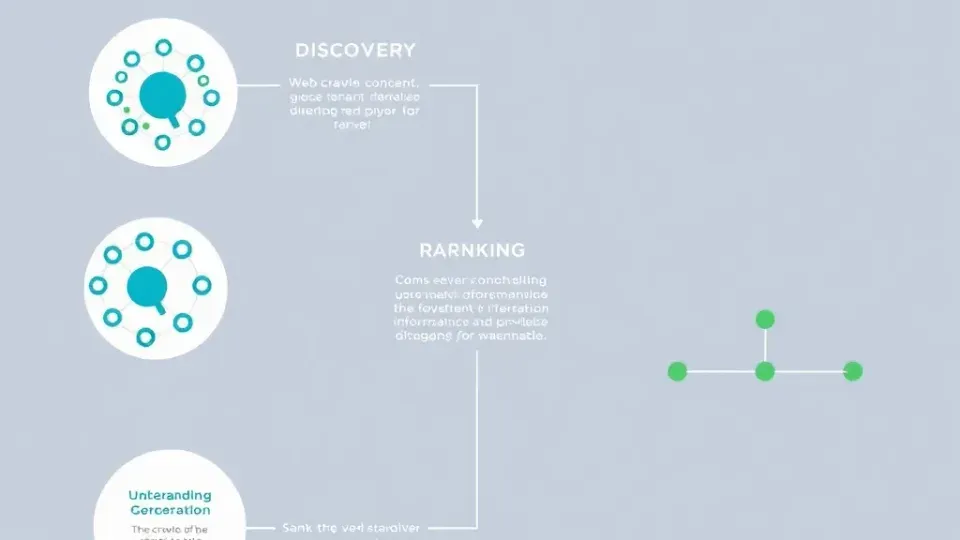
SEO is not magic, and it is not a one-time task. It is a systematic process that aligns your website with the way search engines evaluate, categorize, and rank web content. To understand how SEO works and grasp the full search engine optimization definition, you first need to understand what happens behind the scenes when someone types a query into Google.
At its core, a search engine has three jobs: discover content, understand it, and serve the most relevant results. SEO is the practice of making your content as easy as possible to discover, understand, and rank.
Step 1: Crawling and Indexing
Search engines use automated programs called crawlers (or spiders) to discover content across the web. Google's primary crawler, Googlebot, follows links from page to page, downloading content and passing it back to Google's servers for processing.
Once crawled, a page goes through indexing — the process of analyzing, categorizing, and storing the page's content in Google's index, which is essentially a massive database of every page the engine has evaluated. According to Google's official documentation on Google Search Central, pages that are blocked by robots.txt, carry noindex tags, or contain thin or duplicate content may be excluded from the index entirely.
What this means for SEO:
- Your site must be technically accessible to crawlers (no broken internal links, correct robots.txt configuration)
- Pages should have unique, substantive content worth indexing
- Internal linking helps crawlers discover deeper pages on your site
Step 2: Ranking and Relevance
Once a page is indexed, the search engine determines where it should appear in results for any given query. This is the ranking stage, and it is where the majority of SEO strategy is focused.
Google's algorithm uses hundreds of ranking signals, but several have been confirmed as particularly significant:
- Content relevance: Does the page directly address the user's query and search intent?
- Content quality: Is the content accurate, original, comprehensive, and written for humans?
- Backlinks: How many reputable external sites link to this page? Google's own guidance consistently identifies backlinks as a top-tier authority signal.
- Core Web Vitals: Does the page load quickly, respond to interaction promptly, and maintain visual stability? Google confirmed Core Web Vitals as official ranking factors in 2021, and they remain in the algorithm today.
- Mobile-friendliness: Google operates on a mobile-first indexing model, meaning the mobile version of your site is the primary version evaluated for ranking.
A practical example: Imagine you run a small bakery and you publish a detailed blog post titled "How to Make Sourdough Bread at Home." If that post is well-structured, answers the query thoroughly, earns links from food blogs, loads fast on mobile, and matches the informational intent of the search, it can rank on page one — driving hundreds of monthly visitors without a single dollar in ad spend.
What SEO Is in Marketing and Business Context
How SEO Fits Into Digital Marketing
What is SEO in digital marketing? SEO is the discipline of capturing organic (non-paid) search traffic as part of a broader digital marketing strategy. It sits alongside paid search, content marketing, social media, email, and influencer marketing — but it operates differently from all of them.
Where paid campaigns deliver traffic immediately but stop the moment you stop spending, SEO compounds over time. A well-optimized page can continue generating traffic for months or years after it was published. According to BrightEdge's channel performance research, organic search drives approximately 53% of all website traffic across industries — making it the single largest source of digital traffic for most businesses.
In budget terms, what SEO is in marketing comes down to classification: it is an owned and earned media investment. You invest in creating and optimizing content (owned), and if done well, other sites link to you naturally (earned). This contrasts with paid media, where visibility is rented on a cost-per-click basis.
SEO also directly supports other digital marketing channels:
- Content marketing produces the assets that SEO optimizes
- Social media amplifies content and can generate backlinks
- Email marketing drives return visits that improve engagement signals
- PR and brand building generate authoritative mentions and links
For e-commerce businesses specifically, SEO plays a critical role in product discovery. A well-structured e-commerce SEO strategy can drive category and product page traffic that converts at higher rates than many paid channels, because the visitor arrived with clear purchase intent.
SEO vs. Paid Search: Key Differences
One of the most common points of confusion — especially among business leaders reviewing their marketing budget — is the difference between SEO and paid search (also called PPC or SEM).
| Factor | SEO (Organic) | Paid Search (PPC/SEM) | |---|---|---| | Cost model | Time and resource investment | Cost-per-click (CPC) | | Speed to results | 3–6 months | Immediate | | Longevity | Compounds over time | Stops when budget runs out | | Click trust | Higher (users prefer organic) | Lower (labeled as "Ad") | | Scalability | Requires content investment | Scales with budget | | Data ownership | You own the traffic | Platform-dependent |
SEM (Search Engine Marketing) is a broader term that encompasses both SEO and paid search. When marketers say "SEM," they usually mean paid search ads (Google Ads, Bing Ads). When they say "SEO," they specifically mean organic optimization. The distinction matters because the strategies, budgets, timelines, and skill sets involved are fundamentally different.
In practice, the highest-performing digital strategies combine both: use paid search for immediate visibility and testing, then use SEO to build durable organic traffic for your highest-value keywords.
The Role of SEO in a Full-Funnel Marketing Strategy
Understanding what SEO is in digital marketing goes beyond traffic acquisition — it spans the entire customer journey. At the top of the funnel, informational content targets users who are researching topics related to your business. In the middle, comparison and evaluation content captures users weighing their options. At the bottom, transactional and product pages convert users with purchase intent.
This funnel alignment is what separates sophisticated SEO programs from basic keyword targeting. When each page in your content architecture is mapped to a specific funnel stage and intent type, SEO becomes a predictable, measurable revenue channel — not just a traffic source.
For example, a SaaS business might target:
- Top of funnel: "what is project management software" (informational)
- Middle of funnel: "best project management software for remote teams" (commercial)
- Bottom of funnel: "project management software pricing" (transactional)
Each stage requires a different content format, call-to-action strategy, and conversion metric. Building this architecture deliberately — rather than publishing content reactively — is what distinguishes SEO-mature organizations from those just getting started.
Core SEO Techniques: On-Page, Off-Page, and Technical
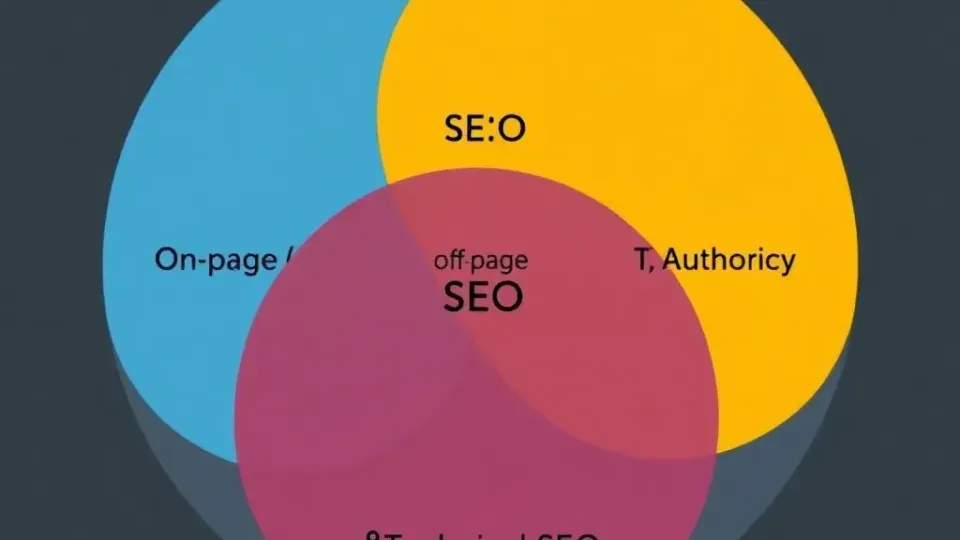
The three main pillars of SEO are on-page SEO (content, keywords, meta tags), off-page SEO (backlinks, brand signals, citations), and technical SEO (site speed, mobile-friendliness, crawlability, indexability). Each pillar is distinct but interconnected — weakness in any one area limits the ceiling of the others.
On-Page SEO Fundamentals
On-page SEO refers to everything you control directly on your web pages to improve relevance and quality signals. It is the most accessible pillar for beginners and the one with the most immediate feedback loop.
Core on-page elements include:
1. Keywords and search intent Keywords are the words and phrases users type into search engines. Effective on-page SEO starts with identifying which keywords your target audience uses, then creating content that directly addresses the intent behind those searches.
Search intent breaks into four types:
- Informational ("what is SEO") — user wants to learn
- Navigational ("Google Search Console login") — user wants a specific site
- Commercial ("best SEO tools for small business") — user is comparing options
- Transactional ("buy SEO audit service") — user is ready to act
Matching your content to the correct intent type is more important than keyword density. A page that uses the keyword 20 times but fails to satisfy intent will not outrank a page that addresses intent comprehensively.
2. Title tags and meta descriptions The title tag is the clickable headline in search results and one of the most direct on-page ranking signals. It should include your primary keyword near the beginning and stay under 60 characters to avoid truncation. The meta description does not directly affect rankings but significantly influences click-through rate — a well-written meta description can increase organic CTR by 5–10%.
3. Heading structure (H1–H6) A logical heading hierarchy helps both users and crawlers understand page structure. Your H1 should match the primary topic; H2s and H3s should organize subtopics logically.
4. Content quality and depth Google's Quality Rater Guidelines evaluate content on E-E-A-T: Experience, Expertise, Authoritativeness, and Trustworthiness. Content that demonstrates first-hand experience, cites credible sources, and answers questions more thoroughly than competing pages tends to rank higher and sustain rankings longer.
5. Internal linking Strategic internal links distribute authority throughout your site and help users navigate related content. A robust internal linking structure is one of the most underutilized on-page SEO techniques.
Off-Page SEO and Backlinks
Off-page SEO covers actions taken outside your website that influence your rankings — primarily the acquisition of backlinks from other sites.
A backlink is a link from an external website pointing to yours. Search engines treat backlinks as votes of confidence: if many reputable sites link to your content, it signals that your content is trustworthy and authoritative. Moz's Search Engine Ranking Factors research consistently identifies backlinks among the top three ranking factors across Google's algorithm.
Not all backlinks are equal. The quality of a backlink is determined by:
- Domain authority of the linking site (a link from the New York Times carries more weight than a link from a low-traffic personal blog)
- Relevance of the linking site's topic to your own
- Anchor text used in the link (descriptive, natural anchor text is preferable)
- Link placement (editorial links within body content outperform footer or sidebar links)
Legitimate off-page SEO strategies include:
- Creating original research, data studies, or tools that others naturally cite
- Guest posting on authoritative publications in your industry
- Digital PR: pitching journalists and bloggers with data-driven story angles
- Building local citations (for local SEO) in directories like Google Business Profile, Yelp, and industry-specific directories
- Earning brand mentions that link back to your site
What to avoid: Buying backlinks, participating in link schemes, or using private blog networks (PBNs). These tactics violate Google's webmaster guidelines and risk manual penalties that can remove your site from search results entirely.
Technical SEO Essentials
Technical SEO addresses the infrastructure of your website — ensuring that search engine crawlers can access, process, and rank your content efficiently. Even the best content will underperform if technical barriers prevent proper indexing.
Core technical SEO factors:
Site speed and Core Web Vitals Google officially uses Core Web Vitals as ranking signals. The three metrics are:
- LCP (Largest Contentful Paint): How fast the main content loads (target: under 2.5 seconds)
- INP (Interaction to Next Paint): How quickly the page responds to user interaction (target: under 200ms)
- CLS (Cumulative Layout Shift): Visual stability as the page loads (target: below 0.1)
Mobile-first indexing Google indexes and ranks the mobile version of your site primarily. A site that renders poorly on mobile — small text, broken layouts, non-tappable buttons — faces ranking disadvantages regardless of content quality.
Crawlability and indexability
- Use a correctly configured robots.txt file to guide crawlers
- Submit an XML sitemap to Google Search Console so important pages are discovered promptly
- Avoid duplicate content issues by implementing canonical tags
- Fix crawl errors and broken links identified in Google Search Console
HTTPS security Google confirmed HTTPS as a ranking signal in 2014 and has reinforced it since. An SSL certificate is now a baseline requirement, not a competitive advantage.
Structured data (schema markup) Adding schema markup (JSON-LD format) helps search engines understand page context and can unlock rich results — star ratings, FAQ dropdowns, How-To steps — that increase SERP visibility and CTR even without a ranking change.
What SEO Is Not: Common Misconceptions
Even experienced marketers carry SEO myths that lead to wasted effort or missed opportunities. Clarifying what SEO is — and what it definitively is not — prevents costly strategic misdirection.
Myth 1: "SEO is a one-time setup task." Reality: SEO requires ongoing maintenance. Search algorithms update continuously (Google makes thousands of algorithm adjustments per year), competitor content improves, and new keywords emerge. Sites that treat SEO as a one-time project tend to lose rankings within 6–12 months.
Myth 2: "More keywords = better rankings." Reality: Keyword stuffing is a negative quality signal. Modern search algorithms use semantic understanding (via natural language processing models like BERT and MUM) to evaluate topic coverage, not keyword repetition. Write naturally for humans; use keywords where they fit logically.
Myth 3: "Meta keywords still matter." Reality: Google has publicly stated it ignores the meta keywords tag. It has been irrelevant for over a decade. Focus your effort on title tags, meta descriptions, and content quality instead.
Myth 4: "Higher domain authority guarantees top rankings." Reality: Domain authority (DA) is a Moz metric, not a Google metric. Google evaluates individual page quality and relevance, not just site-wide authority. A highly specific, well-optimized page on a mid-authority site regularly outranks lower-quality pages on high-DA sites.
Myth 5: "Social media shares directly improve SEO rankings." Reality: Google has stated that social signals are not direct ranking factors. However, social amplification drives traffic, earns backlinks, and increases brand searches — all of which carry indirect SEO benefits.
Myth 6: "You need to submit your site to Google every time you publish." Reality: Googlebot discovers new content through internal links and sitemaps automatically. Manual submission via Google Search Console's URL Inspection tool is useful for new or time-sensitive pages but is not required for routine publishing.
Myth 7: "SEO only applies to Google." Reality: While Google dominates global search market share, what SEO is in marketing applies across all search engines — Bing, DuckDuckGo, Yahoo, YouTube (the world's second-largest search engine), and increasingly, AI-powered platforms like Perplexity and ChatGPT. The principles of relevance, authority, and technical accessibility translate across all of them, though specific ranking signals vary.
Measuring SEO Success: Key Metrics
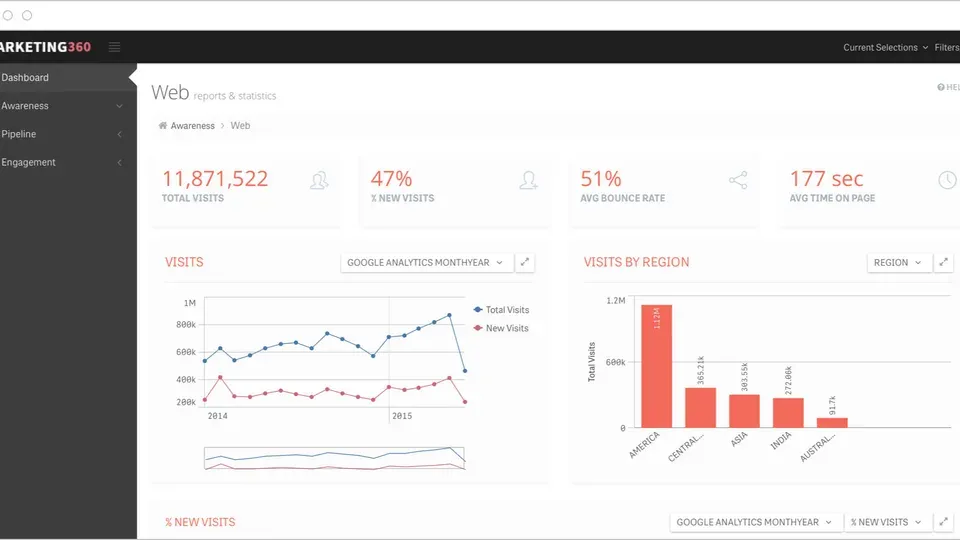
Tracking the right metrics is what separates strategic SEO from guesswork. Here are the KPIs that experienced SEO professionals monitor consistently.
Primary SEO KPIs
1. Organic Traffic The total number of sessions from organic (non-paid) search. Track this in Google Analytics 4 segmented by channel to isolate organic search performance from other traffic sources.
2. Keyword Rankings Where specific target keywords rank in the SERP. SEO position — the numerical rank (1st, 3rd, 10th, etc.) — directly correlates with click-through rate. Research from Backlinko's click-through rate studies indicates that the first organic position captures approximately 27–28% of all clicks, while position ten captures under 3%.
3. Click-Through Rate (CTR) The percentage of people who see your page in search results and click through. Low CTR despite strong rankings often signals a title tag or meta description optimization opportunity.
4. Impressions How many times your pages appear in search results. Found in Google Search Console, impressions help identify ranking opportunities — specifically pages with high impressions but low CTR or low ranking positions.
5. Backlink Profile Total number of referring domains, new links acquired, and lost links over time. Tools like Ahrefs, Semrush, and Moz provide backlink profile data that Search Console does not fully surface.
6. Core Web Vitals scores Available in Google Search Console's Core Web Vitals report and in PageSpeed Insights. These directly affect ranking eligibility.
7. Conversion rate from organic traffic Ultimately, SEO success should be measured in business outcomes — leads, purchases, sign-ups — not just traffic. A page with 500 monthly organic visitors converting at 5% outperforms a page with 2,000 visitors converting at 0.5%.
Recommended Tool Stack
For most businesses, a combination of free and paid tools covers the necessary tracking:
- Google Search Console (free): Rankings, impressions, CTR, crawl errors, Core Web Vitals
- Google Analytics 4 (free): Organic traffic, user behavior, conversion tracking
- Ahrefs or Semrush (paid): Keyword research, competitor analysis, backlink tracking, site audits
- PageSpeed Insights / Lighthouse (free): Core Web Vitals and technical performance
For independent publishers and content-focused teams who want to streamline keyword research, clustering, and content production in a single workflow, Writora is worth evaluating. It combines keyword clustering, AI-assisted article generation, and one-click publishing — which can significantly reduce the time between keyword research and live, optimized content. It is particularly well-suited for small teams managing high content volume without a full SEO department.
Benchmarking Against Competitors
Measurement in isolation only tells half the story. In my experience working with content-heavy sites, absolute traffic numbers are less revealing than relative share of voice — how your visibility compares against competitors for the same keyword set.
Tools like Semrush's Keyword Gap and Ahrefs' Content Gap features allow you to identify which keywords your competitors rank for that you do not. This competitive benchmarking approach surfaces high-priority content opportunities far more efficiently than building keyword lists from scratch.
A practical benchmarking workflow looks like this:
- Identify your top 3–5 organic competitors (they may differ from your commercial competitors)
- Run a keyword gap analysis to find queries where competitors rank in positions 1–10 and you do not appear
- Prioritize gaps where your existing content authority is closest to the competitor's — these are the quickest wins
- Build or optimize content to address the gap, then monitor ranking movement over 60–90 days
This cycle, repeated quarterly, creates a systematic improvement loop rather than one-off optimization efforts.
SEO and Emerging Technologies
The SEO landscape is undergoing its most significant shift in over a decade, driven by AI-powered search features, large language models (LLMs), and conversational answer engines.
AI Overviews and Generative Search
Google's AI Overviews (formerly Search Generative Experience) now appear at the top of many search results, providing synthesized answers drawn from multiple sources. For users, this means they sometimes get their answer without clicking any result — a phenomenon called zero-click search.
For SEOs, this creates two strategic imperatives:
- Optimize for citation in AI-generated answers, not just ranking position 1–10. Pages that are comprehensive, well-structured, and semantically clear are more likely to be sourced by AI Overviews.
- Target queries with persistent click intent — questions that require deeper exploration, comparison, or action will continue to drive clicks even with AI Overviews present.
LLM-Based Answer Engines and GEO
Platforms like ChatGPT (with search), Perplexity, and Google's Gemini are increasingly acting as search interfaces. When testing several AI answer engines, a consistent pattern emerges: they disproportionately cite sources with clear structure, authoritative authorship signals, and well-formatted factual content. This aligns directly with Google's E-E-A-T framework.
GEO (Generative Engine Optimization) is an emerging practice that extends the traditional search engine optimization definition to cover content specifically optimized for citation by AI systems. Core GEO techniques include:
- Writing concise, extractable definition blocks (like the answer blocks in this article)
- Using structured data and schema markup to help AI systems understand content type and entities
- Establishing clear authorship and expertise signals
- Publishing original data and first-hand perspectives that AI systems cannot generate themselves
What This Means Practically
The fundamentals of SEO — relevance, quality, authority, technical accessibility — are more important in the AI era, not less. The channel through which traffic arrives may evolve, but the underlying signals search engines and AI models use to identify trustworthy content remain consistent.
Practical adaptations for SEO in the AI era:
- Structure long-form content with concise summary sections and clear H2/H3 hierarchies
- Add FAQ sections (with FAQPage schema) to capture People Also Ask placements and AI answer citations
- Prioritize original research, case studies, and first-hand experience over recycled information
- Monitor brand mention visibility in AI answers alongside traditional ranking metrics
SEO Implementation Checklist
Use this checklist as a starting framework when launching a new site or auditing an existing one. Resolve technical issues before investing heavily in content or link building — the order matters.
Technical Foundation
- [ ] Site is accessible over HTTPS with a valid SSL certificate
- [ ] robots.txt file is configured correctly (not blocking important pages)
- [ ] XML sitemap submitted to Google Search Console
- [ ] No critical crawl errors in Google Search Console
- [ ] Core Web Vitals scores: LCP < 2.5s, INP < 200ms, CLS < 0.1
- [ ] Site renders correctly on mobile devices (test with Google's Mobile-Friendly Test)
- [ ] No significant duplicate content issues (canonical tags implemented where needed)
- [ ] Structured data / schema markup implemented for relevant page types
On-Page Optimization
- [ ] Primary keyword present in title tag (within first 60 characters)
- [ ] Meta description written (120–160 characters), includes primary keyword, written to encourage clicks
- [ ] H1 tag present and matches primary topic of the page
- [ ] Content directly addresses search intent for the target keyword
- [ ] Content demonstrates E-E-A-T (authorship, sources, first-hand experience)
- [ ] Internal links to and from related pages
- [ ] Images have descriptive alt text
- [ ] URLs are short, descriptive, and include the target keyword
Off-Page and Authority
- [ ] Google Business Profile claimed and optimized (for local businesses)
- [ ] Core industry directories and citations completed
- [ ] At least one content-driven link-earning strategy active (research, PR, guest posting)
- [ ] Backlink profile monitored for new and lost links (Ahrefs, Semrush, or Search Console)
Measurement
- [ ] Google Analytics 4 installed and tracking organic conversions
- [ ] Google Search Console property verified and monitoring active
- [ ] Target keywords tracked weekly in a ranking tool
- [ ] Monthly SEO performance report template established
Frequently Asked Questions About SEO

Is SEO still relevant in 2026 with AI-powered search engines?
Yes — SEO remains essential, but its scope is expanding. AI Overviews and LLM-based search surfaces still rely on indexed, high-quality web content as their source material. The skills at the core of SEO — creating authoritative content, building site credibility, and ensuring technical accessibility — are precisely what AI systems reward when deciding which sources to cite.
What has changed is that "ranking #1" is no longer the only goal. Visibility in AI-generated answers, featured snippets, and People Also Ask boxes requires the same underlying content quality, but with greater emphasis on structure, clarity, and extractable answer formats. Brands that invest in SEO today are building the content infrastructure that AI systems will continue to draw from.
How long does it take to see results from SEO efforts?
Typically, meaningful SEO results take 3–6 months to materialize, depending on three variables: the competitive difficulty of your target keywords, your site's current domain authority and backlink profile, and the quality and speed of implementation.
Some improvements produce faster results. Technical fixes — resolving crawl errors, improving Core Web Vitals, implementing canonical tags — can show measurable impact within 2–4 weeks. New content targeting low-competition, long-tail keywords can rank within 4–8 weeks on a site with moderate authority. Competitive head terms in saturated industries may take 12–18 months to crack the first page.
SEO timelines are not linear. In my experience working with content-heavy sites, rankings often plateau or even dip slightly in months 2–3 before accelerating as authority compounds. Patience and consistent execution are the differentiators.
Can small businesses compete with large enterprises in SEO?
Yes — and in many cases, small businesses have structural advantages. Large enterprises struggle with slow content approval cycles, massive legacy site architecture, and difficulty ranking for highly specific, long-tail queries. Small businesses can:
- Move faster on content publication and optimization
- Build topical authority within a niche more efficiently
- Target local SEO where proximity and relevance outweigh domain authority
- Create more genuine, specific, experience-driven content that Google's E-E-A-T guidelines reward
The practical strategy is to avoid competing head-on for broad, high-volume keywords where enterprise budgets and domain authority dominate. Instead, build authority in a specific niche or geography, target long-tail informational queries, and compound that authority over 12–24 months.
What is the difference between SEO and SEM?
SEO is a subset of SEM, but the terms are commonly used as if they are separate disciplines.
- SEO = organic search optimization (no per-click cost, takes time to build)
- SEM = paid search advertising through platforms like Google Ads (immediate visibility, cost-per-click model)
- In common usage, "SEM" usually refers exclusively to paid search; "SEO" always refers to organic
Both target the same search engine results page (SERP) but appear in different sections: paid ads appear above and below organic results, labeled as "Sponsored." Organic SEO results appear between them, unlabeled and generally trusted more by users. Studies suggest that 70–80% of users skip paid ads and focus on organic results, though this varies significantly by query type.
What is SEO in digital marketing for local businesses?
For local businesses, what SEO is in digital marketing translates to a specific set of tactics centered on geographic relevance. Local SEO focuses on ranking in location-based queries ("plumber near me," "best coffee shop in Austin") and in Google's Local Pack — the map-based results that appear above organic listings for many local searches.
Core local SEO priorities differ from traditional SEO in important ways:
- Google Business Profile optimization is the single highest-leverage activity for local visibility. Completing every field, adding photos regularly, and actively responding to reviews all influence Local Pack rankings.
- NAP consistency (Name, Address, Phone number) across all online directories signals location reliability to search engines. Inconsistencies — even minor formatting differences — can suppress local rankings.
- Local citation building in relevant directories (Yelp, industry-specific platforms, local chamber of commerce sites) reinforces geographic and topical relevance.
- Proximity, relevance, and prominence are the three factors Google officially cites as governing Local Pack rankings — a useful framework for prioritizing local SEO effort.
For service businesses, franchises, and brick-and-mortar retailers, local SEO often delivers faster, more measurable ROI than broad organic SEO because the competitive landscape is limited to geographic proximity rather than the entire internet.
The Bottom Line on What SEO Is
Understanding what SEO is is the first step — but implementing it strategically is where competitive advantage is built.
The three pillars of the search engine optimization definition work together as a system:
- On-page SEO ensures your content is relevant, high-quality, and structured for both users and crawlers
- Off-page SEO builds the authority and trust signals that elevate your site above competitors
- Technical SEO removes every infrastructure barrier that could prevent your content from being discovered, indexed, or ranked
SEO is a long-term investment, not a quick fix. Unlike a paid campaign you can turn on and off, SEO equity compounds over time — well-optimized content and a strong backlink profile continue generating returns long after the initial investment. The businesses that treat SEO as a durable asset rather than a short-term tactic consistently outperform those chasing algorithmic shortcuts.
The forward-looking reality is that AI is not replacing SEO — it is raising the bar for it. As search interfaces evolve from ten blue links to AI-synthesized answers, the content that gets cited, featured, and trusted will be content built on exactly the principles this guide covers: genuine expertise, clear structure, technical accessibility, and earned authority. Whether you're still working out what SEO is in marketing at a foundational level, or refining an advanced program, the core principles are stable — relevance, quality, and trust.
Your next step: Start with a keyword audit to identify which queries your target audience is using, then run a technical health check on your existing site. If you want to accelerate from research to published content, Writora offers an integrated platform that combines keyword clustering, AI-assisted writing, and one-click publishing — purpose-built for independent publishers who need SEO-grade content at scale. It's a free trial, so you can evaluate whether it fits your workflow before committing.